 follow us
Antarctica, a continent largely covered in ice, paradoxically holds about 75 percent of the world's fresh water, yet it is classified as a desert. This unique combination presents significant challenges, particularly regarding fire safety for the individuals stationed there. The United States operates the only full-time professional fire department on the continent, known as the
Challenges of Firefighting in Extreme Conditions
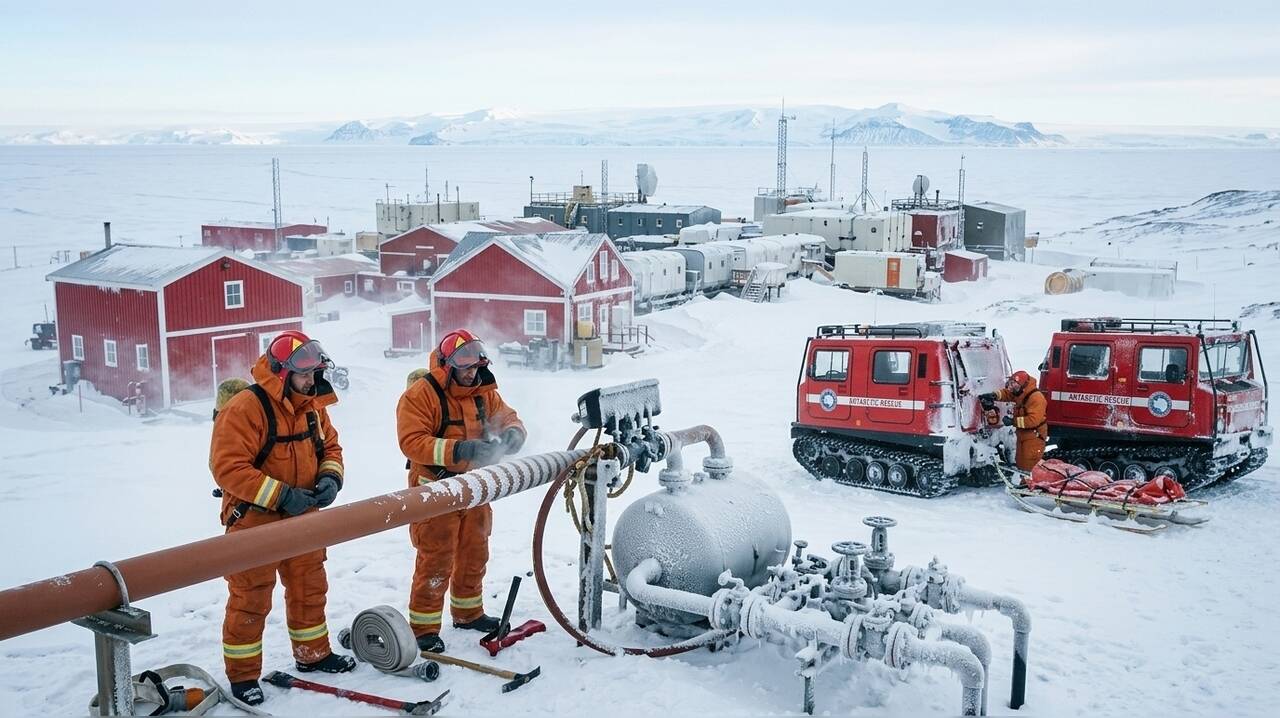
The firefighting landscape in Antarctica is defined by its extremes. Despite the abundance of ice, firefighters face a significant challenge: the frozen water is not useful for extinguishing fires. The continent's dry air can lead to static electricity discharges, increasing the risk of fire in an environment filled with flammable materials, including generators and heated buildings necessary for survival. Additionally, the frigid temperatures complicate the use of firefighting agents, as they can freeze within hoses, while strong winds can exacerbate a fire, transforming a manageable situation into a rapidly escalating emergency.
Every structure at McMurdo Station is considered a potential hazard, as each building plays a vital role in the operations of the United States Antarctic Program. The loss of even a single facility could severely disrupt research activities or, in extreme cases, halt operations entirely. Key facilities, such as the Crary Scientific Laboratory, are particularly critical, underscoring the importance of fire prevention and response in this isolated setting.
Operational Readiness and Daily Life of Firefighters
The Antarctic Fire Department, based at McMurdo Station, is the largest of the three U.S. fire departments on the continent. It operates with a team of approximately 46 personnel during the summer months, which can see the station's population rise to around 1,100. Firefighters work in two rotating shifts, equipped with specialized vehicles designed for the unique challenges of the Antarctic terrain, including snow-covered runways.
While actual fires are rare, the potential for rapid spread due to the dry climate and strong winds remains a constant concern. Firefighters also engage in medical emergencies, providing essential care and transport to the station's hospital and coordinating evacuations when necessary. Despite the infrequency of fires, the risks associated with the extreme environment are real, as past incidents have resulted in fatalities among fire department personnel. This reality reinforces the necessity of maintaining a fully staffed and trained fire service in Antarctica, ensuring the safety of both lives and the scientific missions that the continent supports.