 follow us
The
Geological Origins and Chemical Reactions
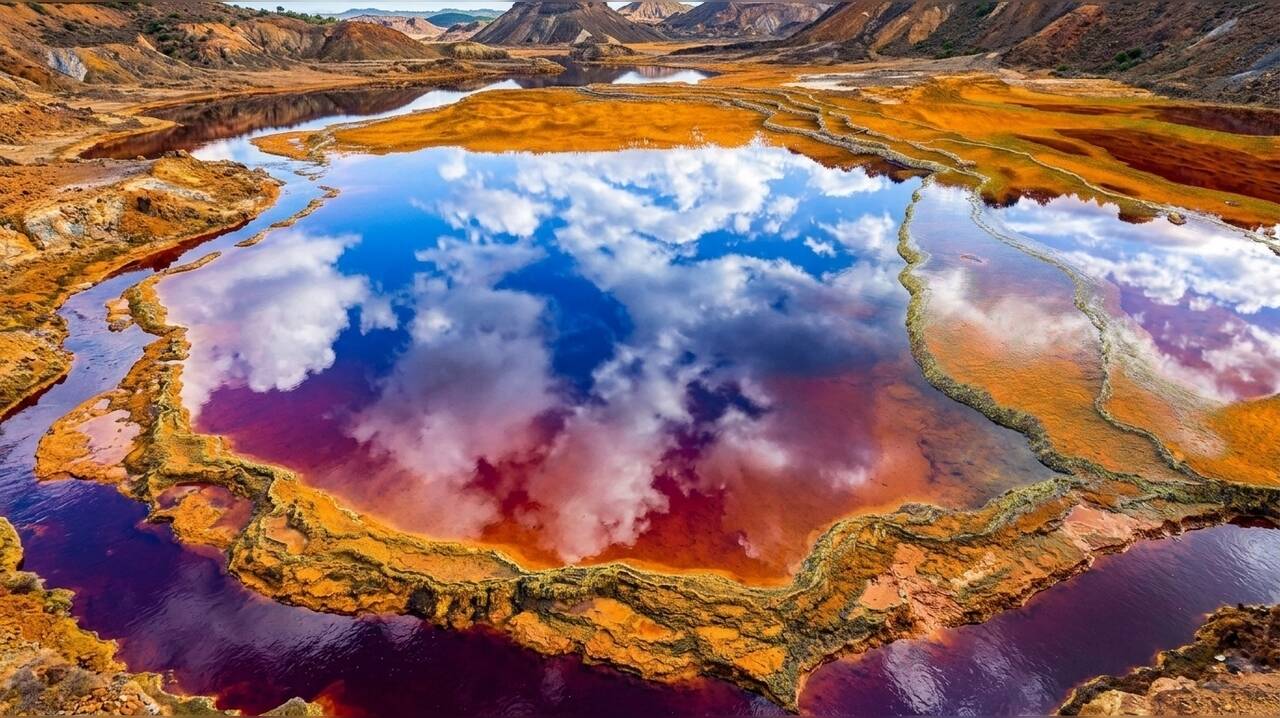
The name Río Tinto translates to "stained river," aptly describing its appearance as it flows through one of Europe’s richest volcanic sulfide ore regions. These mineral deposits were formed hundreds of millions of years ago during a period of intense volcanic activity in southern Spain. As groundwater interacts with buried sulfide minerals, a series of chemical reactions occur, leading to the dissolution of iron and sulfur compounds, which in turn creates a highly acidic environment. The river's pH can drop to around 2, comparable to vinegar, making it a challenging habitat for most aquatic life.
Interestingly, the bacterial communities residing in the Río Tinto not only survive in these harsh conditions but also play a crucial role in maintaining them. By oxidizing iron and sulfur compounds, these microbes produce ferric iron, the rust-colored substance that gives the river its distinctive hue. This unique ecosystem showcases how life can adapt to extreme conditions, utilizing the river's chemical environment as a survival mechanism.
Impact of Mining and Astrobiological Significance
While the Río Tinto's unique chemistry has natural origins, human activity has significantly influenced its landscape for approximately 5,000 years. Archaeological findings indicate that mining in the area dates back to the Copper Age, with extensive operations continuing through the Bronze Age and into Roman times. Modern industrial mining practices, which ceased in 2001 but resumed in 2016, have further exposed sulfide-rich rocks to air and water, intensifying the natural chemical processes.
Initially, the river's striking color was often attributed solely to mining pollution. However, recent scientific studies have clarified that its distinctive appearance is primarily a result of its natural acidic geochemistry, with mining activities exacerbating these effects. Today, the Río Tinto serves as a critical site for astrobiological research, as its surrounding landscape contains minerals like jarosite, which have also been found on Mars. NASA has utilized the river as a testing ground for robotic technologies aimed at detecting life on other planets, reinforcing the idea that if life exists on Mars, it may be found beneath its surface, similar to the resilient