
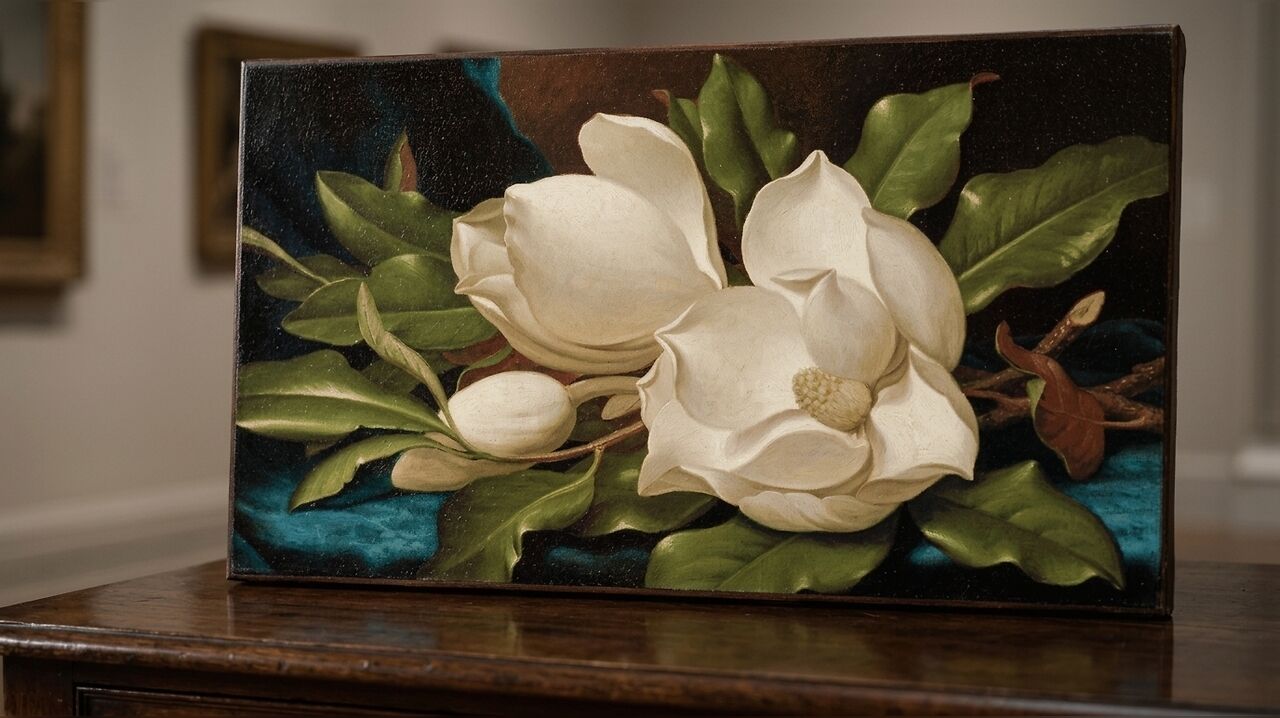
An unassuming floral painting, purchased for just $29 at a Wisconsin rummage sale, underwent a remarkable transformation in value after being identified as a significant work by the 19th-century American artist
The painting remained in the buyer's possession for approximately a decade before its true provenance was established. Once authenticated, the work—titled Two Magnolias on Blue Plush—was consigned to Christie’s in New York. The auction house ultimately sold the piece for $882,500 on May 26, 1999, far exceeding its pre-sale estimate of $300,000 to $500,000.
The Significance of Heade’s Floral Still Lifes
Martin Johnson Heade, who lived from 1819 to 1904, is celebrated for his diverse body of work, which includes landscapes and still lifes. His series of magnolia paintings is considered a hallmark of his career and a unique contribution to American art. Unlike traditional floral arrangements of the era that featured flowers in vases, Heade’s compositions often depicted blossoms resting upon luxurious, richly colored fabrics.
In the case of
An Extraordinary Art Market Discovery
The journey of the painting from a local rummage sale to a major auction house highlights the potential for significant art discoveries outside of traditional gallery settings. The final sale price represented a return of more than 30,000 times the original purchase amount, a figure that garnered widespread attention at the time. While the story of the bargain purchase added a layer of intrigue, the auction result was ultimately driven by the work's verified attribution, artistic quality, and historical importance within the
This discovery contributed to a broader fascination with the emergence of previously unidentified works by Heade, several of which were similarly found in estate or garage sales. These instances underscored the reality that important artworks can occasionally remain unrecognized for years, only to be validated through expert appraisal. The sale of Two Magnolias on Blue Plush remains a notable example of how a change in context and expert recognition can fundamentally alter the perceived value of an overlooked object.




