
When the
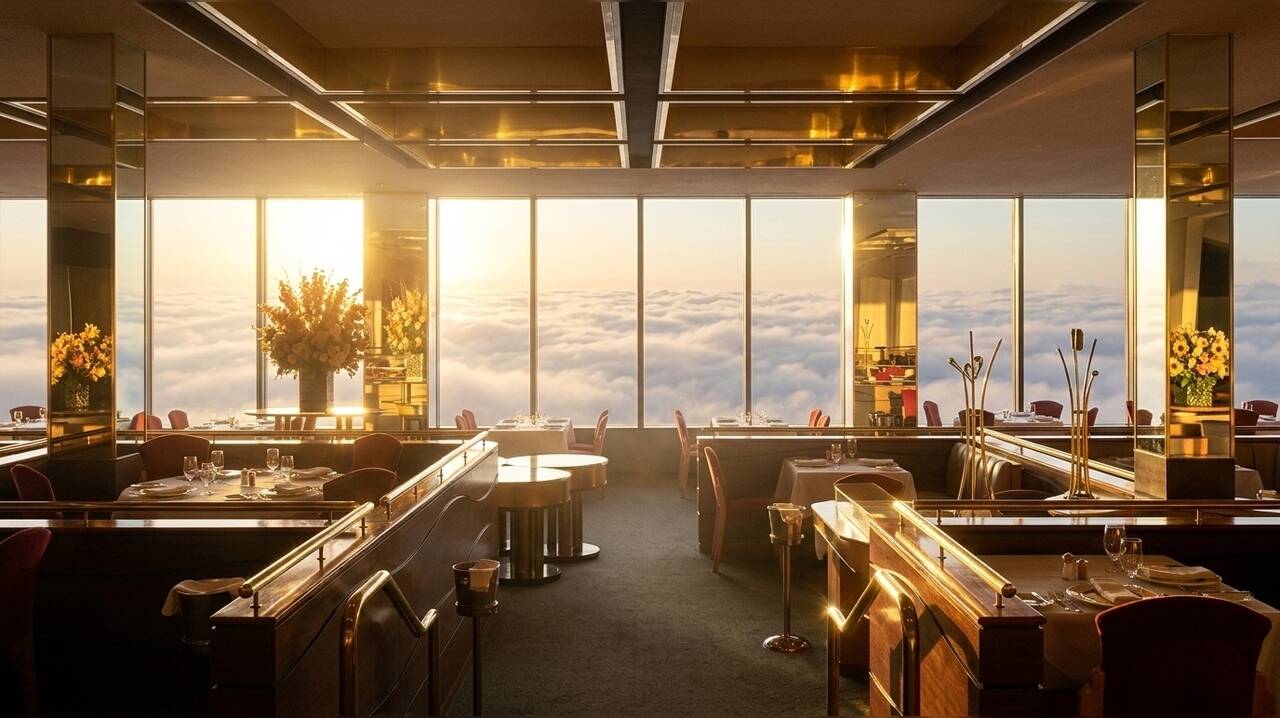
The project was born from a sense of creative freedom fueled by the lack of expectations for the area. Architect Warren Platner designed an aesthetic intended to frame the dramatic, unobstructed views, while graphic designer Milton Glaser established a visual identity rooted in celestial motifs and a sky-inspired color palette. The restaurant’s philosophy was ambitious, described by Glaser as an adventure in imagination. This approach resonated with the public, and the venue quickly became a premier destination for high-profile galas, weddings, and celebrity gatherings, hosting figures ranging from Dolly Parton to Frank Sinatra.
A Cultural Shift in Fine Dining
Beyond its status as a high-altitude attraction, the restaurant fundamentally changed how New Yorkers approached fine dining. By moving away from the lofty, often pretentious conventions of the era—such as requiring menus to be written in accessible English rather than traditional French—the establishment helped democratize the luxury dining experience. This shift in tone, combined with its status as a symbol of optimism for a city in flux, helped it become one of the highest-grossing restaurants in the United States, frequently competing with Tavern on the Green for the top spot.
The restaurant’s journey was marked by significant challenges, most notably the 1993 truck bomb in the World Trade Center’s underground garage. The attack, which resulted in six deaths and injured over 1,000 people, forced a three-year closure for repairs. During the subsequent renovation, which cost $25 million, the team introduced The Greatest Bar on Earth. This addition featured a more casual, global menu of street food and shared plates, successfully attracting a younger demographic and ensuring the venue remained a vibrant hub of activity as it entered the new millennium.
Legacy and the Final Chapter
The history of the restaurant reached a definitive and tragic conclusion on September 11, 2001. More than 70 staff members who were on duty that morning were among the thousands killed in the attacks on the towers. In the immediate aftermath, surviving employees demonstrated a commitment to service by volunteering to provide meals for first responders and recovery workers at the site.
This effort eventually led to the founding of the Restaurant Opportunities Center of New York in 2002, an organization established to assist displaced service workers in finding new employment and advocating for improved labor conditions. As the restaurant would have marked its 50th anniversary this year, its legacy remains defined by its role in reshaping the city’s culinary culture and the resilience of the staff who served it until the very end.




