
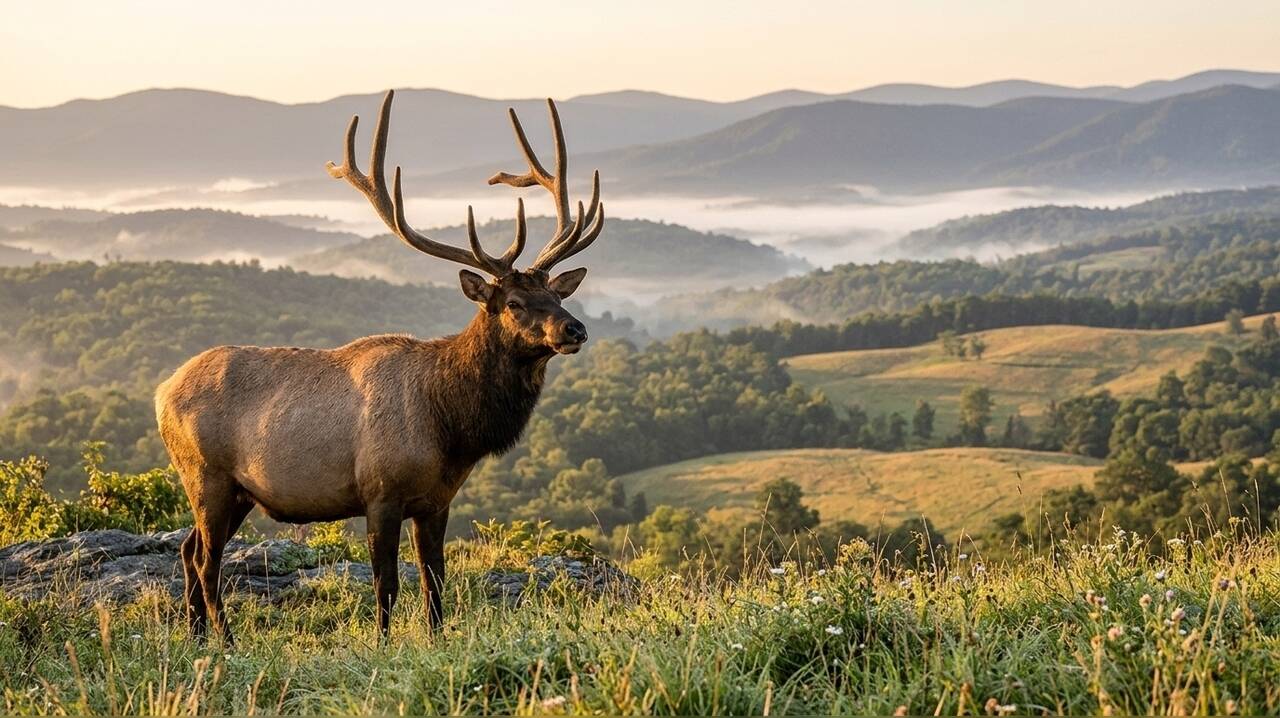
Nearly ten years after the first elk were reintroduced to West Virginia, the state’s growing herd is beginning to venture beyond its primary habitat, marking a significant milestone in a long-term
The movement of the herd was recently highlighted by reports of a young female elk traveling north into Lincoln County. According to the WVDNR, the animal spent time on private farmland near Harts Creek before returning to the Tomblin area. Wildlife biologists were able to track this journey using GPS telemetry, providing researchers with valuable data on how the animals are interacting with the broader landscape as the population grows.
A Decade of Conservation Success
Elk were once native to West Virginia but were driven to local extinction by the late 1800s due to habitat loss and overhunting. The modern effort to bring the species back began in 2016, following extensive studies that identified the state's southern coalfields as an ideal environment. These areas, shaped by previous surface mining, provided the open habitat necessary for elk while minimizing potential conflicts with agricultural interests.
The restoration program has seen steady progress since the initial release of 24 elk in December 2016. Subsequent efforts saw the introduction of 95 additional animals from Kentucky and Arizona, with further releases in 2024 bringing the total estimated population to approximately 130. Beyond these introductions, the project has recorded at least 60 native calf births, confirming that the herd is successfully reproducing in the wild.
Managing Future Expansion
While the Tomblin Wildlife Management Area remains the core of the herd’s range, the recent exploratory movements into neighboring counties offer a glimpse into the future of the program. The state has designated an Elk Management Area covering roughly 2,845 square miles, which includes parts of Logan, Mingo, McDowell, Wyoming, Boone, Lincoln, and Wayne counties. Officials continue to monitor these boundaries, with plans to adjust management strategies should the elk’s use of the landscape shift significantly.
The return of the species has also evolved into a notable tourism draw. The WVDNR has scheduled guided elk tours for the autumn, allowing the public to observe the animals and learn about their history and conservation. The addition of a dedicated viewing platform and education center at the Tomblin site in 2025 further supports these efforts. For conservationists, the sight of elk wandering into new territory is a clear indicator that the species is moving beyond the initial reintroduction phase and is once again becoming a permanent part of the West Virginia landscape.




