
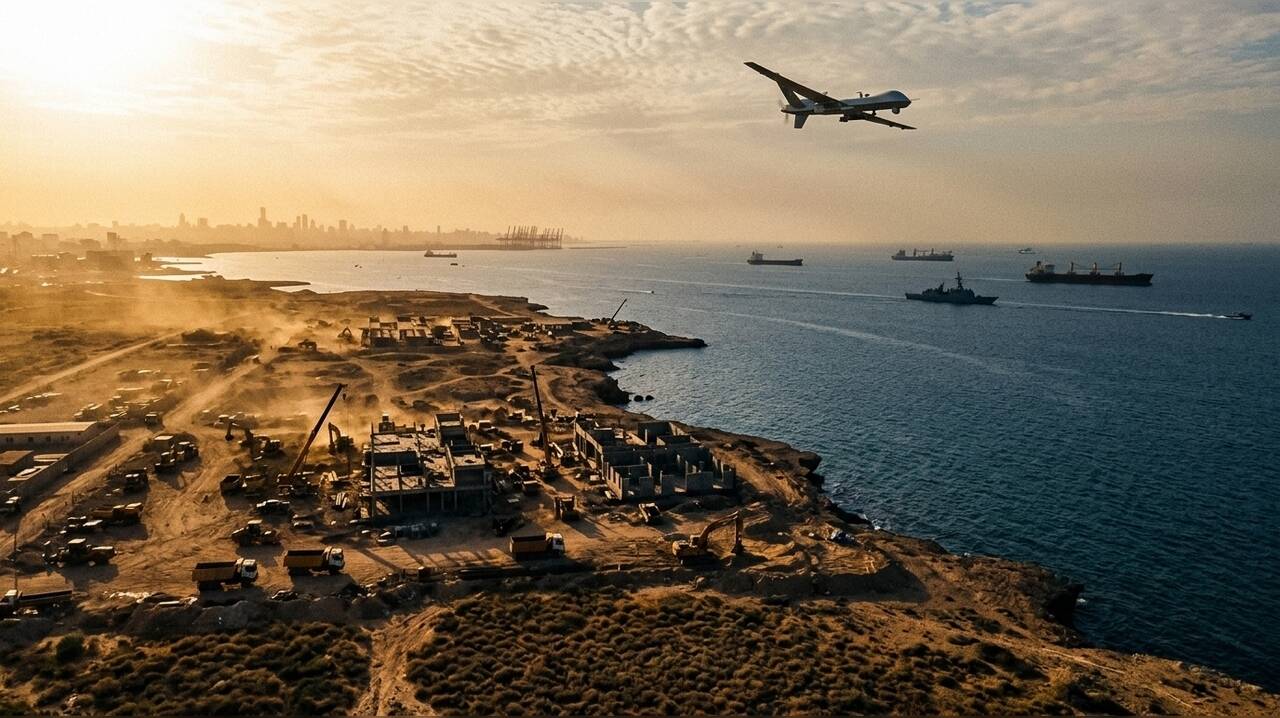
The United States is reportedly expanding its military footprint in Somalia with the development of a new base in the port city of Bosaso. Located along the Gulf of Aden, the facility is intended to support maritime security initiatives and facilitate surveillance and combat operations against militant groups active in the region.
The project marks a significant development in the Horn of Africa, an area that hosts one of the world’s most critical maritime corridors. Approximately 25 percent of global shipping traffic passes through the Gulf of Aden, a waterway that also serves as a major transit route for human trafficking and migration toward the Middle East.
Strategic Operations and Regional Security
According to reports, the Bosaso facility will serve as a hub for enhanced security efforts, with officials indicating that the Central Intelligence Agency (CIA) is expected to expand its presence at the site. The base is designed to support ongoing US efforts to counter militant organizations, including ISIS, which maintains strongholds in areas such as Togga Miraale and Togga Baalade where US surveillance drones have been observed conducting reconnaissance missions.
The US has historically maintained a military presence in the country, notably through the Puntland Security Force (PSF). This elite counter-terrorism unit was established following the September 11 attacks and has continued to conduct operations despite the formal conclusion of direct American support in 2020. Recent data from the think tank New America indicates that the US has conducted 205 airstrikes in Somalia since the start of the current administration, with more than half of those operations targeting ISIS.
Geopolitical Context and Emerging Threats
The construction of the base comes amid concerns regarding potential security shifts in the region. Analysts and reports suggest a growing risk of collaboration between Yemen’s Houthi rebels—who maintain ties to Iran’s Islamic Revolutionary Guard Corps—and the al-Shabaab militant group, which has been active in Somalia for two decades. The two groups operate on opposite sides of the Gulf of Aden, and there are concerns that a formal alliance could provide al-Shabaab with access to advanced weaponry, including drones and specialized training.
Such a development could significantly complicate the security landscape in the Horn of Africa, particularly as the Gulf of Aden becomes increasingly vital for global oil shipments amid ongoing disruptions in the Strait of Hormuz. For the Houthi movement, deeper cooperation with al-Shabaab could potentially extend their reach across the waterway, creating new methods to monitor or disrupt maritime traffic. In response to the persistent threat posed by al-Shabaab, the United States has intensified its military engagement, conducting approximately 40 airstrikes against the group within the current year.




