
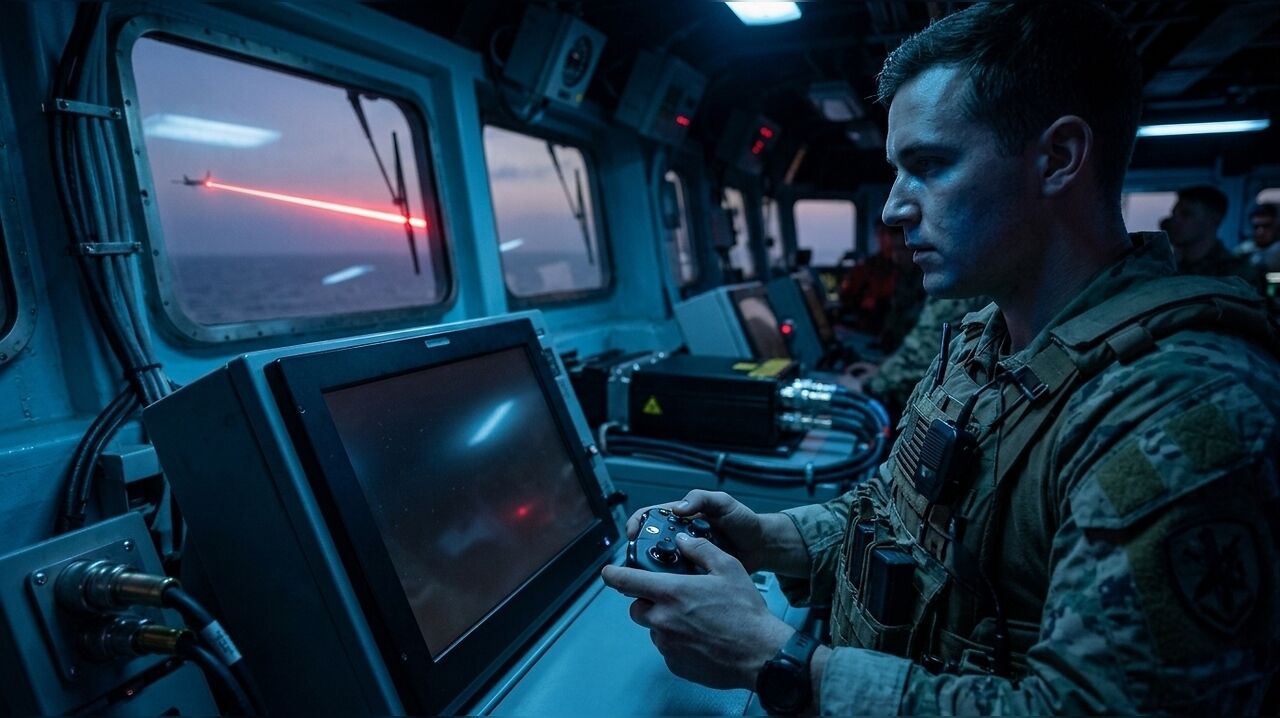
The United States military has begun deploying high-energy laser weapon systems in the
The technology, which has been under development for approximately five decades, functions by converting energy from generators or battery packs into concentrated beams of photons. These beams are capable of heating the surface of a target until it is disabled or destroyed. According to industry experts, the precision of these systems allows operators to target specific components of a drone, such as its sensors, or to destroy the aircraft entirely.
Operational Integration and Gaming Technology
A notable feature of these modern defense systems is the interface used by military personnel to operate them. In a move to leverage existing ergonomic designs, the military has integrated reconfigured Xbox gaming controllers into the weapon systems. Officials have noted that the gaming industry has already perfected highly efficient control interfaces, making the development of bespoke, specialized hardware unnecessary for these specific applications.
Jared Keller, author of the newsletter Laser Wars, suggested that the transition from laboratory testing to real-world deployment is a logical progression for the technology. He noted that the familiarity of the control schemes allows for a shorter learning curve for operators, drawing a comparison to the intuitive nature of popular video game mechanics.
Capabilities and Current Limitations
The systems currently deployed in the Middle East, known as High-Energy Laser with Integrated Optical Dazzler and Surveillance (HELIOS) units, are capable of focusing 60-kilowatt beams. Due to their significant size and weight, these units are presently restricted to installation on naval vessels. While Boeing has introduced the more portable Compact Laser Weapon System (CLWS) designed to engage smaller drones, the broader technology still faces environmental and tactical constraints.
Military analysts, including Brent Ziarnick of the American Foreign Policy Council, have highlighted the potential for these systems to transform military logistics by reducing the reliance on traditional ammunition stockpiles. However, the effectiveness of these lasers remains dependent on atmospheric conditions, as they require clear skies to function optimally. Furthermore, current configurations face challenges when confronted with multiple, simultaneous drone threats. Despite these limitations, the project, which has received an investment of approximately $500 million, continues to be tested in various environments, including along the southern border of the United States.




