
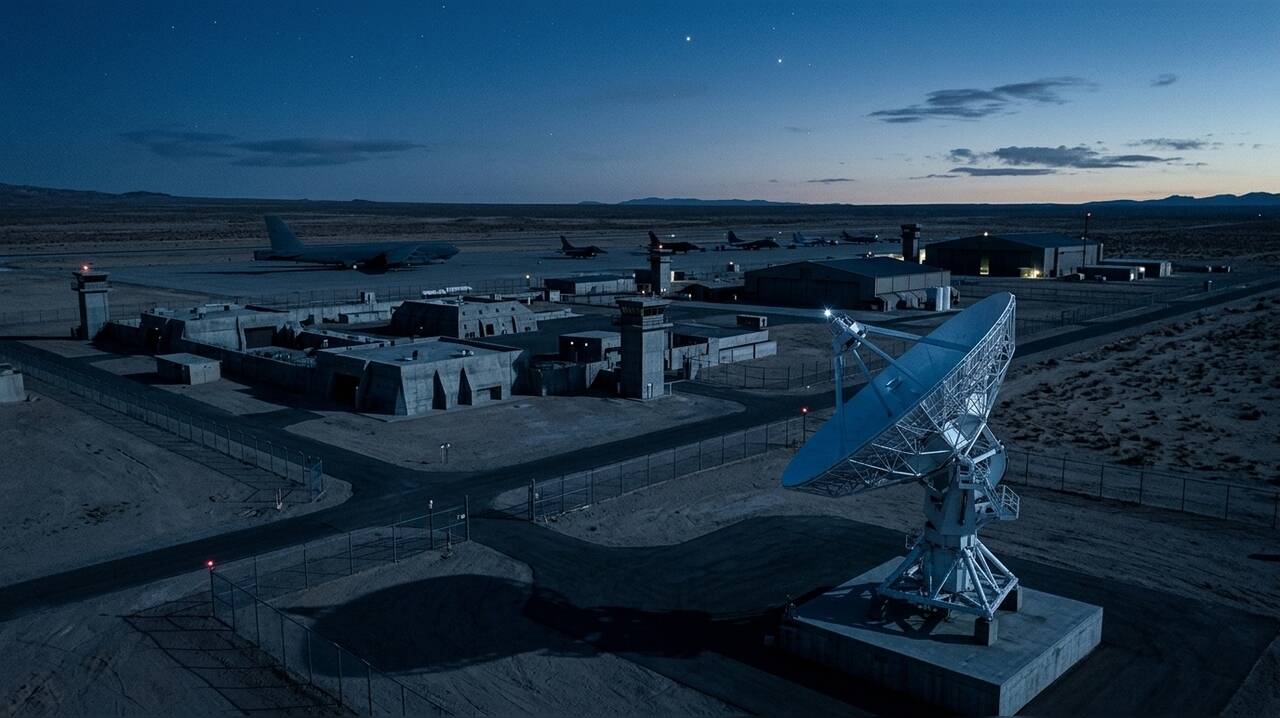
Intelligence assessments have reportedly linked high-quality satellite imagery provided by Chinese entities to a lethal ballistic missile strike carried out by Iran against a military installation in Jordan. The July 17 attack, which targeted the Muwaffaq Salti Air Base, resulted in the deaths of three American soldiers and left four others requiring medical evacuation.
The findings, detailed in a report by The Wall Street Journal, suggest that targeting data supplied by Chinese firms may have facilitated the operation. This development follows a period of persistent warnings from the
Diplomatic Friction and Official Responses
When confronted by US officials regarding the imagery connected to the July 17 assault, Chinese representatives reportedly requested concrete proof. Beijing has consistently rejected Washington’s concerns, maintaining that no Chinese companies are involved in providing illicit targeting assistance. A spokesperson for the Chinese Embassy in the United States asserted that any support provided to Tehran remains in strict compliance with international law, characterizing the allegations as an attempt to maliciously smear China by exploiting regional conflicts.
The incident at Muwaffaq Salti Air Base involved three separate missile strikes within a 24-hour window, marking the first American military fatalities since an April ceasefire. The attack underscored concerns regarding the vulnerability of fortified installations and the evolving precision of Iran’s military capabilities. In response to these developments, the US government previously imposed sanctions in May on three Chinese firms—Mizart Vision, Earth Eye, and Chang Guang—citing their role in supplying satellite imagery that allegedly threatens American and partner personnel.
Broader Intelligence and Strategic Concerns
Despite the gravity of the intelligence findings, senior US officials have reportedly sought to downplay the impact of Chinese assistance to preserve diplomatic momentum with Beijing. Secretary of State Marco Rubio, when questioned about the potential role of Chinese intelligence in the attack, declined to comment directly. Following a meeting with Chinese Foreign Minister Wang Yi, Rubio stated that no actions taken by China had altered the fundamental trajectory of the conflict.
Experts and former officials suggest that satellite imagery likely represents only one facet of Iran’s intelligence-gathering operations. According to US officials, the Iranian military frequently integrates such external data with information from domestic satellites, human intelligence networks, and assistance provided by Russia. There is growing apprehension within US security circles that both China and Russia may be providing high-resolution imagery or intelligence to help Iran track and monitor American naval assets operating throughout the Middle East.




