
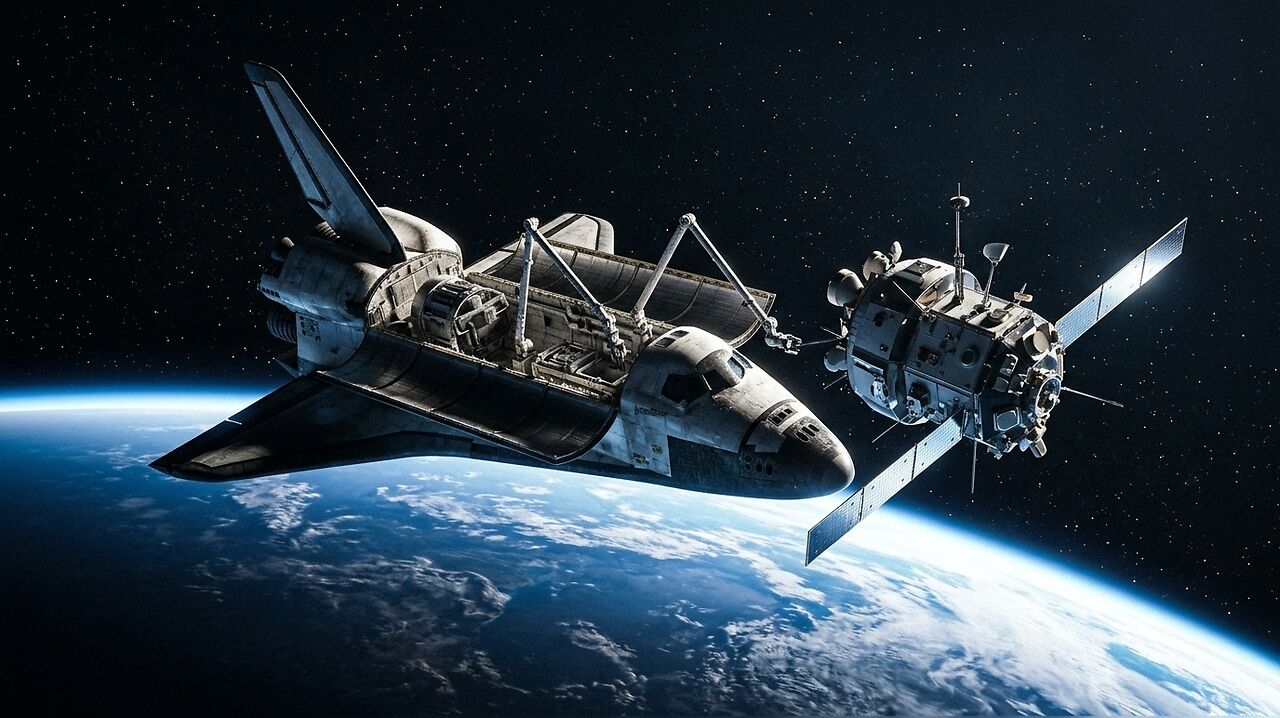
A recently released photograph from the US Defence Intelligence Agency has provided a rare, detailed look at China’s experimental
The Shenlong, or "divine dragon," is currently engaged in its fourth mission. Launched vertically via a Long March 2F rocket from the Jiuquan Satellite Launch Centre, the craft is designed to operate autonomously in space before returning to Earth for a runway landing. While Beijing has maintained a high level of secrecy regarding the vehicle’s specific design and mission objectives, independent satellite trackers have closely monitored its flight history. Since its inaugural mission in 2020, the program has seen progressively longer durations in orbit, with the most recent completed flight lasting approximately 268 days.
Comparing Capabilities and Operational History
The Shenlong is frequently compared to the American X-37B, a reusable space plane developed by Boeing for the
Despite these structural similarities, the two programs differ significantly in their operational records and transparency. The X-37B, which first flew in 2010, has completed seven missions and is currently on its eighth. It has demonstrated a broader operational range, including flights at altitudes exceeding 24,000 miles and complex maneuvers such as aerobraking to adjust orbits while conserving fuel. While the US military maintains that many of the X-37B’s objectives remain classified, it has provided more public information regarding the craft’s experiments, which have included studies on radiation and navigation systems.
Strategic Utility in Orbit
The development of reusable space planes by both nations represents a shift toward more flexible orbital platforms. Unlike traditional satellites, which remain in orbit until their operational life concludes, these space planes can carry experimental payloads, deploy smaller satellites, and return hardware to the ground for inspection. This capability allows for the testing of new technologies under actual space conditions.
A key area of interest for both programs is the ability to conduct close-proximity operations. Orbital tracking data, including analysis by astrophysicist Jonathan McDowell, has indicated that the Shenlong has performed maneuvers involving the release and recapture of smaller objects. Such capabilities are technically significant, as they could theoretically be used for satellite maintenance, refueling, or the removal of space debris. However, because neither nation has disclosed the full extent of their spacecraft’s capabilities, the precise nature of these interactions remains a subject of ongoing observation by the international space community.




