
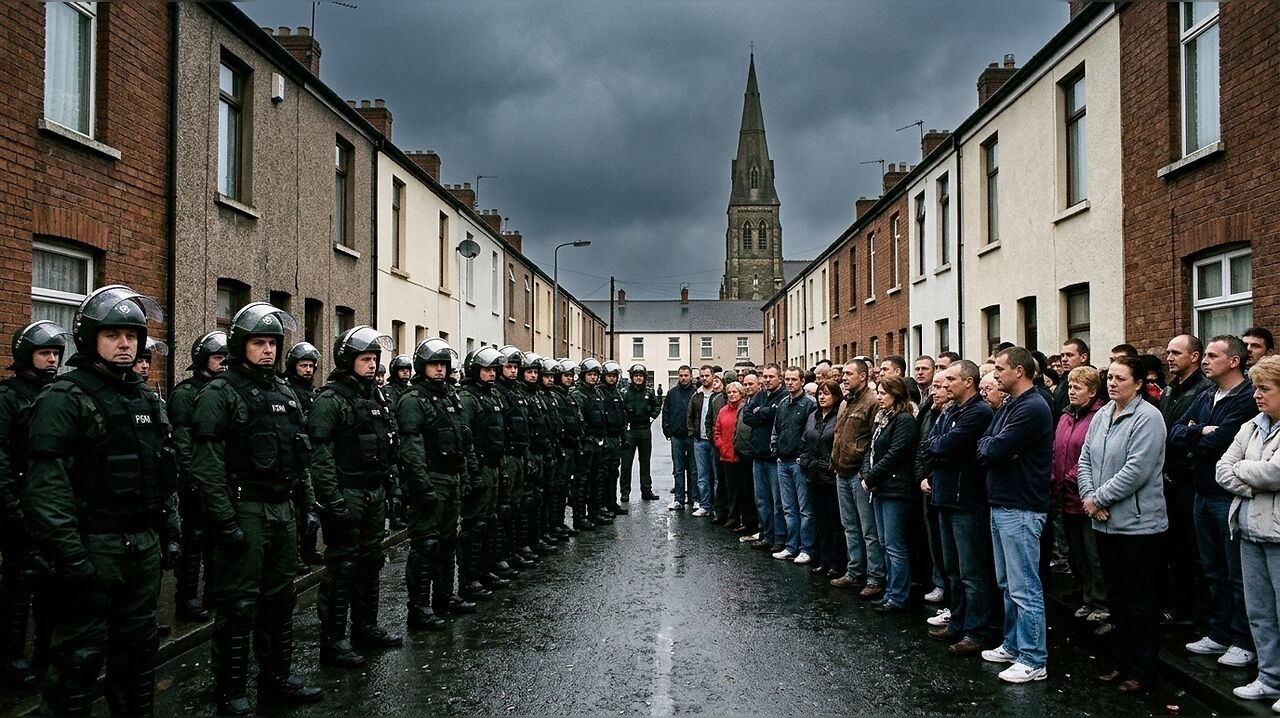
The British government has intervened to prohibit a controversial
The Parades Commission, an independent body tasked with regulating processions in the region, had initially granted permission for 35 members of the
Security Concerns and Official Response
Following the impasse, Police Service of Northern Ireland Chief Constable Jon Boutcher formally requested that the Secretary of State review the situation. Boutcher stated that all lawful and proportionate measures to facilitate the march had been exhausted. He warned that any attempt to force the procession through the area would pose an unacceptable risk of violence and could cause catastrophic, long-term damage to public confidence in the peace process.
In his statement, Chris Bryant emphasized that the circumstances surrounding the initial authorization had changed significantly, necessitating the ban in the interest of public safety. He urged all parties to cease protests and demonstrations, stating that there was no justification for further escalating tensions. The Garvaghy Road route has been a flashpoint for sectarian friction since 1997, when the parade was subsequently barred following a peace agreement that largely concluded three decades of conflict in Northern Ireland.
Political Reactions to the Decision
The government's intervention has drawn polarized responses from Northern Ireland's political leadership. Sinn Fein president Mary Lou McDonald and vice president Michelle O'Neill welcomed the decision, praising the residents of Garvaghy Road for their conduct. They noted that the community would feel a sense of relief, having endured two weeks of anxiety over the prospect of the march proceeding.
Conversely, the Democratic Unionist Party (DUP) leader, Gavin Robinson, criticized the move, arguing that it represented a failure of the rule of law. Robinson contended that the decision was a direct consequence of republican mobilization and threats of violence. He expressed concern that the outcome sends a message that policy decisions in Northern Ireland are being dictated by the threat of force rather than established legal processes. The Orange Order, a pro-British organization, has remained at the nearby Drumcree Church throughout the standoff, maintaining its position that the march should be allowed to conclude.




