
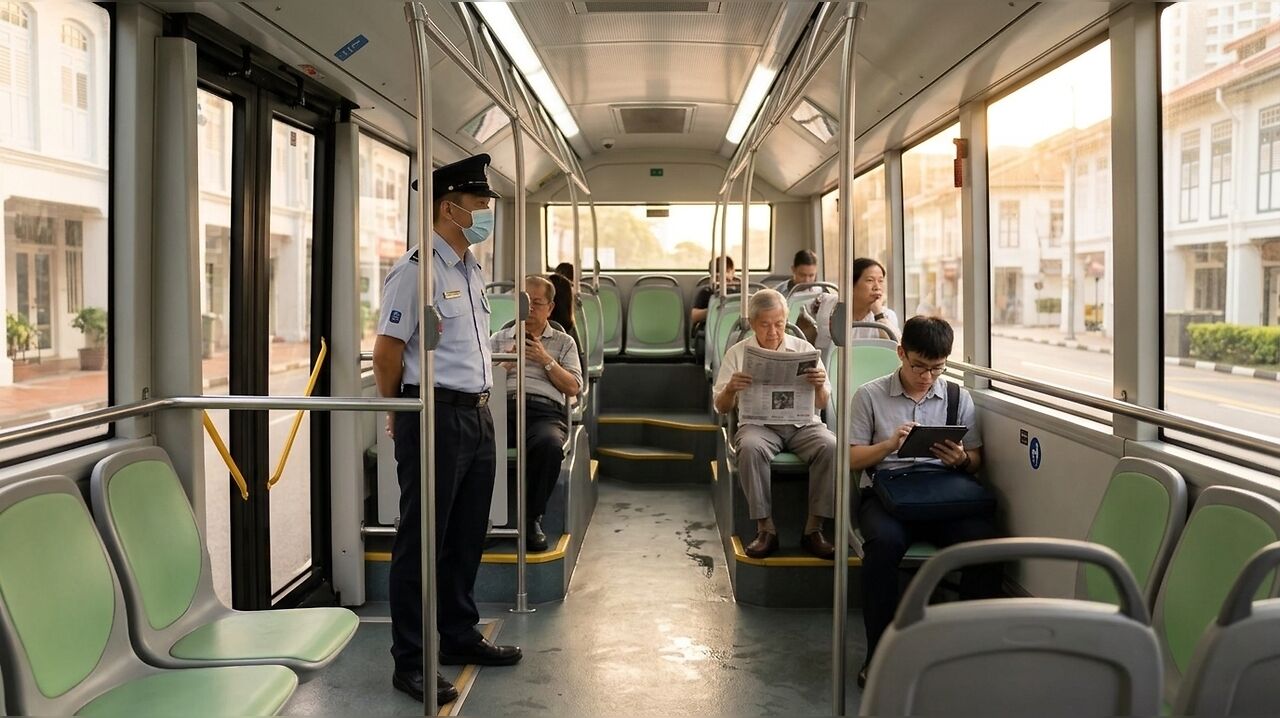
Singapore has introduced a new regulatory framework aimed at curbing disruptive behavior on its public bus network. Under the updated guidelines, passengers who engage in activities deemed a nuisance to others, such as playing loud music or videos, face immediate financial penalties. The move is part of a broader effort by the city-state to standardize conduct across its public transport infrastructure.
The
Enforcement and Escalating Penalties
The new enforcement strategy empowers authorized personnel, including ticket inspectors and bus interchange staff, to issue official notices to individuals suspected of violating these conduct rules. This transition marks a shift from previous practices, where such issues were largely managed through individual bus company policies that typically relied on drivers to request that disruptive passengers leave the vehicle.
For more severe infractions, the financial consequences are significantly higher. Individuals found causing obstructions or posing a danger to other commuters within bus terminals, or those responsible for the soiling of any part of a public bus or interchange facility, may face fines reaching up to 5,000 Singapore dollars. The LTA stated that these regulations are intended to foster a safer and more considerate atmosphere for all passengers, emphasizing that public transport is a shared space requiring collective responsibility.
Alignment with Existing Transit Standards
These updated bus regulations bring the road-based transit system into closer alignment with the rules already governing Singapore’s Mass Rapid Transit (MRT) network. The rail system has long maintained strict policies regarding passenger conduct, including prohibitions on eating and drinking. By extending these standards to the bus network, the LTA aims to create a consistent regulatory environment across all modes of public transit in the city.
Singapore’s initiative follows similar efforts in other global cities to address public transit etiquette. Earlier this year, authorities in Krakow, Poland, introduced fines for disruptive behavior, while a commuter in France was recently penalized for refusing to silence a loud phone call while in a train station. These international developments reflect a growing trend of municipal authorities using financial deterrents to manage noise and hygiene standards in shared public spaces.




