
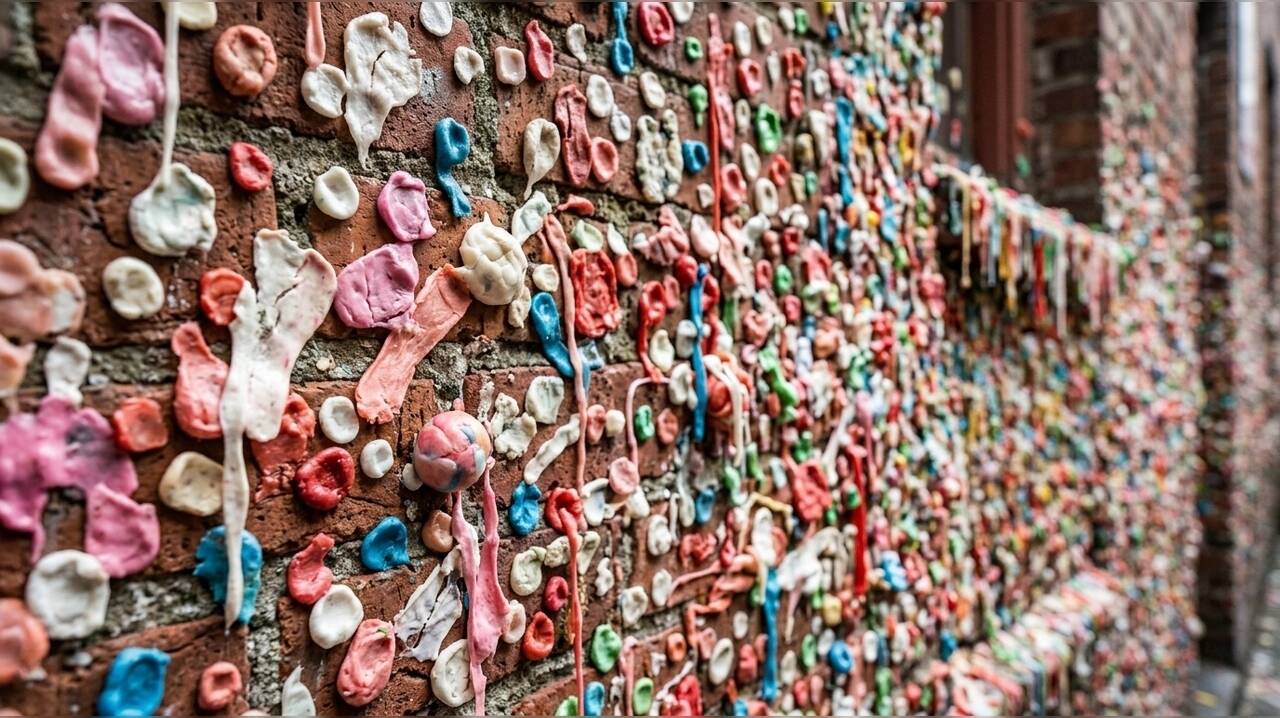
In the heart of Seattle, beneath the bustling corridors of
The phenomenon originated in the early 1990s, when patrons waiting in line for shows at the nearby Market Theater began pressing their chewed gum onto the alley walls. What began as a casual, impromptu habit among theatergoers quickly escalated. Despite initial efforts by theater staff to keep the area clean, the sheer volume of gum grew rapidly, eventually transforming the alley into a vibrant, multi-colored tapestry of shapes and initials that caught the attention of visitors from around the world.
A Massive Cleanup and the Return of a Tradition
By 2015, the accumulation had reached a scale that prompted intervention from the Pike Place Market Preservation and Development Authority. Officials grew concerned that the sugar and chemical components within the layers of gum were beginning to erode the historic brickwork of the market area. In November of that year, a specialized cleaning crew was deployed to address the buildup.
The operation was a significant undertaking, requiring 130 hours of labor and the use of high-temperature water, heated to approximately 280 degrees Fahrenheit, to strip the bricks bare. By the time the work concluded, crews had collected 94 buckets of material, totaling roughly 2,350 pounds of gum. The project successfully restored the original appearance of the wall, but the reprieve was short-lived.
The Persistence of an Urban Landmark
Almost immediately after the cleaning was completed, the tradition resumed. Within days, visitors began adding fresh pieces of gum to the exposed bricks. The site’s cultural resilience was further highlighted shortly after the cleanup when a flash mob gathered at the alley to form a peace symbol out of gum in response to the terrorist attacks in Paris. While that specific display was eventually cleared, the broader practice of adding to the wall continued unabated.
Today, the Gum Wall stands as a testament to the power of collective, unplanned urban behavior. It remains a fixture of the local landscape, situated near popular bars and restaurants, and continues to draw crowds who come to witness the bizarre, evolving installation. The site serves as a reminder that some of the most enduring landmarks in a city are not the result of formal planning, but rather the accumulation of small, repeated actions by the public.




