
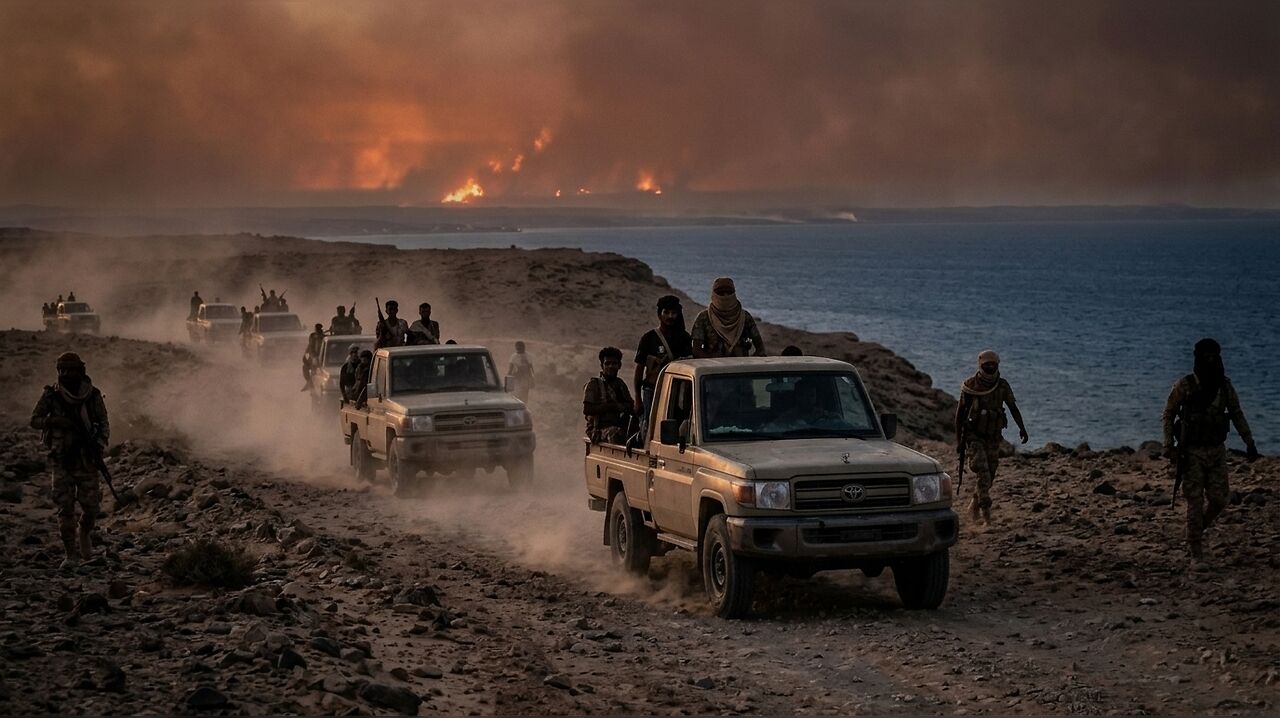
Forces backed by the
Yemeni officials confirmed that government-aligned troops have recaptured the town of Dhubab, situated just north of the strait, alongside the towns of Bab and Hadeid. The push is part of a broader campaign, dubbed “Yemen Dawn,” which the head of the Presidential Leadership Council, Rashad al-Alimi, stated is intended to restore state institutions and liberate the rebel-held capital, Sanaa.
Escalation of Regional Hostilities
The government offensive follows a period of rapid territorial gains by
The Saudi-led coalition, represented by spokesman Maj. Gen. Turki al-Malki, reported that 100 fighter jets are providing air support for the government ground forces. Al-Malki stated that the coalition has secured air protection over the Bab el-Mandeb Strait and successfully targeted hundreds of Houthi positions. Meanwhile, the foreign and defence ministers of Turkey and Pakistan have reached an agreement with Saudi Arabia to deploy military forces to the kingdom under an existing defence pact, though specific details regarding troop numbers or deployment timelines remain undisclosed.
International Involvement and Humanitarian Impact
United States Secretary of State Marco Rubio addressed the conflict, noting that Saudi Arabia maintains a right to self-defence following the recent attacks. While the US has previously distanced itself from the coalition, officials speaking on condition of anonymity indicated that the US is currently providing intelligence sharing, target identification, and planning support for the ongoing offensive. The US Embassy in Riyadh has issued a security warning to American citizens, advising vigilance regarding potential aerial threats.
The resurgence of violence has exacerbated an already dire humanitarian situation in Yemen. According to the World Health Organization, the latest escalation has resulted in at least 959 deaths and over 4,200 injuries. Displacement figures from the UN migration agency indicate that approximately 174,000 people have been forced from their homes within Yemen, with thousands more fleeing across the sea to Djibouti. Local health authorities have reported that medical facilities across Taiz province are either closed or operating at severely reduced capacity, further straining the country’s infrastructure after years of civil war.




