
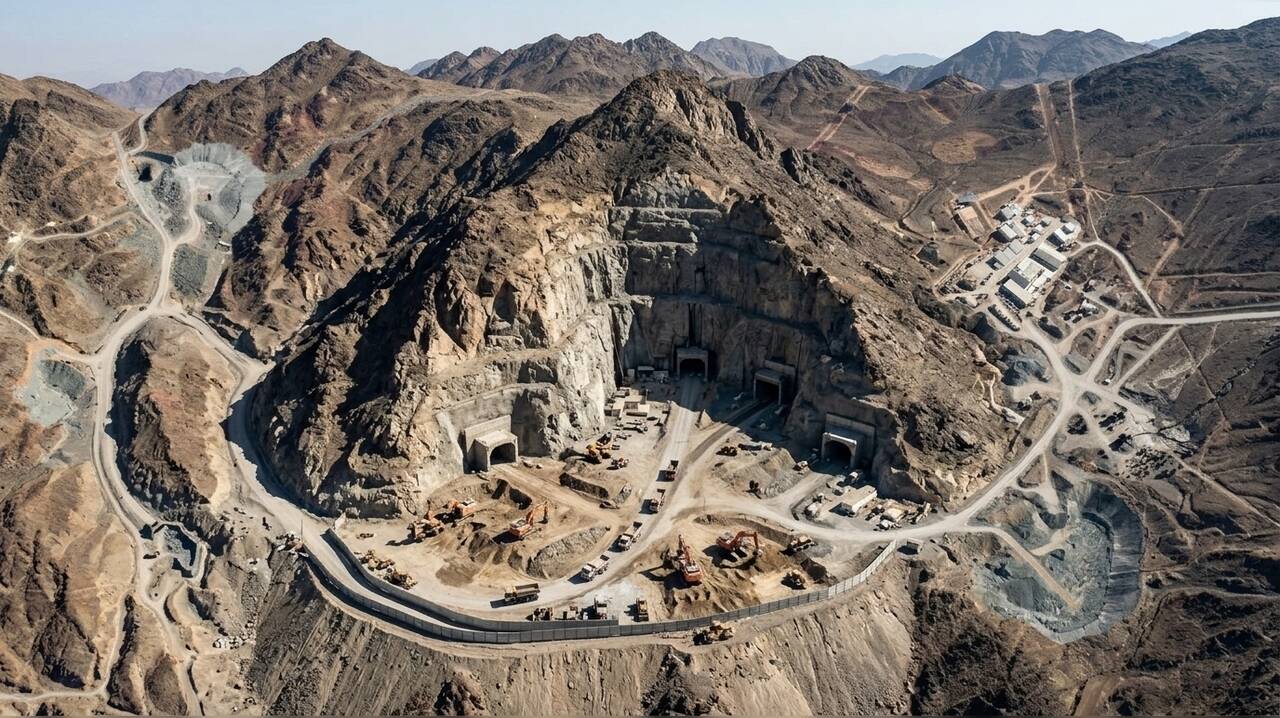
New satellite imagery analysis has identified a significant increase in construction activity at a suspected Iranian nuclear facility located within
Researchers at the Washington-based Centre for Strategic and International Studies (CSIS) examined satellite data collected over a six-year period, with the most recent images dated August 9. Their findings indicate that 2026 has seen the most intensive development in the site's history, characterized by the establishment of a new security perimeter and the hardening of portal access points.
Evidence of Site Expansion
The CSIS report describes a three-phase progression at the site, which is buried deep beneath granite. Analysts observed that the facility has transitioned from initial excavation work to what appears to be internal construction and exterior reinforcement. Recent activity includes the paving of internal road networks and the removal of excavation spoil, suggesting a concerted effort to prepare the site for specialized operations.
While the report documents these physical changes, the analysts noted they could neither confirm nor disprove claims attributed to Israeli intelligence that uranium centrifuges and related components were transferred to the facility last autumn. The site, known locally as Kuh-e Kolang Gaz La, remains a focal point for international concern due to its deep-underground design, which experts suggest would be difficult to compromise even with advanced non-nuclear munitions such as the GBU-57 Massive Ordnance Penetrator.
International Scrutiny and Official Responses
The purpose of the Pickaxe Mountain complex remains a point of diplomatic contention. Iranian President Masoud Pezeshkian stated in September that satellite imagery alone is insufficient to determine the nature of the work being conducted there, suggesting that the International Atomic Energy Agency (IAEA) should conduct on-site inspections. However, no such access has been facilitated by Tehran to date.
The CSIS report suggests several possibilities for the site's function, including the potential construction of a centrifuge assembly facility—a project previously referenced by former Iranian nuclear program officials in 2020. Alternatively, analysts noted the site could be intended for uranium enrichment or to house research activities, such as metallurgy and chemical conversion, that were previously located at facilities struck during military operations in June 2025.
The heightened activity at the mountain comes amid renewed public warnings from the United States. President Donald Trump recently indicated that the U.S. is monitoring movements at the site, stating that the facility remains a potential target for military action. Meanwhile, the IAEA continues to request information and access to the complex, though officials report that Iran has not responded to these inquiries.




