
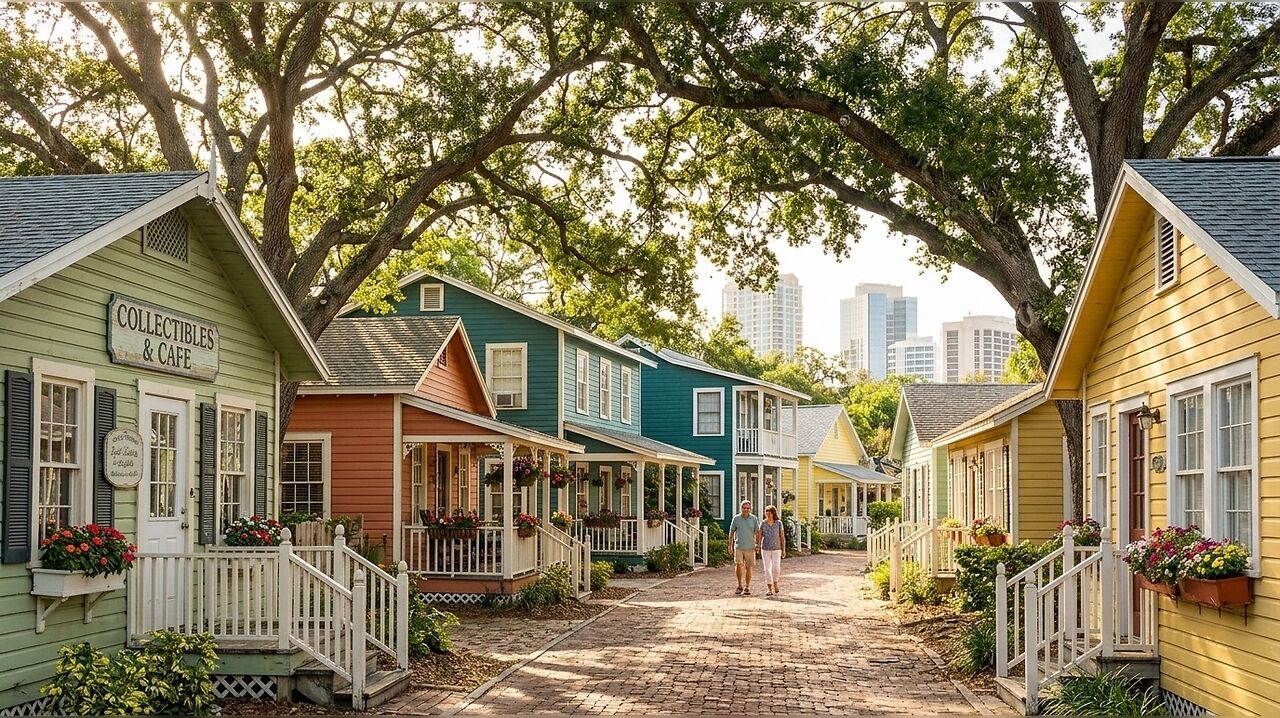
A collection of vibrant, historic cottages in downtown
The property had been under contract with the Tennessee-based Bristol Development Group, which proposed replacing the bungalows with a 324-unit apartment complex titled 1899 Fruitville. The project, which had received unanimous approval for zoning adjustments from the city’s Planning Board in August, would have included a five-story residential building, structured parking, and various amenities. However, in an early October email to tenants, the Lancasters confirmed that the purchase agreement was no longer in effect and that they had taken the property off the market entirely.
A reprieve for local business owners
The cancellation of the sale brings an end to months of uncertainty for the business owners operating within the village. For many, the prospect of displacement had been a source of significant stress, forcing them to weigh the costs of relocating against the potential loss of their established customer base. Tenants such as Laetitia Kepecz of FAM Cuisine had expressed concerns that finding comparable, affordable space within the downtown core would be financially prohibitive.
Some business owners had already begun taking proactive measures to secure their futures. Wendy Lee Goldberg, owner of The Breakfast House, had purchased a nearby property with the intention of potentially relocating her business and exploring the possibility of moving several of the cottages to a new site to preserve the village’s unique community atmosphere. With the Lancasters now confirming their intent to continue managing the property, these immediate relocation plans have been put on hold.
Confidentiality and future development
In their communication to tenants, the Lancasters explained that their silence during the months-long development review process was due to a strict nondisclosure agreement required by the buyer. They stated that the lack of transparency was not intended to cause distress but was a contractual obligation. Philip DiMaria, representing the development project, confirmed the deal’s collapse and expressed hope that the public benefits proposed in the original plan—such as the preservation of grand oak trees and the creation of public green space—might be considered in any future development proposals for the site.
While the immediate threat of demolition has been removed, real estate observers suggest that the site’s prime location and zoning status may continue to attract interest from developers. For the time being, however, the Lancasters have committed to maintaining the property, providing a sense of stability for the small businesses that define this corner of downtown Sarasota. The situation highlights the ongoing tension in rapidly growing urban areas between the demand for increased housing density and the desire to protect the character and continuity of established, locally owned commercial hubs.




