
A landmark collection of short stories that captured the essence of early 20th-century Midwestern life is returning to bookshelves a century after its debut.
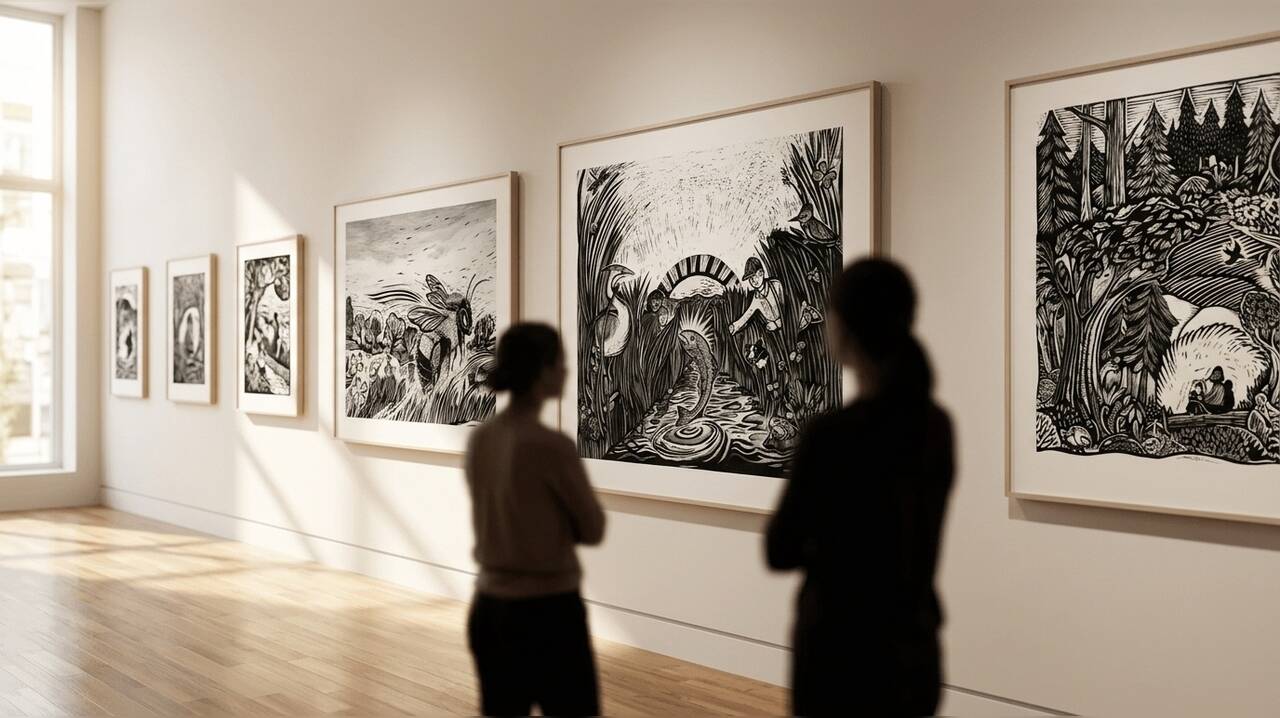
The new edition features an introduction by editors Julie Husband and Jim O’Loughlin, alongside a series of 14 scratchboard illustrations created by Iowa artist Claudia McGehee. To celebrate the release, the Hearst Center for the Arts in Cedar Falls is hosting an exhibition of McGehee’s original artwork. The display, which highlights the visual interpretation of Suckow’s narratives, is scheduled to run from September 10 through December 6.
A Literary Legacy Rooted in Rural Life
Before achieving national acclaim as an author, Suckow led a life far removed from the literary circles of the era. Based in Earlville, Iowa, she spent six years managing the Orchard Apiary. This period of her life, documented in a 1930 profile by Time, provided her with a unique vantage point from which to observe the local population. Her fiction, including the 14 stories featured in Iowa Interiors, drew heavily from these observations, focusing on the lives of farmers, ministers, renters, and small-town residents.
The collection, which includes notable titles such as A Start in Life and Uprooted, was originally published by Alfred A. Knopf. It followed the success of her earlier novels, Country People and The Odyssey of a Nice Girl, and served to solidify her reputation as a chronicler of the social and economic pressures facing Iowans during that period. The Ruth Suckow Memorial Association has noted that while many of the stories have been made available online in recent years, the physical book itself had become a rarity.
Revisiting the Human Experience
The editors of the centennial edition argue that the significance of the work extends beyond its value as a historical document. While the agricultural landscape of Iowa has shifted dramatically since the 1920s, the themes explored in the collection—such as the pursuit of independence, the challenges of maintaining family stability, and the navigation of changing community dynamics—remain relevant to contemporary audiences.
By reissuing the collection, the project organizers hope to reintroduce a new generation of readers to Suckow’s perspective on the ordinary lives that shaped the state’s history. The initiative serves as both a preservation of regional literary tradition and an effort to ensure that Suckow’s portrayals of the human experience continue to be accessible to a modern public.




