
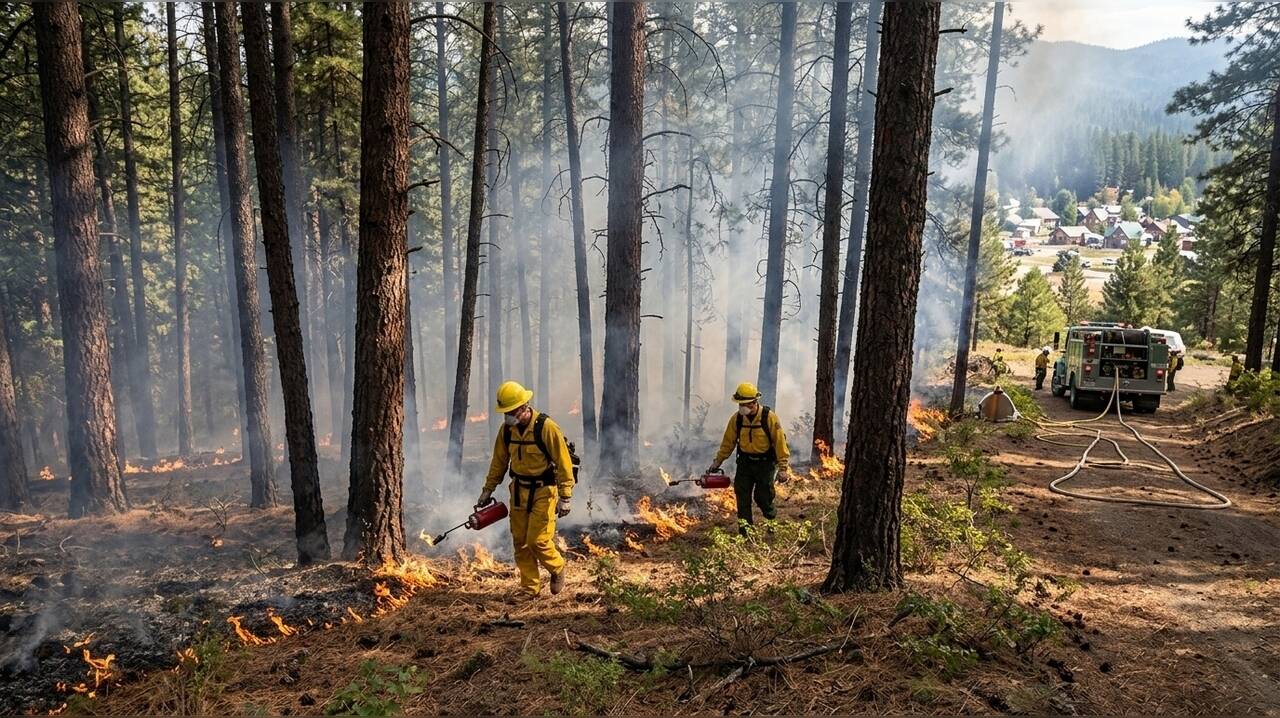
In the forests surrounding Roslyn, Washington, teams of specialists are systematically setting fire to the landscape. Using canisters filled with a mixture of diesel and gasoline, these crews move in parallel lines, igniting grasses and shrubs to clear the forest floor. This deliberate process, known as a prescribed burn, is part of a growing effort to manage
The initiative follows a harrowing experience in 2017, when the Jolly Mountain Fire threatened the town. During that event, local officials were warned that if the fire reached the surrounding woods, large sections of the community would be considered indefensible. This near-miss prompted a shift in strategy for the town of 950 residents, which now ranks in the 99th percentile for wildfire risk nationwide.
A New Model for Forest Management
For decades, land management policies focused on the total suppression of fire, a practice that allowed brush, dead branches, and dense tree growth to accumulate. Experts note that this long-term exclusion of fire, combined with climate-driven drought, has left many forests primed for intense infernos. By reintroducing controlled fire, the community of Roslyn aims to restore the forest to a healthier state while simultaneously reducing the fuel available to future wildfires.
Since 2017, local leaders have overseen the burning of more than 500 acres of forest. This effort is complemented by mechanical thinning, where logging equipment is used to remove excess vegetation. Together, these measures create a protective buffer—a semicircle of treated land designed to deprive potential wildfires of the fuel they need to spread. According to Greg Dillon of the U.S. Forest Service’s Fire Modelling Institute, this work highlights the critical role private landowners can play in bridging the gap between public forest land and residential areas.
The Complexity of Controlled Burning
Executing these burns requires significant interagency coordination. A recent project covering just 55 acres involved 30 personnel from multiple fire districts, the Washington Department of Natural Resources, and The Nature Conservancy. The process is labor-intensive, requiring the creation of boundary lines, the staging of water tenders and fire engines, and extensive safety briefings. Even with meticulous planning, operations can be cancelled on short notice due to shifting weather conditions or strict air quality regulations.
While prescribed burning is a vital tool for forest health, it also presents challenges regarding smoke management. Organizers must balance the necessity of the burns with the health concerns of local residents, often conducting outreach programs to address issues such as visibility on highways or the needs of vulnerable individuals. Despite these hurdles, proponents argue that the practice is essential, noting that Washington state currently completes only a fraction of the annual acreage required to maintain forest health and mitigate the risk of uncontrollable, catastrophic wildfires.




