
The remains of a young
The discovery provides a poignant link to the American Civil War, specifically the intense fighting that occurred in August 1862. Alongside the soldier’s nearly complete remains, researchers recovered four surgically amputated limbs, offering a rare and stark look at the medical realities faced by troops at a nearby field hospital during the conflict.
Archaeological insights into a forgotten burial
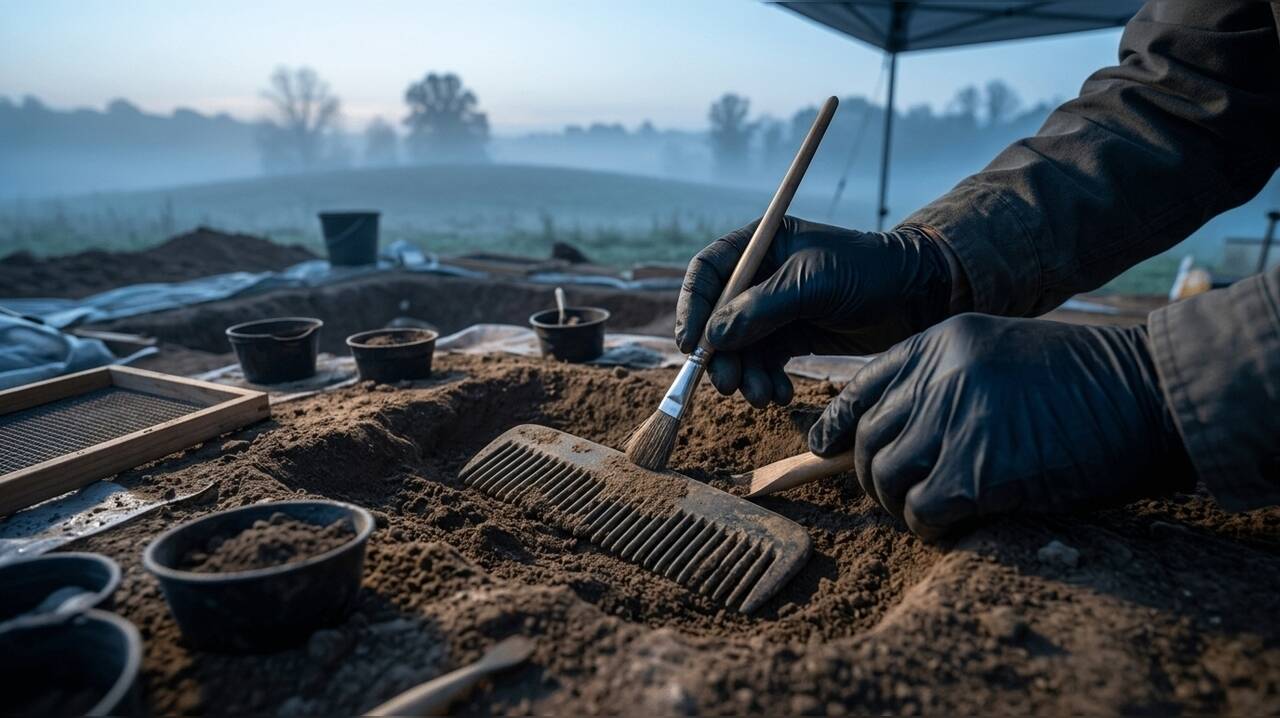
The site of the discovery is historically significant, as it is associated with a field hospital that operated during the Second Battle of Manassas, also referred to as the Second Battle of Bull Run. The area has long been a focus for researchers seeking to understand the human cost of the engagement, which resulted in thousands of casualties. Among the few personal items recovered with the soldier was a historic rubber pocket comb, a small artifact that remains one of the few clues to his identity, which is currently unknown.
The excavation is part of a broader, ongoing effort to document and preserve the history of the battlefield. This latest find follows a 2014 project in the same vicinity, where utility work led to the discovery of a surgeon’s burial pit containing the remains of two other Union soldiers and 11 amputated limbs. Forensic analysis conducted by the Smithsonian Institution and other experts has consistently helped confirm the identities of these remains as belonging to the Union Army, utilizing a combination of skeletal evidence, chemical analysis, and recovered artifacts.
A final resting place at Arlington
The process of recovering and documenting these remains is governed by the National Historic Preservation Act, which ensures that archaeological resources are handled with appropriate care and academic rigor. Following the completion of the necessary studies, the National Park Service announced on August 13, 2026, that the soldier’s remains would be transferred to the Office of Army Cemeteries.
The upcoming interment at Arlington National Cemetery marks the end of a long journey for the unidentified soldier, moving from an unmarked battlefield grave to a permanent, honored resting place. While his name may remain lost to history, the archaeological evidence has preserved a fragment of his story, highlighting the experiences of the young men who served in one of the most significant battles of the Civil War. This transition to Arlington serves as a formal conclusion to the archaeological study, ensuring that the soldier is afforded the respect and recognition typically reserved for those who served in the nation's military.




