
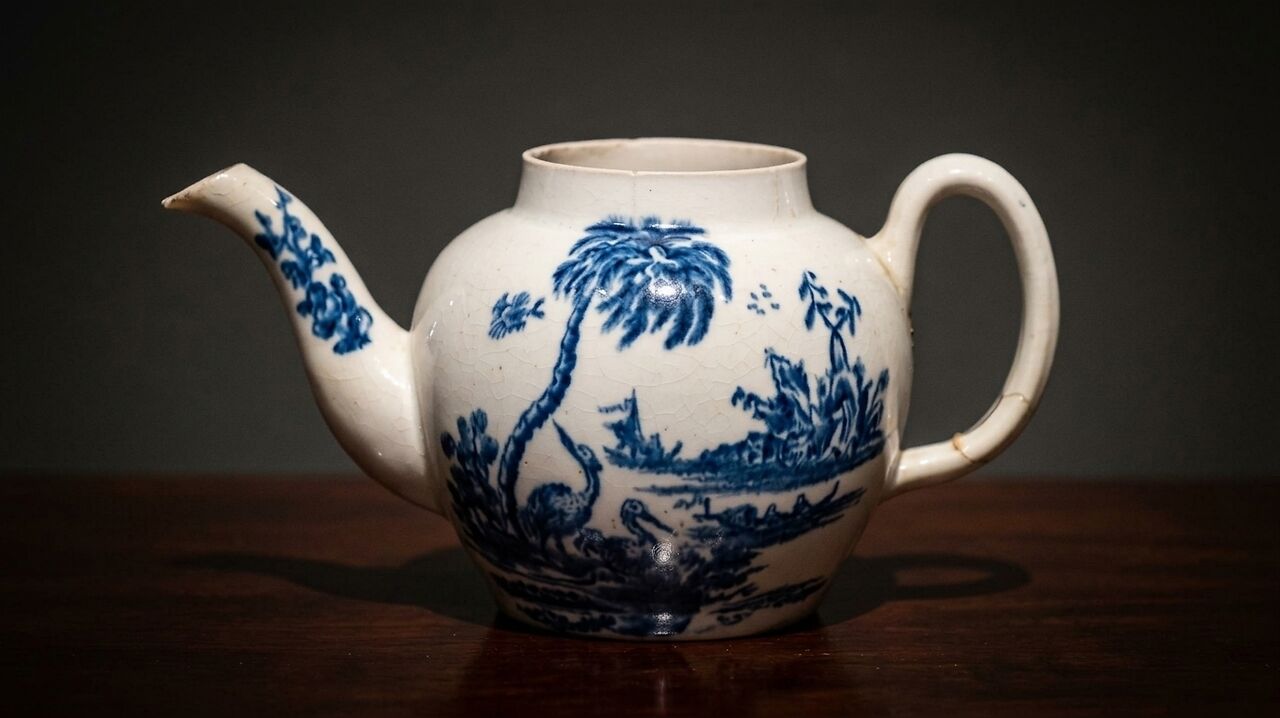
A private collector in the United Kingdom has seen a modest £15 investment transform into a significant historical discovery after a broken, lidless teapot he purchased at a 2016
The collector, an enthusiast from south-west England, acquired the item at a general auction in the Midlands. At the time of the sale, the teapot was believed to be a product of the Isleworth pottery factory in Middlesex, dating from the late 18th century. However, the buyer remained skeptical of this attribution and sought a professional appraisal from Clare Dunham, an expert at the Salisbury-based auction house Woolley and Wallis.
A Rare Piece of Colonial History
Upon examination, the distinctive blue and white decorative motifs—specifically a palm tree design—led experts to reclassify the piece as the work of
The teapot, which measures approximately 9cm in height and 17.5cm in width, features underglaze blue illustrations, including a landscape with a bridge and a scene depicting figures in a sampan. Despite its missing lid and a repaired handle, the object’s historical value far exceeded initial expectations. While the auction house had estimated a sale price between £10,000 and £20,000, competitive bidding drove the final hammer price to £460,000, reaching a total of £575,000 once fees and premiums were included.
The Legacy of John Bartlam’s Pottery
The Metropolitan Museum of Art, which acquired the piece through London dealer Rod Jellicoe, dates the teapot to between 1765 and 1769. Archaeological research conducted in the 1990s at a site in Cain Hoy, South Carolina, provided evidence of Bartlam’s factory, which sought to produce porcelain locally to compete with luxury imports from England. Historical records indicate that the prominent English potter Josiah Wedgwood was aware of this colonial competition, noting in a 1767 letter the existence of a “Pottwork in Charles Town” utilizing local Cherokee clay.
The teapot is now on public display at The Met Fifth Avenue in Gallery 723. For the original collector, the outcome was both a personal success and a professional milestone. Reflecting on his three decades of studying ceramics, he expressed satisfaction that the object would be preserved in a major museum, stating that he was pleased the teapot was “going home to America where it will be on public display for generations to come.”




