
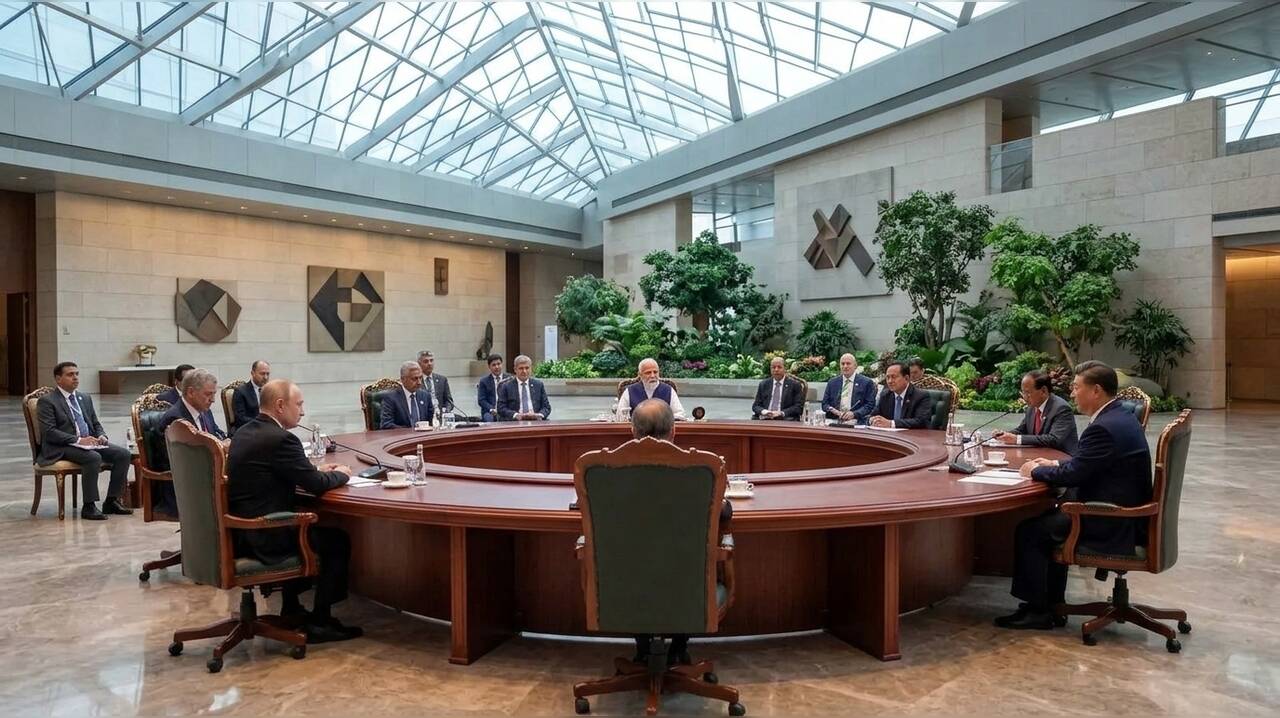
Prime Minister
With Chinese President Xi Jinping and other heads of state in attendance, the Prime Minister highlighted how interconnected global challenges—ranging from supply chain disruptions to climate disasters—have demonstrated that regional crises can no longer be contained. While he did not name specific nations, his remarks arrived against a backdrop of global energy supply instability linked to the ongoing conflict between the United States and Iran, which has significantly impacted shipping through the Strait of Hormuz.
Focus on Resilience and Health Security
During his address, Prime Minister Modi underscored the necessity for the BRICS bloc to prioritize resilience and proactive crisis management. He pointed to the lessons learned from the COVID-19 pandemic, which originated in Wuhan, China, and subsequently caused widespread loss of life across the globe. To mitigate future health threats, the Prime Minister announced that the grouping has reached a consensus on establishing a BRICS Integrated Early Warning System designed to prevent and respond to infectious diseases. He confirmed that the guidelines for this data integration system are now finalized.
The summit, held at the Bharat Mandapam in New Delhi, saw participation from several key international figures, including Russian President Vladimir Putin, Iranian President Masoud Pezeshkian, Malaysian Prime Minister Anwar Ibrahim, and Indonesian President Prabowo Subianto. Prime Minister Modi noted that under India’s presidency, the bloc has centered its efforts on four core pillars: resilience, innovation, cooperation, and sustainability.
Diplomatic Stance on Global Trade and Conflict
The summit’s broader agenda has been defined by the
Economic policy also featured prominently in the discussions. The BRICS nations expressed opposition to unilateral economic sanctions and raised alarms over the rise of protectionist trade policies. The declaration warned that arbitrary tariff increases and trade barriers—often framed under environmental or green labels—are actively disrupting global supply chains and placing undue strain on emerging economies. As the summit continues, Prime Minister Modi is slated to conduct a series of bilateral meetings with leaders from South Africa, Kazakhstan, the Philippines, Egypt, Burundi, Uganda, and Nigeria.




