
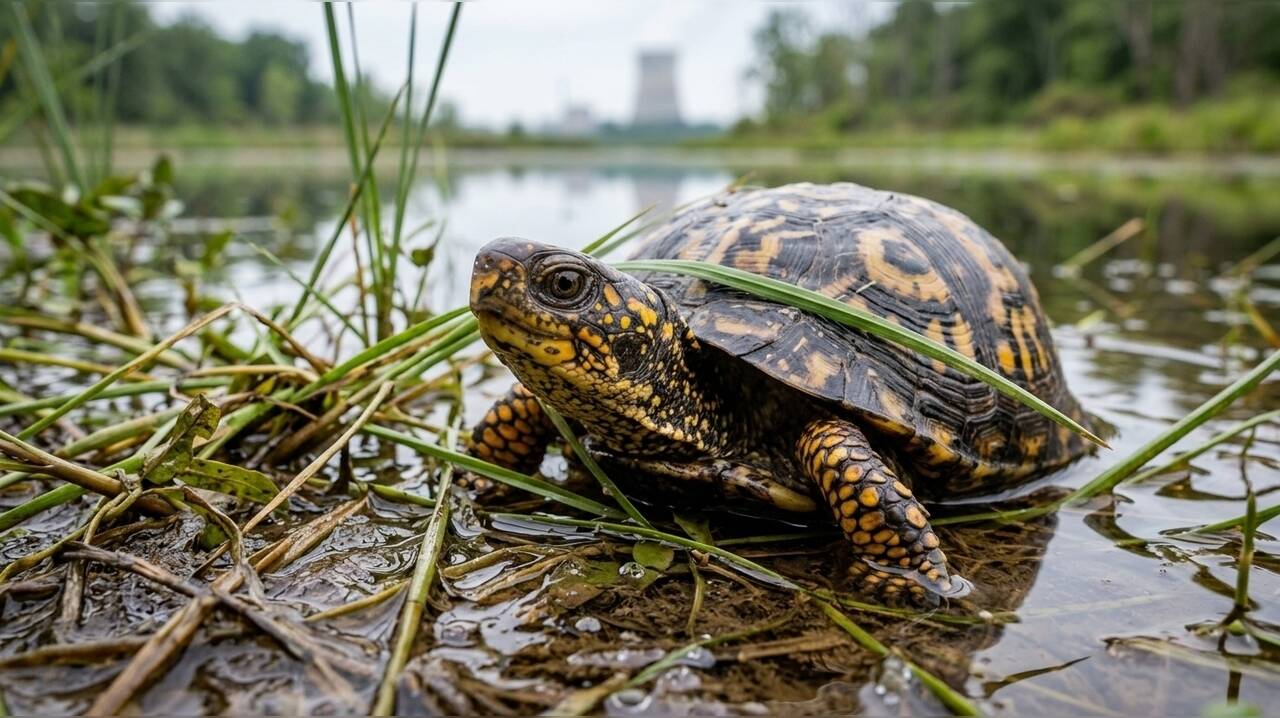
In the vicinity of the
In July 2025, the Nuclear Regulatory Commission granted a 20-year extension for the operation of the Perry facility, allowing it to function until November 7, 2046. While the land surrounding the plant was initially designated for industrial use, it has inadvertently become a sanctuary for wildlife, including the slow-growing spotted turtles. The plant, a 1,268 megawatt boiling-water reactor situated about 40 miles northeast of Cleveland, is surrounded by over 850 acres of preserved forest and marshland, recognized as an
A Sanctuary for Wildlife
The regulations governing nuclear sites necessitate an exclusion zone where the plant can manage activities, but they do not mandate that every wooded area remains untouched. At Perry, a combination of limited development and a commitment to conservation has transformed the site into a refuge for various species. Surveys have documented the presence of herons, kingfishers, and even a rare crane fly orchid, showcasing the ecological benefits of preserving this land.
Spotted turtles, which typically measure between 3.4 to 4.5 inches in length, thrive in shallow waters rich in vegetation. Their reproductive cycle is slow, with females laying only two to eight eggs and reaching maturity between 7 to 14 years. This makes each adult turtle crucial for the survival of the species, which is classified as threatened in Ohio. Although the U.S. Fish and Wildlife Service determined in September 2025 that federal protection under the
The Impact of Wetland Loss
According to the U.S. Geological Survey, Ohio's wetlands have plummeted from approximately 5 million acres to around 483,000 acres over the past two centuries, primarily due to agricultural conversion. This loss has not only affected the turtles but has also disrupted a complex network of ecosystems that provide essential services, such as floodwater storage and wildlife habitats. The remaining wetlands are often fragmented by roads and development, making it increasingly difficult for species like the spotted turtle to thrive.
While the Perry Nuclear Power Plant may not serve as a long-term solution to the challenges facing Ohio's wetlands, it exemplifies the potential for human infrastructure to coexist with nature. By allowing certain areas to remain undisturbed, the site offers a critical buffer for wildlife, demonstrating the importance of conservation in urban settings.




