
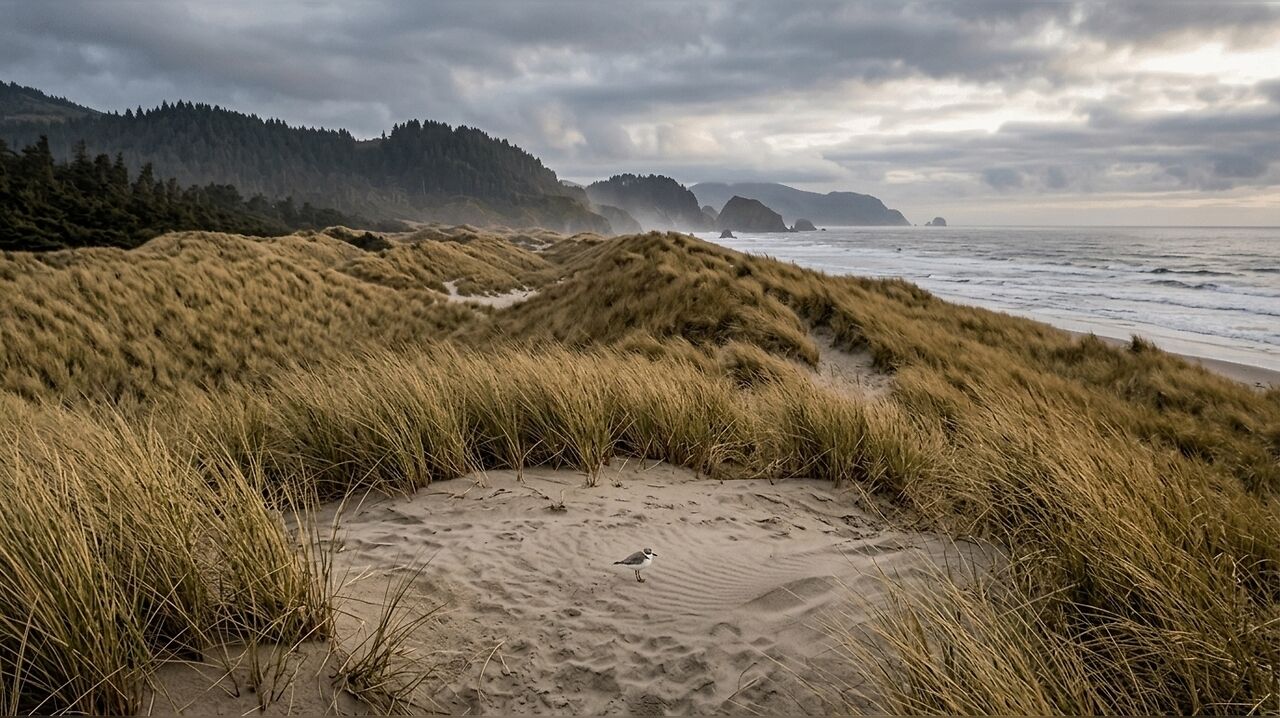
In the early 20th century, the shifting sands of the
Research published in the journal Ecology in 2012 by Zarnetske and colleagues indicates that the introduction of non-native beachgrasses caused the Pacific Northwest coast to transition from a landscape of open, mobile dunes to one dominated by dense, continuous grassy ridges. This shift has had profound implications for the local environment, replacing sparse native vegetation with thick, invasive plant cover that has reshaped the very structure of the dunes.
The Ecological Impact of Invasive Grasses
The transformation of the coastline was driven by two specific non-native species: European beachgrass and, subsequently, American beachgrass. According to a 2013 study in Global Change Biology, the American variety, which originated from the Atlantic coast and the Great Lakes region, has been gradually displacing the European species while expanding its range further south along the Oregon coast. The study notes that dunes now account for approximately 45 percent of the coastline in this area, a direct result of the deep root systems and sand-trapping capabilities of these introduced plants.
This environmental shift has had unintended consequences for native wildlife, most notably the
Balancing Coastal Protection and Habitat Restoration
The introduction of these grasses has also complicated modern efforts to manage coastal flood risks. Researchers utilizing predictive models have examined how the presence of American beachgrass—which tends to build lower dunes than its European counterpart—interacts with rising sea levels and increased storm intensity. Their findings suggest that the prevalence of American beachgrass has tripled the number of areas vulnerable to wave overtopping, where water breaches the dune line during severe weather events.
These findings present a difficult dilemma for land managers. While removing invasive beachgrass is essential for the recovery of threatened species like the Western snowy plover, the protective function of the dunes remains critical in the face of climate change. The historical trajectory of Oregon’s coastline serves as a case study in the long-term, often unforeseen costs of species introduction. What began as a localized solution to protect property has evolved into a complex, ongoing challenge of managing a landscape that has been permanently altered by human intervention.




