
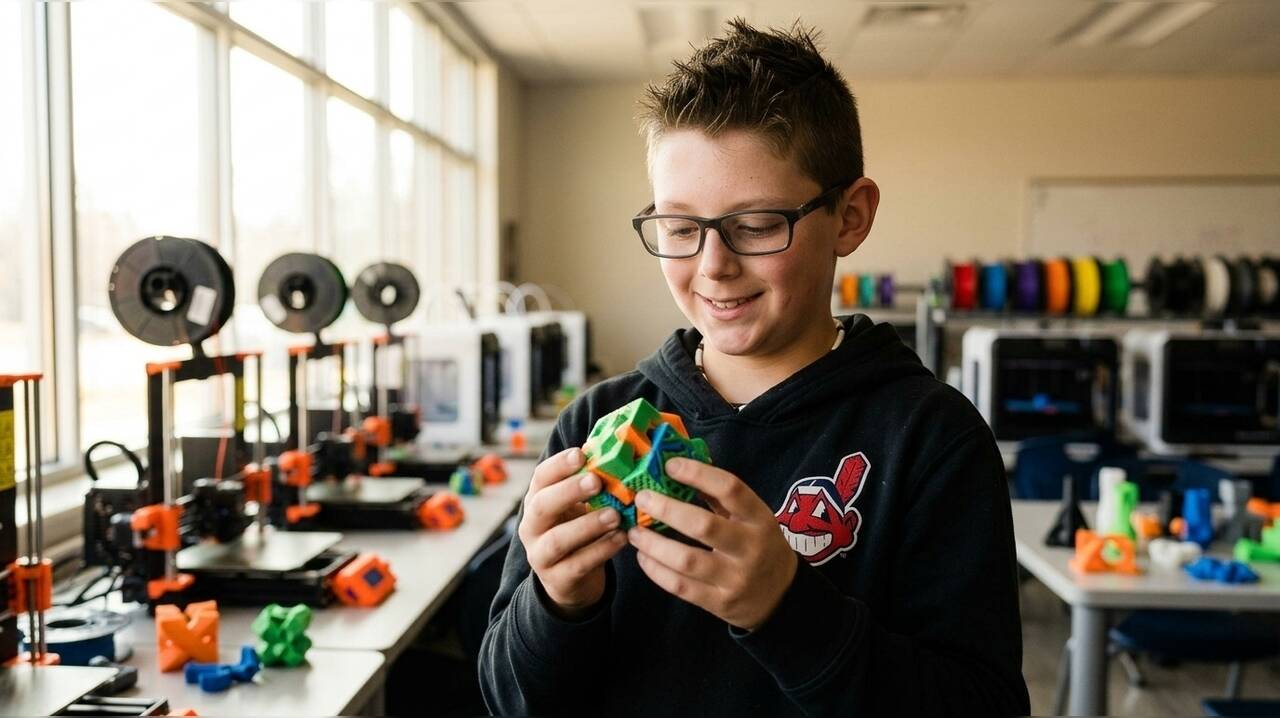
A 13-year-old student in Ohio has transformed a standard classroom technology assignment into a charitable venture, utilizing school 3D printing equipment to produce and sell custom fidget toys.
The initiative began within the school’s engineering lab, a space typically reserved for basic digital design and prototyping. Recognizing the widespread popularity of fidget toys among his peers as tools for concentration and stress management, Barrett identified an opportunity to create a personalized alternative to mass-produced items. By leveraging the school's 3D printing resources, he developed a series of custom designs that he refined based on feedback from classmates.
From Classroom Prototyping to Community Impact
The development process required significant technical effort, as Barrett had to master design software and troubleshoot common manufacturing challenges, such as mechanical failures and material inconsistencies. Each printed item underwent a manual finishing process to ensure quality and durability. As the project gained momentum, the classroom lab became a hub for his micro-business, with the student managing production schedules alongside his regular academic responsibilities.
The motivation behind the project is rooted in Barrett’s personal connection to epilepsy, a neurological condition characterized by recurrent seizures. By choosing to donate the entirety of his profits, he aimed to address the lack of public understanding surrounding the disorder and the social challenges often faced by those living with it. Each sale served as an opportunity to engage his peers in discussions about the condition, effectively turning a small-scale commercial effort into an educational platform.
Collaborative Success and Future Potential
The project’s success was bolstered by the support of the school environment, which provided the necessary access to equipment and the flexibility for Barrett to pursue his entrepreneurial goals. His teachers facilitated the use of the lab, while his family assisted in the financial management and the eventual donation of funds to relevant non-profit organizations. This collaborative approach allowed the student to navigate the complexities of running a purpose-led operation while still in middle school.
While Barrett’s future endeavors remain open, the project has demonstrated the potential for students to apply classroom-based technology toward community-focused initiatives. By successfully managing the design, production, and distribution of his products, he has established a practical foundation in business management and social advocacy. The initiative stands as a notable example of how individual students can leverage available resources to generate tangible support for health-related causes.




