
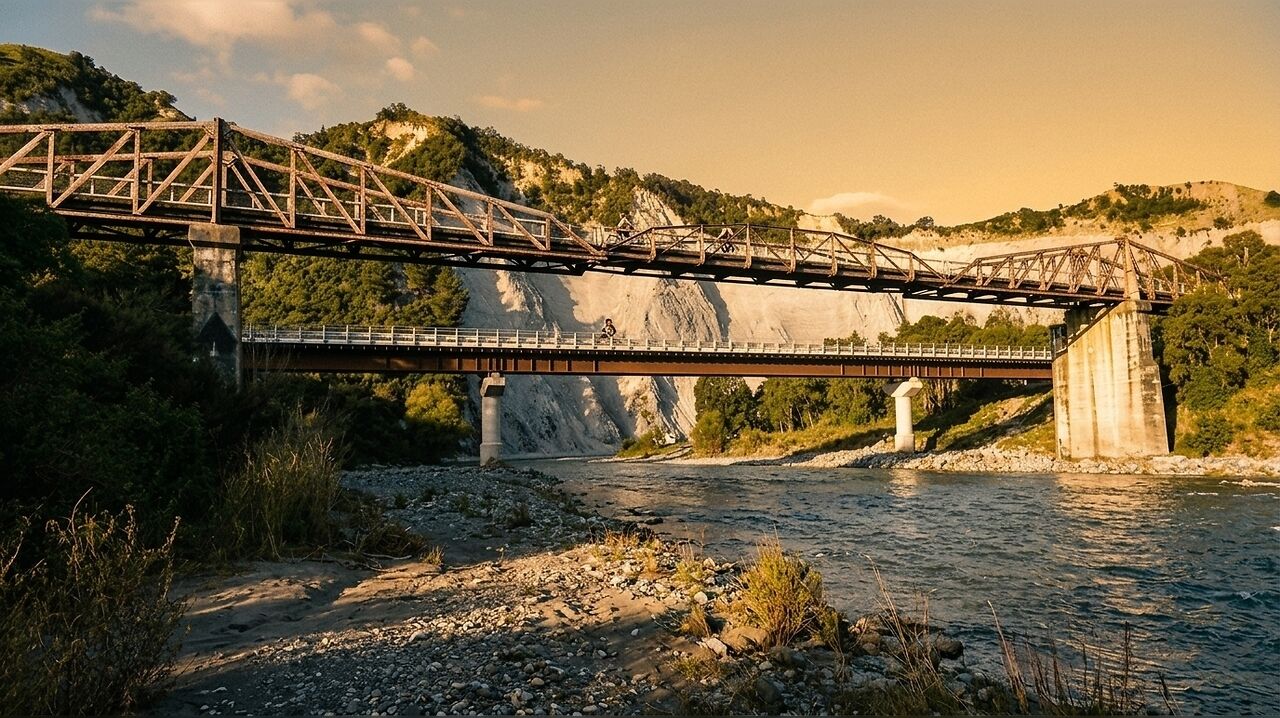
A century-old engineering landmark in New Zealand has successfully transitioned from a vital transport link to a preserved heritage site. The
The decision to maintain the structure followed a 2016 inspection that revealed significant structural deterioration, rendering the bridge unsuitable for modern road requirements. Rather than opting for demolition, local advocacy efforts ensured the bridge remained standing, allowing it to continue serving the community in a new capacity alongside a modern replacement crossing built just 30 metres away.
A Unique Engineering Legacy
Constructed in 1904, the bridge was designed to address the logistical challenges of a region expanding through farming and forestry. The project was overseen by the Public Works Department in collaboration with the engineering firm J and A Anderson Ltd. Its design was specifically chosen to navigate the difficulties of the Rangitīkei River, which is prone to flooding; the cantilever arrangement allowed the structure to span the waterway without the need for vulnerable midstream piers.
The bridge consists of three steel truss spans and a timber deck, measuring approximately 141 metres in length. It incorporates two concrete piers that were originally intended for an unfinished cylinder bridge project at the same site. According to Heritage New Zealand, the structure holds a unique place in the country’s infrastructure history as the only steel cantilever road bridge ever built in New Zealand, and it remains one of only three surviving cantilever bridges nationwide.
Preserving a Regional Landmark
The bridge’s history is marked by a peculiar milestone: despite being completed and operational in the early 20th century, its official opening ceremony did not take place until 111 years later. Throughout its long service life, the bridge remained largely true to its original design, retaining its steel trusses and timber decking despite the evolving demands of regional transport. Its presence was instrumental in the development of the Manawatū-Whanganui region, connecting local communities and supporting the growth of the local economy.
Today, the bridge serves as a recreational asset, offering visitors a unique perspective of the river valley that was once reserved for motorists. By separating modern traffic onto the new bridge and dedicating the historic structure to non-motorized travel, local authorities have managed to balance contemporary safety standards with the preservation of a rare piece of industrial heritage. The site now functions as a testament to the region's history, ensuring that the steelwork remains a fixture of the landscape for future generations.




