
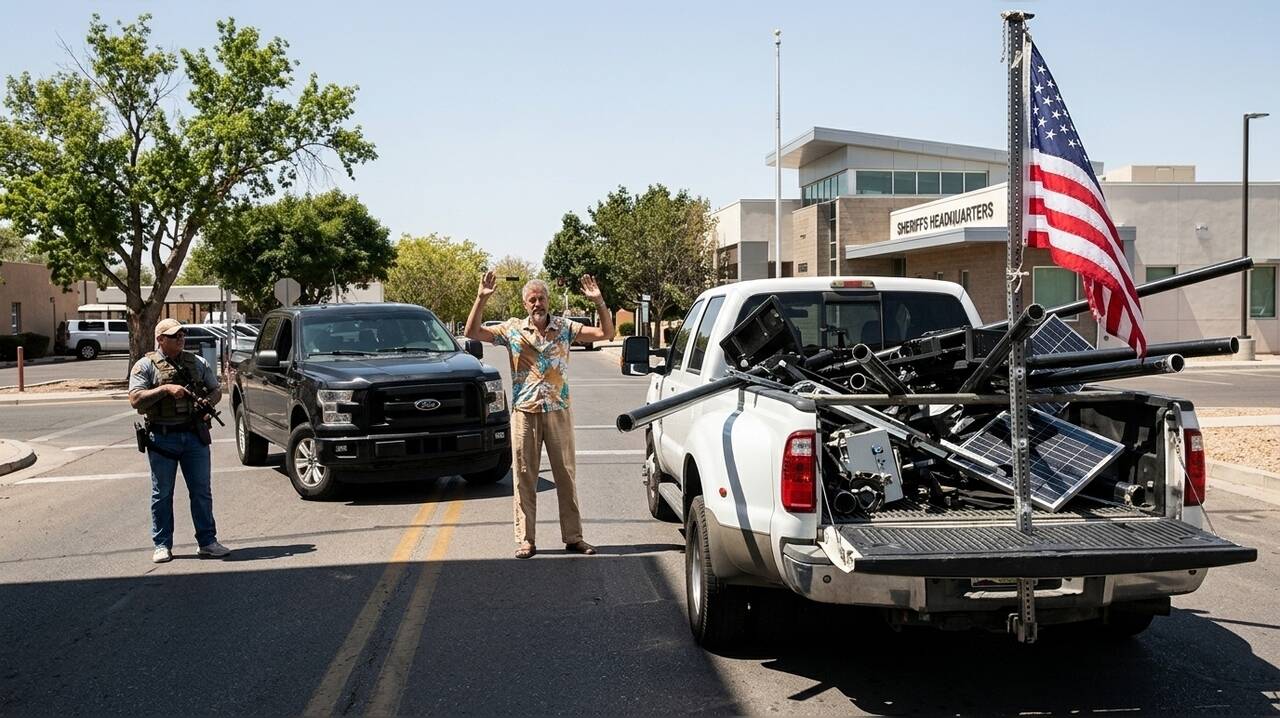
A resident of Rio Rancho, New Mexico, has been arrested following an incident in which he allegedly removed
The arrest occurred shortly after Bernalillo County Sheriff John Allen announced that his department would terminate its existing contracts with Flock Safety. The sheriff cited significant concerns regarding data privacy and the management of information gathered by the company’s
Ongoing Legal Disputes and Privacy Concerns
Martinez has been a vocal critic of the surveillance network, publicly describing the cameras as a threat to public privacy and safety. His actions appear to be part of a sustained campaign against the technology. In May 2026, he was linked to the destruction of multiple Flock cameras in Rio Rancho, where investigators reported finding flags in his vehicle that matched those left at the sites of the damaged equipment. That earlier investigation resulted in nine felony charges, including larceny, criminal damage to property, and tampering with evidence, with estimated damages exceeding $20,000.
During previous court appearances related to those charges, Martinez maintained his opposition to the surveillance tools, stating he intended to continue his efforts to remove them. While Martinez frames his actions as a response to the potential for mass surveillance, law enforcement agencies have consistently treated the removal and destruction of the equipment as criminal activity. The legal proceedings regarding the earlier charges remain ongoing, and the latest incident is currently under investigation by local authorities.
The Broader Debate Over Surveillance Technology
The controversy in New Mexico reflects a national debate regarding the use of automated licence-plate readers. Flock Safety’s technology, which captures vehicle movements and identifies licence plates, is used by police departments across the United States to assist in criminal investigations and the recovery of stolen vehicles. However, the systems have drawn scrutiny from privacy advocates who argue that the aggregation of vehicle location data creates a detailed, long-term record of individual movements, even for those not suspected of any crime.
Concerns have also been raised regarding the sharing of data between jurisdictions. Public records have indicated that information collected by licence-plate readers in one state can sometimes be accessed by law enforcement agencies in other regions. Sheriff Allen has specifically highlighted concerns about the potential for local data to be accessed by federal immigration enforcement agencies. These issues have prompted various jurisdictions to re-evaluate their surveillance policies, as questions persist regarding the adequacy of oversight and the potential for misuse of searchable vehicle databases by law enforcement personnel.




