
A somber atmosphere has descended upon Tribhuvan Hospital in Kathmandu, where families gather in a desperate search for missing relatives following the catastrophic flash floods that struck Nepal on August 26. The disaster, which has claimed more than 1,200 lives, has left a trail of destruction and a mounting humanitarian challenge for authorities struggling to identify the deceased.
Outside the hospital, rows of photographs hang on strings—a visual testament to the scale of the tragedy. As of September 2, at least 161 bodies remained unidentified at the facility. Medical staff report significant difficulties in the identification process, noting that the condition of the remains often makes standard procedures like fingerprint scanning impossible.
Managing the Aftermath and Seeking Accountability
In the hardest-hit districts located north and northwest of the capital, the sheer volume of casualties has forced authorities to adopt temporary burial measures. While cremation is the traditional practice in Nepal, officials have implemented burial protocols to prevent the spread of disease. To facilitate potential future identification, DNA samples are being collected from all remains. In areas such as Chitwan, burial sites are being meticulously documented, with bodies interred in pits 1.5 meters deep and separated by 40-centimeter gaps to ensure they can be accurately retrieved if DNA matching provides a positive identification.
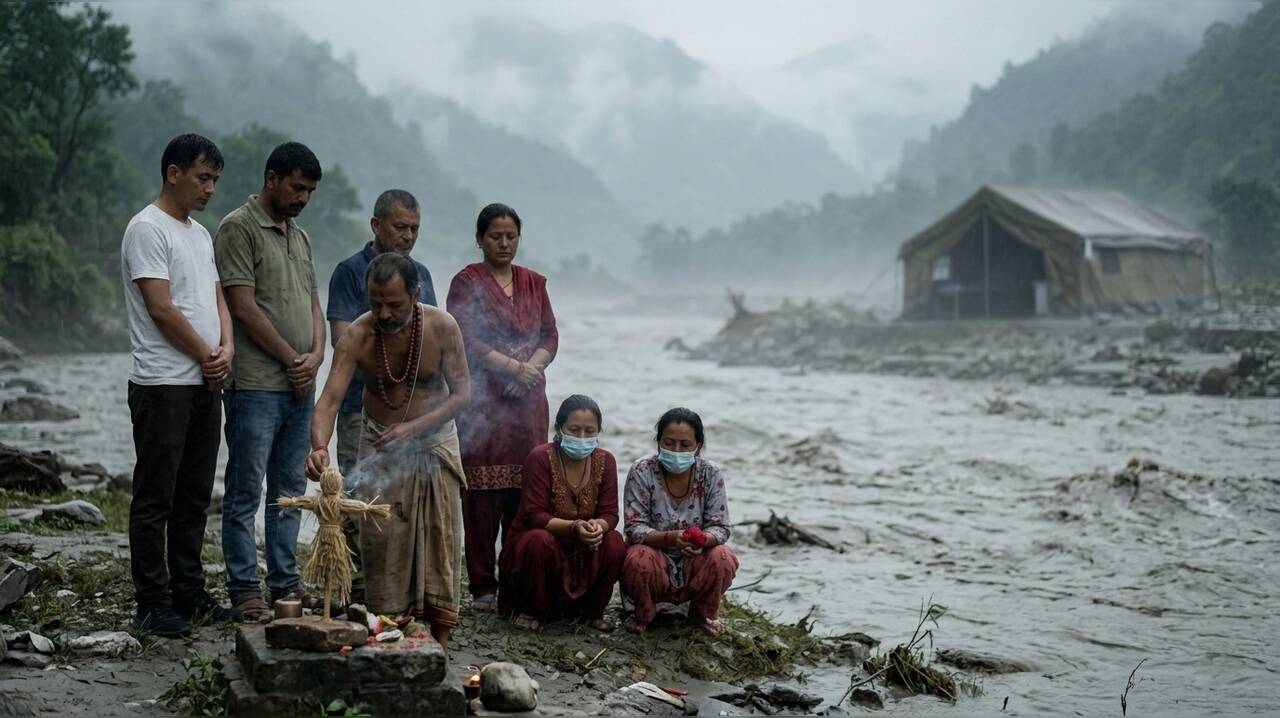
The emotional toll on the affected communities is profound. In districts like Nuwakot, where the search for the missing remains ongoing, some families have begun performing symbolic last rites. Along the banks of the Trishuli River, priests are conducting traditional Hindu cremation rituals using straw effigies to represent those who have not been recovered, providing a sense of closure for families facing the uncertainty of the missing.
Amidst the recovery efforts, the Nepalese government is framing the disaster within the broader context of global climate change. Foreign Minister
The government has officially dispatched formal climate compensation claims to international partners, signaling a shift in its diplomatic strategy. Minister Khanal emphasized that Nepal intends to elevate this issue at international forums, moving beyond traditional requests for disaster relief to advocate for what he described as




