
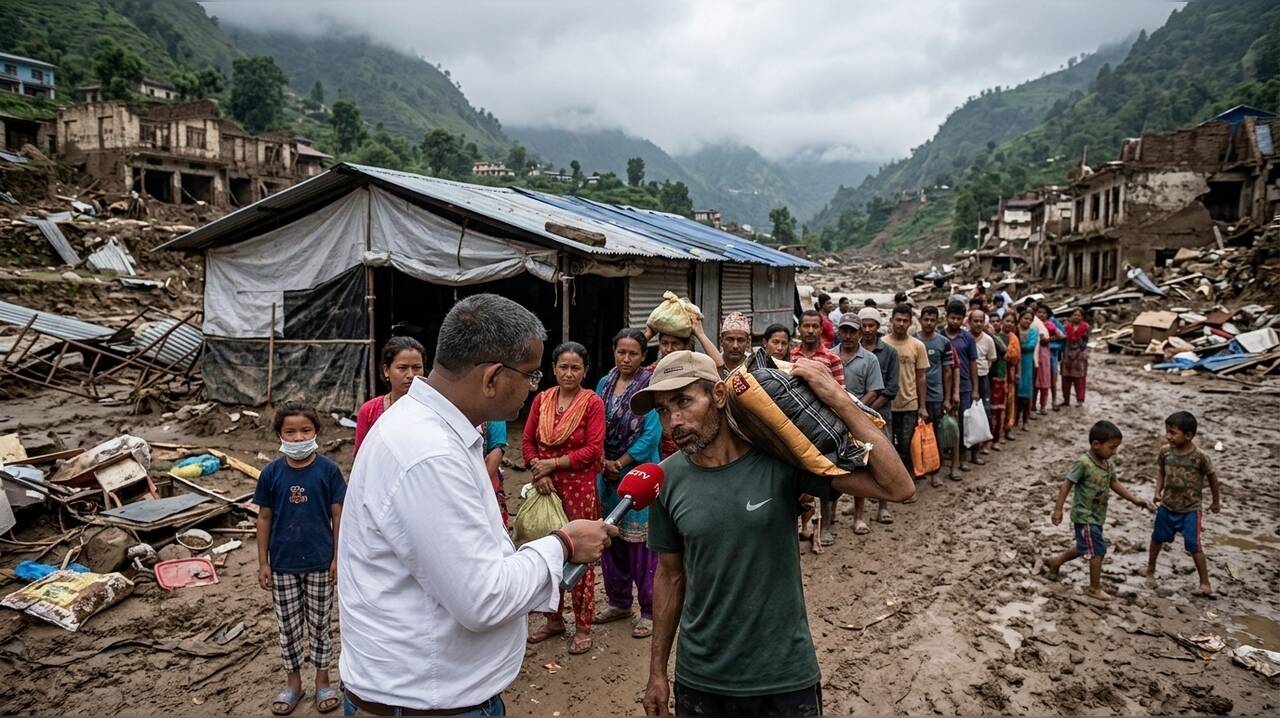
Ten days after catastrophic flash floods swept through parts of Nepal, survivors are grappling with a precarious reality where the very aid intended to sustain them has become a source of anxiety. As thousands remain displaced in temporary shelters and rescue tents, the government has issued an urgent health advisory, warning that food supplies in affected regions are at high risk of contamination.
The advisory highlights the severe environmental hazards currently facing those in the disaster zones. With floodwaters and piles of debris still containing human remains, insects, and flies, officials are urging residents to exercise extreme caution regarding the safety and storage of their rations. The warning underscores the secondary crisis emerging in the wake of the disaster, as the threat of infection and disease looms over communities already stripped of their homes and livelihoods.
A Struggle for Sustenance and Shelter
In the aftermath of the floods, which claimed over 1,200 lives with more than 5,000 individuals still reported missing as of September 4, the government has established a relief card system to provide essential support. Displaced families are registering at makeshift offices to receive rations, including rice, lentils, bread, and bottled water, distributed from trucks and centralized collection points. Schools and other public buildings have been repurposed as shelters, providing temporary refuge for those who lost everything in a matter of hours.
For many survivors, the relief efforts provide a vital lifeline, yet the psychological and material toll remains immense. One survivor, a laborer who lost his home, described the uncertainty of his future, noting that he lacks the resources to rebuild and is currently relying on hospital facilities for shelter. Others, including local business owners, reported the total loss of their property, livestock, and grain stores, leaving them entirely dependent on government aid to meet their daily needs.
The Long Road to Recovery
The impact of the disaster extends beyond the immediate loss of housing and infrastructure. For children, the disruption to daily life is profound, with schools now serving as evacuation centers rather than places of learning. While some survivors attempt to maintain a sense of normalcy, the underlying fear of disease and the lack of a clear path toward reconstruction remain constant concerns.
As the government continues its relief operations, the focus remains on providing basic necessities while managing the significant public health risks posed by the debris-strewn landscape. Survivors, meanwhile, face the daunting task of rebuilding their lives from scratch, with many expressing that their primary focus is limited to securing food and shelter one day at a time.




