
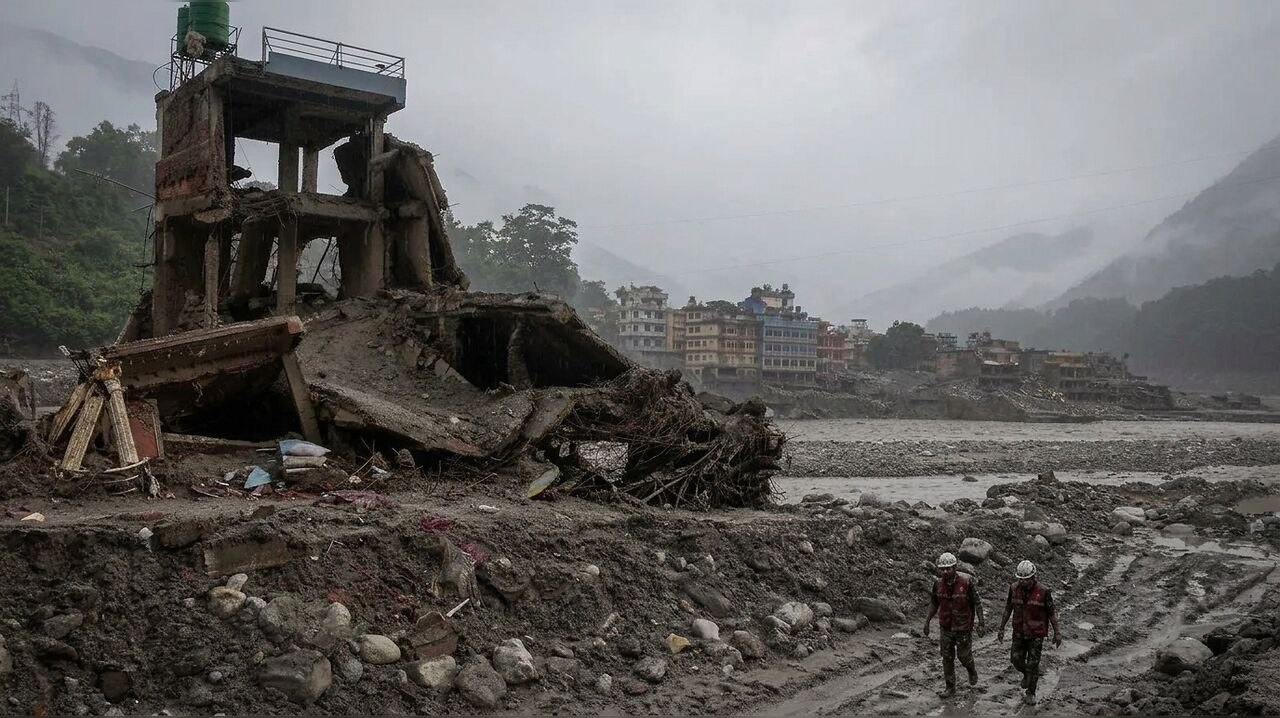
Four weeks after catastrophic flash floods swept through northern and central Nepal, search and rescue teams are continuing their efforts to locate approximately 6,000 people still reported missing. Authorities confirmed on Sunday that the official death toll from the August 26 disaster has now surpassed 1,450, as recovery operations persist in some of the country’s most severely impacted regions.
The floods, which originated near the border with Tibet, caused sudden and widespread destruction as the Bhotekoshi River surged downstream. The force of the water destroyed homes, vehicles, and critical infrastructure, including roads, bridges, and several hydropower projects, leaving many communities isolated and struggling to access essential services.
Recovery Efforts and Identification Challenges
According to data released by the Nepal Police, the confirmed death toll stands at 1,451. The Chitwan district has recorded the highest number of fatalities, with 367 bodies recovered. Other heavily affected areas include Rasuwa, where 236 bodies were found, and the Nawalparasi districts, which reported a combined total of 454 deaths. Additional fatalities were confirmed in Nuwakot, Gorkha, Dhading, and Tanahu, while two individuals died while receiving medical treatment in Kathmandu.
Search teams are currently combing through riverbanks, debris fields, and damaged industrial sites. At the Upper Trishuli-1 hydropower project in Rasuwa, rescuers have utilized specialized equipment, including gas cutters and grinders, to extract 17 bodies trapped within reinforcement mesh and deep mud. Military officials have noted that the sheer volume of debris inside tunnels and affected structures could necessitate several months of clearing operations.
The identification process has presented a significant hurdle for authorities. Many of the recovered remains have been found in a decomposed or damaged state, complicating efforts to return victims to their families. Officials report that DNA samples have been collected from nearly 1,300 bodies, which have since been temporarily buried. To date, only 110 victims have been successfully identified and released to their relatives.
Infrastructure Damage and Ongoing Recovery
The disaster has left a trail of destruction that continues to disrupt daily life for thousands of residents. With many homes destroyed, displaced populations are facing prolonged instability. The government has initiated repair work on suspension bridges along the Trishuli corridor, aiming to restore connectivity between communities in Nuwakot and Dhading that were severed by the floods.
The loss of these crossings has severely hindered access to schools, local markets, and health facilities. As recovery operations move into their second month, the focus remains on clearing debris from critical infrastructure and continuing the search for those who remain unaccounted for in the wake of the disaster.




