
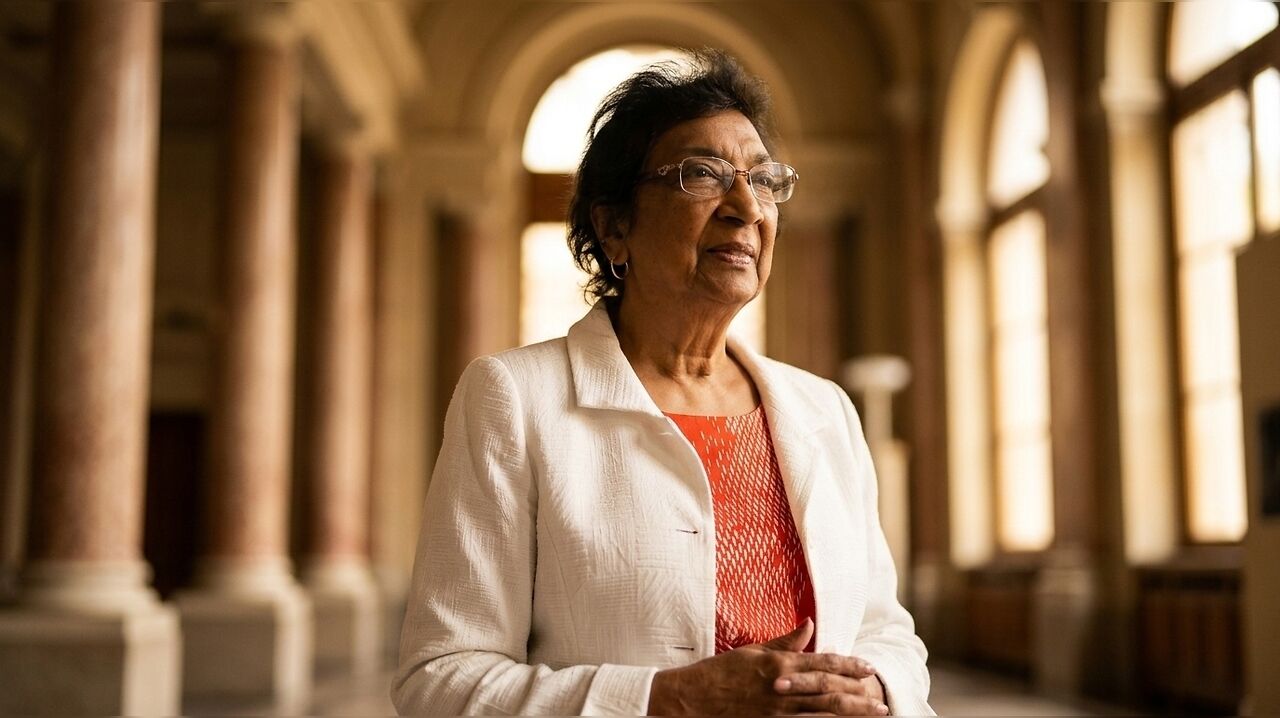
The Norwegian Nobel Committee has awarded this year’s
Now 85, Pillay has built a career defined by her efforts to hold powerful institutions accountable and her advocacy for those facing systemic repression. Her work has spanned the fight against apartheid in her home country to the development of landmark international jurisprudence regarding genocide and sexual violence.
A Career Forged in the Struggle for Justice
Born in Durban in 1941, Pillay grew up in a family of Indian origin during the height of the apartheid era. She has frequently spoken about the poverty and discrimination her family faced, noting that these formative experiences instilled in her a deep belief in the necessity of collective action to combat injustice. After graduating from the University of Natal and later earning postgraduate degrees from Harvard University, she broke significant barriers in the legal profession. In 1967, she became the first woman to open a law practice in the Natal province and later served as the first Black woman appointed to the High Court of South Africa.
Pillay’s transition to the international stage began in 1995 when she was appointed as a judge for the International Criminal Tribunal for Rwanda. During her tenure, which included serving as the tribunal’s president from 1999 to 2003, she played a pivotal role in the prosecution of Jean-Paul Akayesu. The 1998 conviction of the former mayor of Taba was a watershed moment in international law, as the tribunal formally recognised that rape and sexual violence could constitute acts of genocide. This ruling significantly expanded the scope of international jurisprudence regarding crimes against humanity.
Leadership in Global Human Rights
Following her time at the Rwanda tribunal, Pillay was elected as a judge for the International Criminal Court in 2003. Her judicial expertise and focus on accountability led to her appointment as the United Nations High Commissioner for Human Rights in 2008. For six years, she led the Office of the High Commissioner, positioning herself at the forefront of international debates concerning civil liberties, state accountability, and the protection of vulnerable populations.
Throughout her tenure at the United Nations, which concluded in 2014, Pillay consistently advocated for the universality of human rights. She emphasised the critical need to protect human rights defenders and ensure that serious violations were met with legal consequences. The Nobel Peace Prize serves as a recognition of her enduring influence on the global legal landscape and her dedication to ensuring that the experiences of those who suffer abuses are central to the pursuit of justice.




