
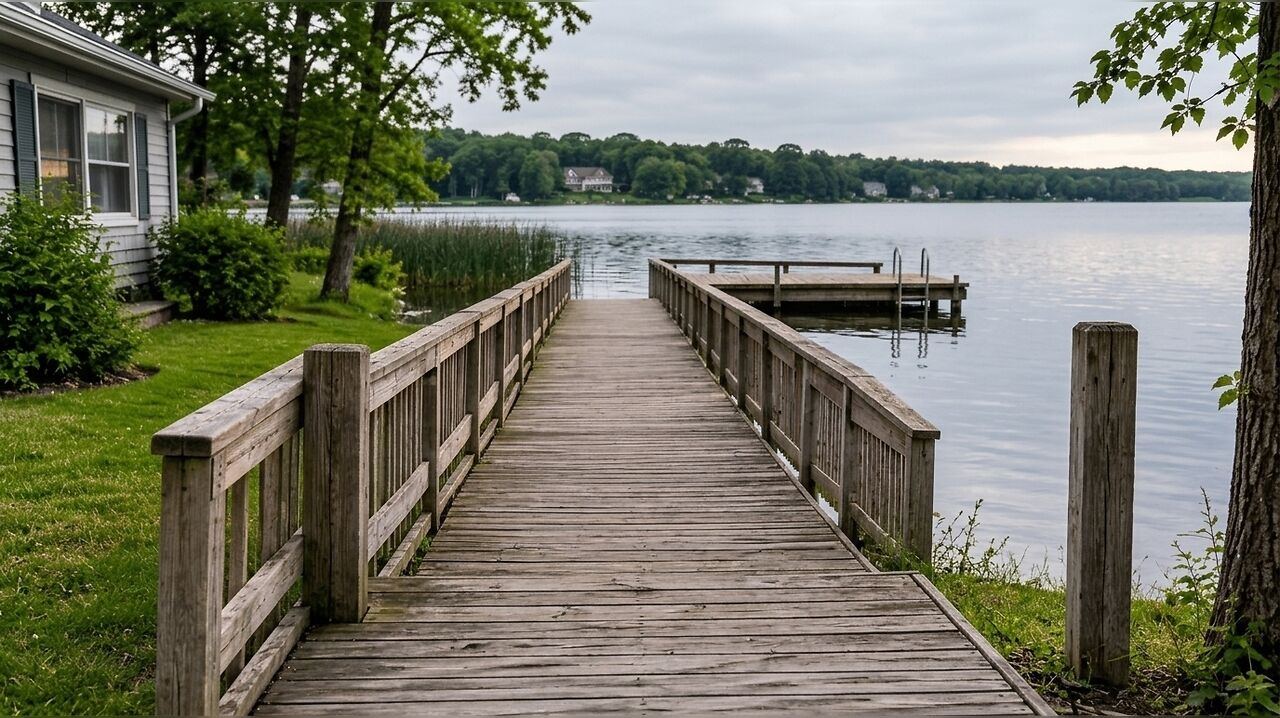
A legal dispute over lakefront access in Michigan has concluded with a court ruling that highlights the financial risks of relying on informal property agreements. The Michigan Court of Appeals recently upheld a $55,750 judgment in favour of Jeremy and Ivanna Leffring, who sought compensation for improvements they made to a neighbouring property after being denied continued access to a shared boardwalk and dock.
The conflict originated from a long-standing, verbal arrangement between the Leffrings and their former neighbours, Timothy and Allison Updyke. The two families had collaborated on the construction and maintenance of a boardwalk and dock on the Updyke property to facilitate lake access. Despite their shared financial contributions and mutual use of the facilities, the parties never formalised the arrangement through a written easement, which would have provided a legally binding right to use the land.
Legal Limits of Verbal Property Agreements
The situation shifted significantly when the Updykes sold their property to Mark Cahill and Lindsey Bissett. While the new owners initially permitted the Leffrings to use the boardwalk, the relationship soured in 2022. Following a disagreement, the new owners blocked access to the route and installed signage prohibiting trespassing. The Leffrings subsequently initiated legal action to secure their access, but the trial court determined that the lack of a written agreement meant no enforceable easement existed under Michigan’s statute of frauds.
Although the court denied the Leffrings the right to use the path, it ruled that they were entitled to compensation for the value they added to the property. Under Michigan Court Rule 3.411(F), individuals who lose a claim to property title may be reimbursed for improvements that increased the land's value, provided those improvements were not made in bad faith. The court found that the Leffrings had acted in good faith, noting that their contributions were part of a mutual agreement with the previous owners and that the new owners had initially participated in the maintenance of the structures.
Dismissal of Indemnification Claims
The new owners, Cahill and Bissett, had attempted to seek financial restitution from the previous owners, the Updykes, arguing that the existence of the shared access had not been properly disclosed during the property sale. However, the court rejected this claim, noting that the disclosure statement had explicitly mentioned the shared nature of the dock. Furthermore, the court observed a contradiction in the new owners' position, as they sought damages for the non-disclosure of an easement while simultaneously arguing that no such legal easement existed.
The appellate court ultimately affirmed the trial court’s decision, maintaining the $55,750 award. The ruling serves as a reminder of the complexities surrounding property rights, confirming that while good-faith investments in neighbouring land may be recoverable, they do not substitute for the legal protections afforded by formal, written property easements.




