
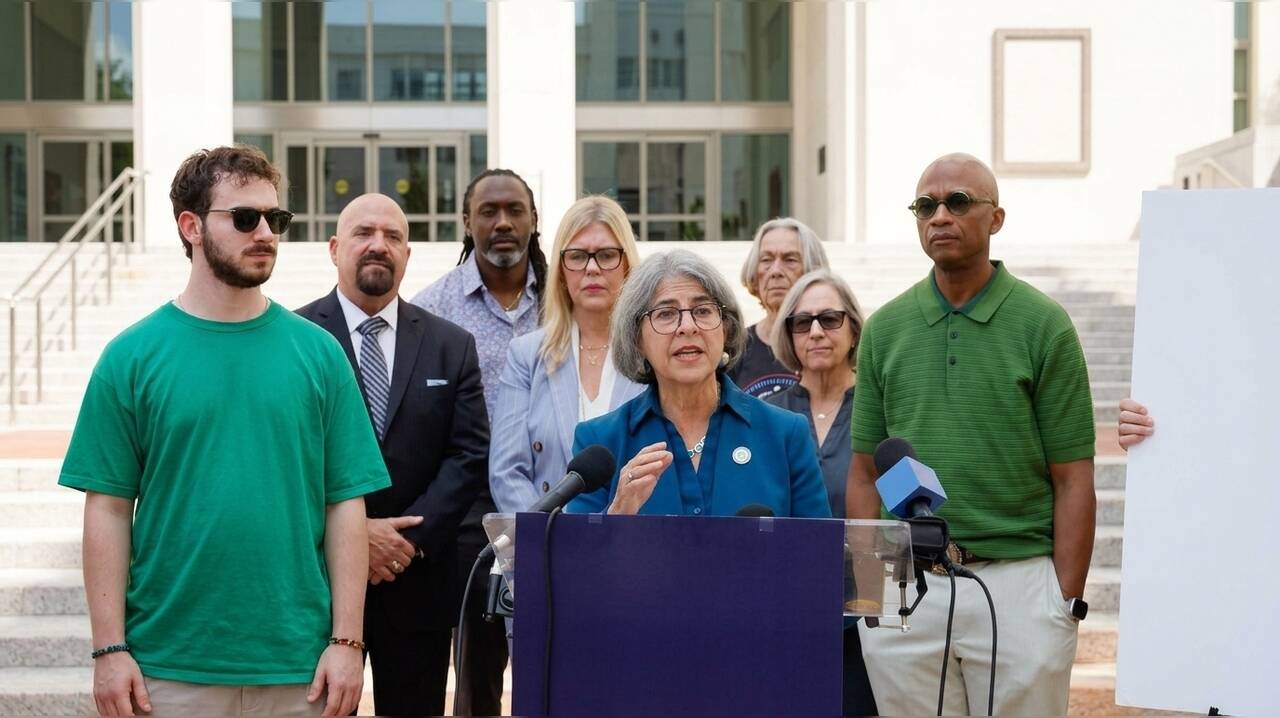
During a press conference held outside the Miami-Dade main library, the Democratic mayor emphasized that the proposed tax cuts would jeopardize critical infrastructure and public safety. She argued that the reduction in tax revenue would directly impact the budgets for police departments, ambulance services, public transportation networks, and community parks. According to the mayor, these are not discretionary luxuries but fundamental services necessary for the protection and daily function of local neighborhoods.
The Economic Impact of Amendment 3
The proposed Amendment 3 seeks to increase the homestead exemption on primary residences from $50,000 to $250,000 by the year 2028. For this change to be enacted, it requires a 60% approval margin from voters across the state. If passed, the amendment would result in a substantial reduction in tax revenue for local governments throughout Florida, which rely heavily on property taxes to fund their operations.
In Miami-Dade County, officials estimate that the amendment could lead to a 20% reduction in the $3 billion currently generated through property taxes. This funding is vital for the maintenance of county-wide services, including the jail system, emergency medical services, and the Jackson Health hospital network. To combat the measure, the mayor has established a political action committee titled No on 3 Protect Our Homes, which is actively raising funds to campaign against the referendum.
Local Officials Warn of Service Reductions
The debate over the amendment has highlighted a sharp divide between state-level proponents in Tallahassee and local government leaders. While supporters of the measure contend that the tax cuts will force local governments to streamline spending without compromising public safety, local officials remain skeptical. They argue that the scale of the projected revenue loss would make it impossible to maintain current levels of service.
County Commissioner Oliver Gilbert, who recently secured a Democratic primary victory for a congressional seat, urged residents to consider the practical implications of the vote. He noted that the quality of police response times and the availability of public transit services for seniors are directly tied to these tax revenues. Similarly, Karyn Cunningham, the outgoing mayor of Palmetto Bay, pointed out that many residential areas rely almost exclusively on property taxes to fund local police departments. She encouraged voters to thoroughly research the financial impact of the amendment before heading to the polls this November, emphasizing that the consequences for municipal budgets could be severe.




