
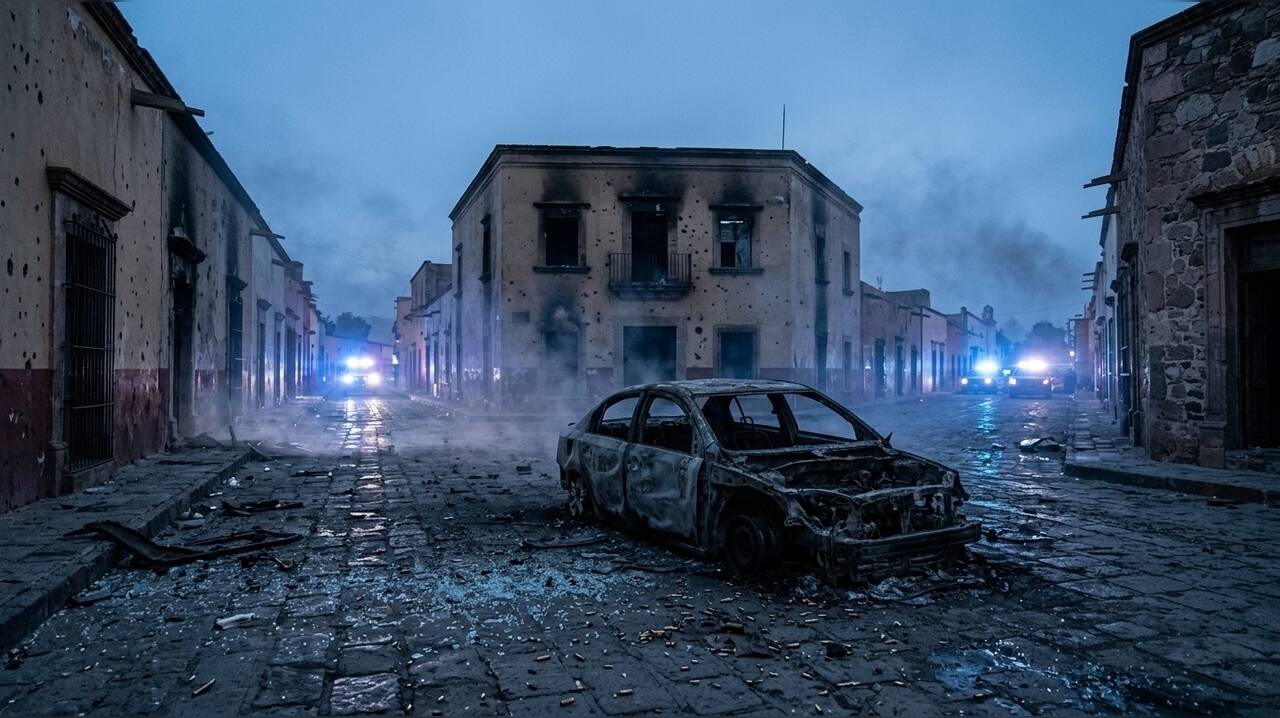
The most recent incident occurred in the north-central state of Zacatecas, where a vehicle packed with 200 kilograms of explosives detonated outside a police station in the town of Ojocaliente. While no fatalities were reported, the blast injured 11 people and caused extensive damage to more than 60 homes in the vicinity. Security officials confirmed that Zacatecas has experienced 23 separate attacks involving explosives so far this year, highlighting the persistent struggle for territory between the Jalisco New Generation Cartel (
Escalating Tactics and Security Challenges
The use of explosives by criminal groups has evolved significantly over the past five years. Beyond the deployment of car bombs, cartels have increasingly utilized drones to drop munitions on security personnel and buried IEDs to secure control over contested territories. Military data indicates the scale of the threat, with authorities reporting the seizure of approximately 2,800 explosive devices nationwide between 2019 and 2023. In Michoacán state alone, security forces deactivated nearly 3,200 devices in a single year, underscoring the widespread nature of the problem.
Experts suggest that the strategic use of explosives serves multiple purposes for criminal organizations, ranging from intimidating rivals and pressuring government authorities to creating an atmosphere of public fear. Carlos Pérez Ricart, a professor at CIDE university, noted that these tactics are often employed when cartels feel under pressure, serving as a mechanism to force negotiations or demand concessions from the state. Despite the rising frequency of these attacks, the scale of the violence remains distinct from the historical patterns observed in other nations, though the impact on civilian safety is increasingly pronounced.
Geopolitical Implications and Official Responses
The surge in explosive-related violence has intensified the debate over how to categorize cartel activities. While some international observers and political figures have pushed for the designation of these groups as foreign terrorist organizations, the Mexican government has historically resisted this classification. Officials argue that cartel violence is primarily driven by profit motives rather than the political or ideological agendas typically associated with terrorism. Furthermore, there are significant concerns that such a designation could negatively impact tourism, foreign investment, and national sovereignty by inviting potential foreign military intervention.
President Claudia Sheinbaum recently emphasized that current government data shows a nationwide decline in homicides, which she cited as evidence that the existing security strategy remains effective. However, analysts warn that the intensification of explosive use complicates the traditional approach to organized crime. Unlike conventional counterterrorism, which aims to eliminate a specific enemy, addressing the illicit drug trade requires dismantling complex, profit-driven markets. As the situation evolves, the use of these weapons continues to strain the relationship between Mexico and the United States, particularly as calls for more aggressive intervention persist.




