
Los Angeles preservationists have reached a significant milestone as the historic
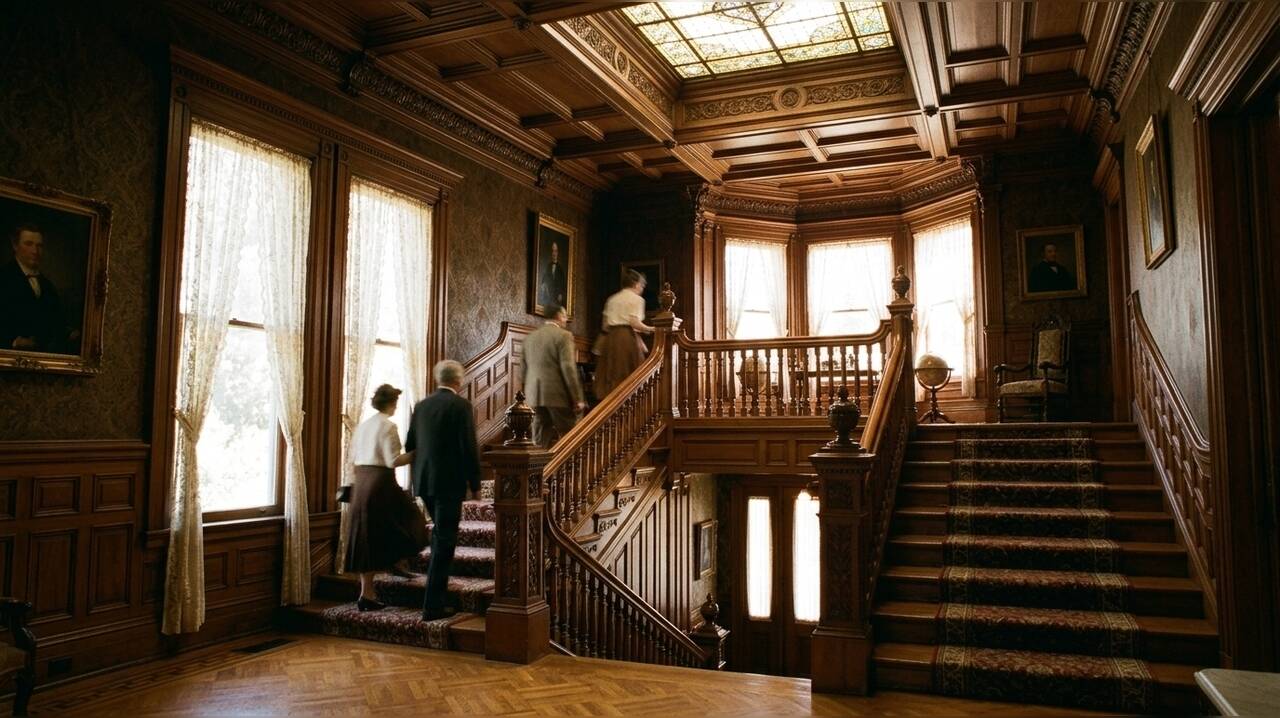
The Victorian-era home, which has been a fixture of the city’s architectural history since 1876, welcomed visitors into its upper chambers, which are typically kept off-limits to protect delicate original materials and furnishings. Organisers held the event to generate necessary capital for the continued maintenance of the wooden structure, allowing ticket holders a unique glimpse into rooms that have been preserved in their 19th-century state.
A Legacy of Early Los Angeles Development
Originally constructed in the Boyle Heights neighbourhood, the mansion was commissioned by William Hayes Perry, a prominent lumber baron and businessman whose company provided materials for the city’s early expansion. Designed by Ezra F. Kysor, widely recognised as the city’s first professional architect, the residence was initially known as the Mount Pleasant House. According to National Park Service records, the project cost approximately $9,000—a substantial sum for a private home in the 1870s.
The mansion served as a testament to Perry’s influence in the region; he was a co-founder of the Los Angeles Gas Company and served as president of the Los Angeles City Water Company for over two decades. The home’s interior features intricate wood carvings, handcrafted ceiling mouldings, and a grand staircase, all of which highlight the high level of artisanal craftsmanship prevalent before the advent of mass industrial production. Following Perry’s tenure, the property was owned by Judge Stephen C. Hubbell, a civic leader instrumental in the early history of the University of Southern California and the establishment of MacArthur Park.
Preservation and Relocation Efforts
By the early 1970s, the mansion faced the threat of demolition due to urban development and structural decline. In 1975—exactly 99 years after its construction—preservationists successfully relocated the building to the Heritage Square Museum in Montecito Heights. This open-air museum was established in 1969 by the Cultural Heritage Foundation of Southern California specifically to safeguard Victorian-era buildings that were being displaced by urban renewal projects.
Following its relocation, the mansion underwent a two-decade restoration process spearheaded by the National Society of the Colonial Dames of America. This project included the removal of 20th-century pink stucco that had been applied to the exterior, successfully revealing the original wooden facade. The building was formally donated to the museum in 1995 and was later designated as Los Angeles Historic-Cultural Monument No. 1009 in 2011. Museum officials noted that while the relocation saved the structure half a century ago, the ongoing preservation of its 19th-century materials requires consistent funding and careful management to ensure its survival for future generations.




