
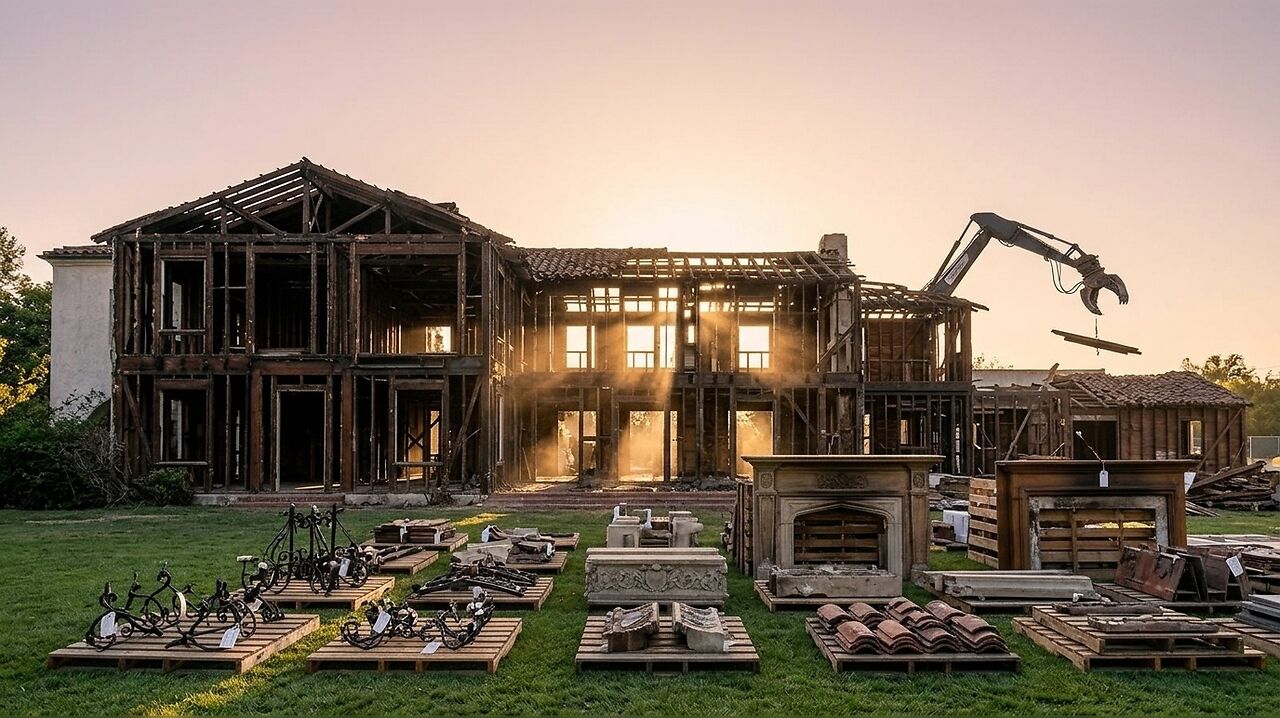
When the historic
The mansion, designed by architect
A Decade of Legal Conflict and Preservation Efforts
The path to demolition was marked by years of litigation. Although the town of Woodside initially granted a permit in 2004, preservation groups successfully challenged the decision in court. A judge ruled against the demolition in 2006, and the California Supreme Court later declined to hear an appeal. It was not until May 2009 that the town council again voted in favor of the project. A superior court judge upheld this decision in 2010, leading the preservation group Uphold Our Heritage to drop its case, clearing the way for the site to be cleared.
During the final months before the demolition, attention shifted toward the preservation of the home’s interior features. The most notable of these was the Aeolian pipe organ, which had been expanded in 1938 to include 55 ranks and over 3,800 pipes. Despite a reported act of vandalism that damaged the organ’s console in 2010, a private organization known as the Friends of the Jackling Organ successfully moved the instrument into storage before the house was razed in February 2011.
Distributing the Remnants of a Lost Estate
As the house was dismantled, the town of Woodside and various heritage organizations worked to recover significant architectural elements. The town secured a variety of items, including fireplace mantels, light fixtures, woodwork, and a copper mailbox. Many of these pieces were later featured in a 2011 exhibition titled Days of Grandeur at the local community museum, while a 50-foot flagpole from the estate was relocated to the museum grounds.
Other artifacts were transferred to the University of California, Santa Barbara, which maintains the archives of the estate’s architect, George Washington Smith. This collection includes decorative tiles, a door frame from the music room, and various light fixtures, all of which were donated by the town of Woodside in 2013. By 2018, the local council evaluated the remaining salvaged materials, which were estimated to be worth approximately $30,300, to determine their final disposition. Steve Jobs passed away in October 2011, months after the demolition, without completing his plans for a new residence on the site. Today, these scattered fragments remain the primary physical legacy of the Jackling House.




