
In the late 2000s,
The expansion began in 2008 when Page acquired and cleared two properties, including a historic home previously owned by philanthropist Len Ely. Through a combination of direct purchases and a property swap, Page consolidated his land, creating a substantial compound. This consolidation prompted local discussion regarding the changing nature of the area, with some observers noting that the block was increasingly becoming a hub for high-net-worth individuals, leading to concerns among residents about the preservation of the neighbourhood's traditional character.
Development Plans and Environmental Design
By 2009, Page moved forward with plans for a new, two-storey residence on a lot exceeding 0.75 acres. While the site allowed for a significantly larger structure under local zoning regulations, the proposed design was limited to approximately 6,000 square feet. Representatives for Page emphasised that the project was intended to prioritise environmental sustainability over sheer scale, aiming for GreenPoint certification to validate its eco-friendly credentials.
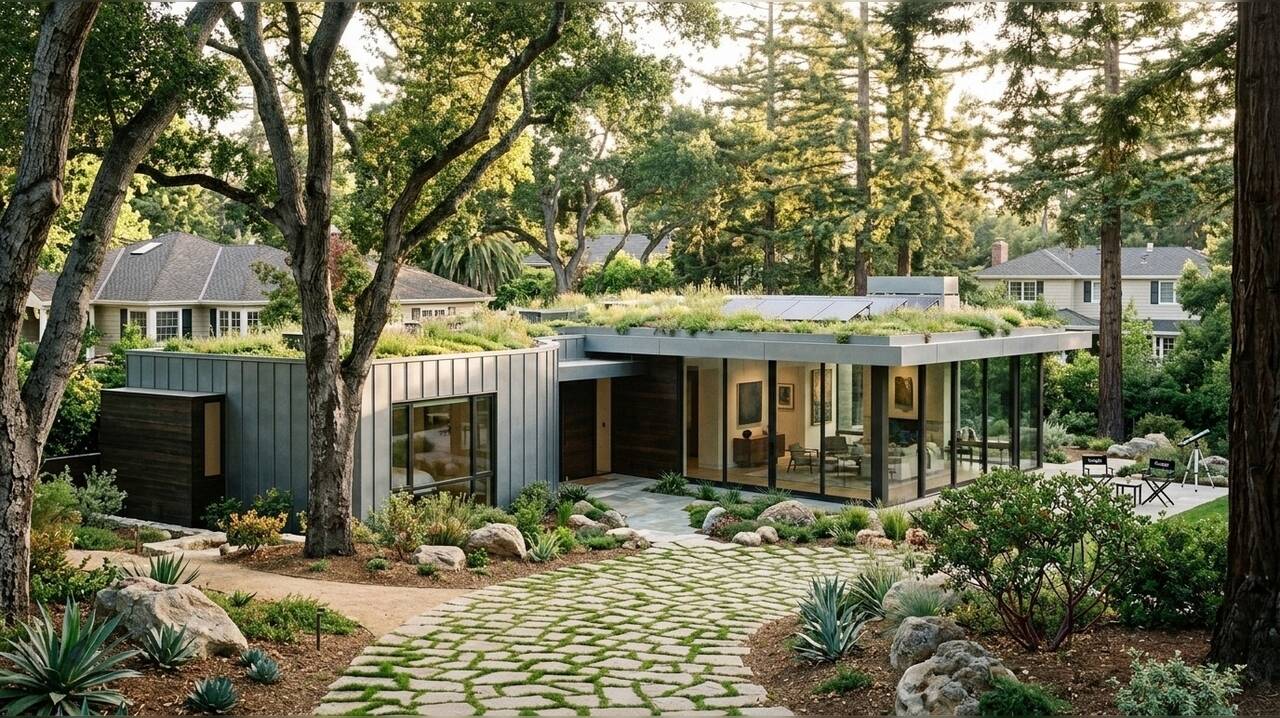
The architectural plans featured a range of sustainable technologies, including the integration of solar panels and a roof garden. The design also incorporated recycled materials and low-emission components to reduce the home's environmental footprint. To manage water usage and drainage, the plans included permeable pathways and grasscrete pavers, which allowed rainwater to absorb into the ground. Furthermore, Page engaged an arborist to manage the existing tree population on the site, with a focus on replacing unhealthy specimens with drought-resistant varieties suitable for the California climate.
Balancing Luxury and Community Character
The project represented a distinct approach to luxury development in Silicon Valley, blending modern aesthetics—such as zinc cladding and extensive glass walls—with a focus on resource efficiency. Despite these environmental considerations, the development remained a point of friction within the community. The demolition of older homes and the ongoing construction activity served as a flashpoint for broader debates about how affluent California cities should manage the tension between private development and the preservation of established community aesthetics.




