
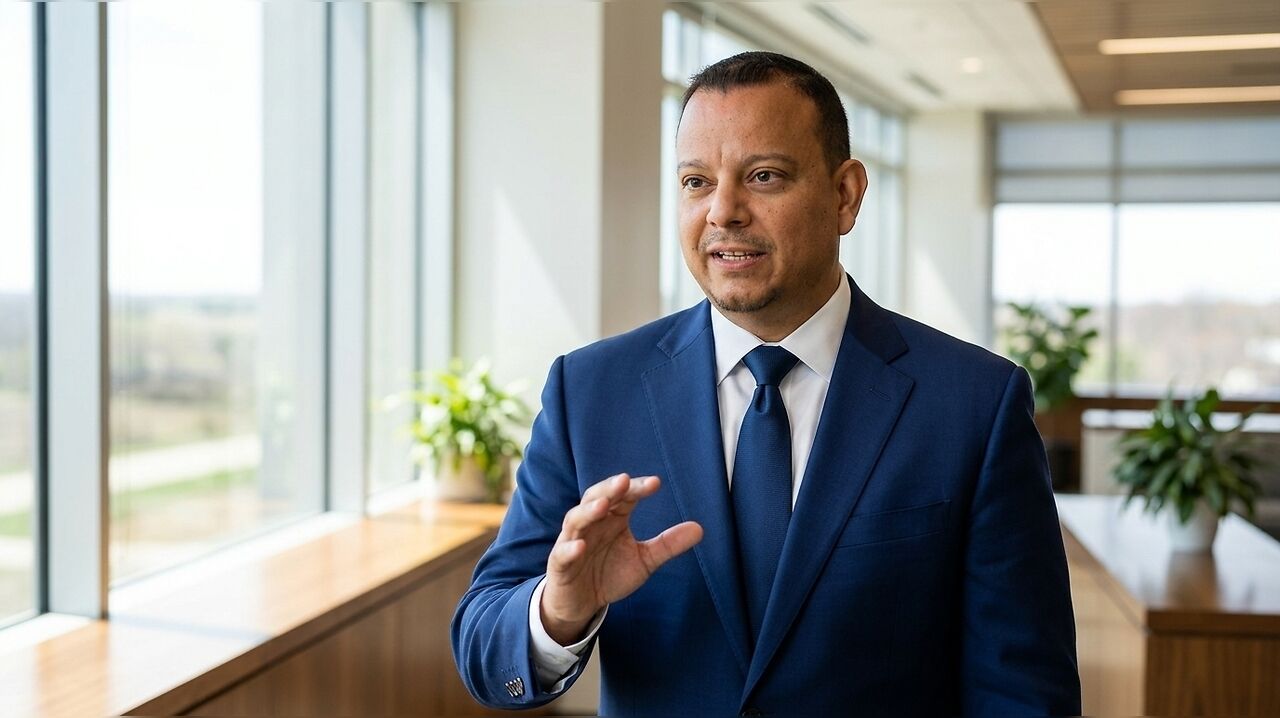
In a recent discussion regarding his candidacy, Luengo emphasized that the prevailing partisanship is detrimental to the interests of Kansas residents. He stated that working with both political parties is a fundamental necessity rather than a preference, suggesting that officials must return to the negotiating table to effectively address the state's pressing economic challenges.
A Business-Focused Approach to Governance
Luengo’s transition from the corporate sector to public office has drawn scrutiny from critics who point to his lack of prior political experience. However, the candidate maintains that his background as an executive—specifically his role in overseeing a significant business turnaround and expansion—has equipped him with the operational skills required to manage the treasurer’s office effectively. He describes himself as a “responsible capitalist,” asserting that while the American economic system is designed to foster growth, current financial pressures require a more inclusive approach to support those struggling with rising costs.
If elected, Luengo plans to establish a non-partisan economic council composed of representatives from the government, the private sector, small businesses, and the agricultural community. He intends for this body to play a central role in drafting policy proposals for the legislature. Furthermore, he has expressed a desire to shift the focus of state economic incentives, arguing that tax abatements and support programs should be more accessible to small businesses and farmers, whom he identifies as the primary engines of employment, rather than being concentrated among large firms.
Engaging with Local Communities
Addressing his upcoming contest against Republican candidate Steven Johnson, Luengo acknowledged his opponent’s financial expertise but argued that the role of treasurer requires a more hands-on, community-oriented leadership style. He contended that effective governance cannot be achieved from behind a desk, emphasizing the need for officials to engage directly with the diverse populations they serve to better understand their specific requirements.
Luengo stated that his decision to enter the race was motivated by a desire to support a broad spectrum of constituents, including the younger generation, women-owned businesses, and individuals with disabilities. While past holders of the office have often used the position as a stepping stone to the U.S. Congress, Luengo insisted that his focus remains entirely on the current race and the potential to deliver results for Kansas over a four-year term. He concluded by reiterating his call for an opportunity to demonstrate his effectiveness, asserting that the state requires a leader prepared to advocate for the needs of its citizens at the local level.




