
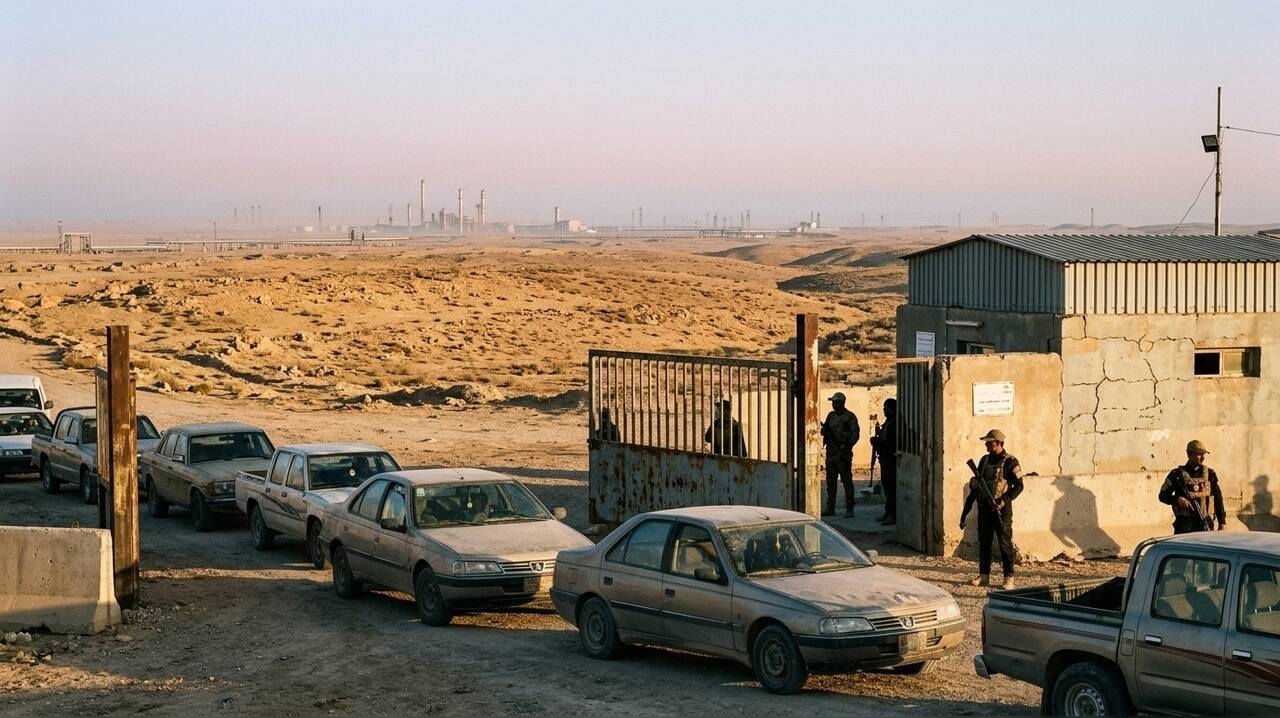
Iraqi authorities have announced a phased reopening of three key
The Friday night strike targeted the East-West pipeline, prompting an immediate investigation by Baghdad. Iraqi officials determined that the drones used in the attack were launched from within the Missan region, which shares a border with Iran. In the wake of these findings, the government removed the military commander responsible for the province.
Security Measures and Border Operations
The Iraqi government’s security media cell confirmed on Sunday that the crossings of Shalamsheh in Basra, al-Shib in Missan, and al-Mandali in Diyala would return to service on a staggered schedule running through Thursday. While passenger traffic resumed at the Shalamsheh and al-Shib crossings on Sunday, commercial trade remains suspended at those locations for the time being.
The initial closure was implemented to facilitate a reorganization of border security protocols and to enhance intelligence-gathering capabilities aimed at preventing future cross-border violations. Security sources cited by international media reported that drone launchers were discovered in the vicinity of the al-Shib crossing shortly after the pipeline incident.
Attribution and Regional Context
As of Sunday, no organization has claimed responsibility for the strike on the Saudi infrastructure. An alliance of Iran-backed armed factions operating within
The incident occurs against a backdrop of heightened regional tensions. Pro-Iran armed groups in Iraq have maintained a consistent presence throughout the ongoing Middle East conflict, frequently claiming responsibility for attacks on United States military bases located within Iraq and across the wider region. The Iraqi government continues to manage the delicate balance of maintaining border security while navigating the complex activities of these armed factions.




