
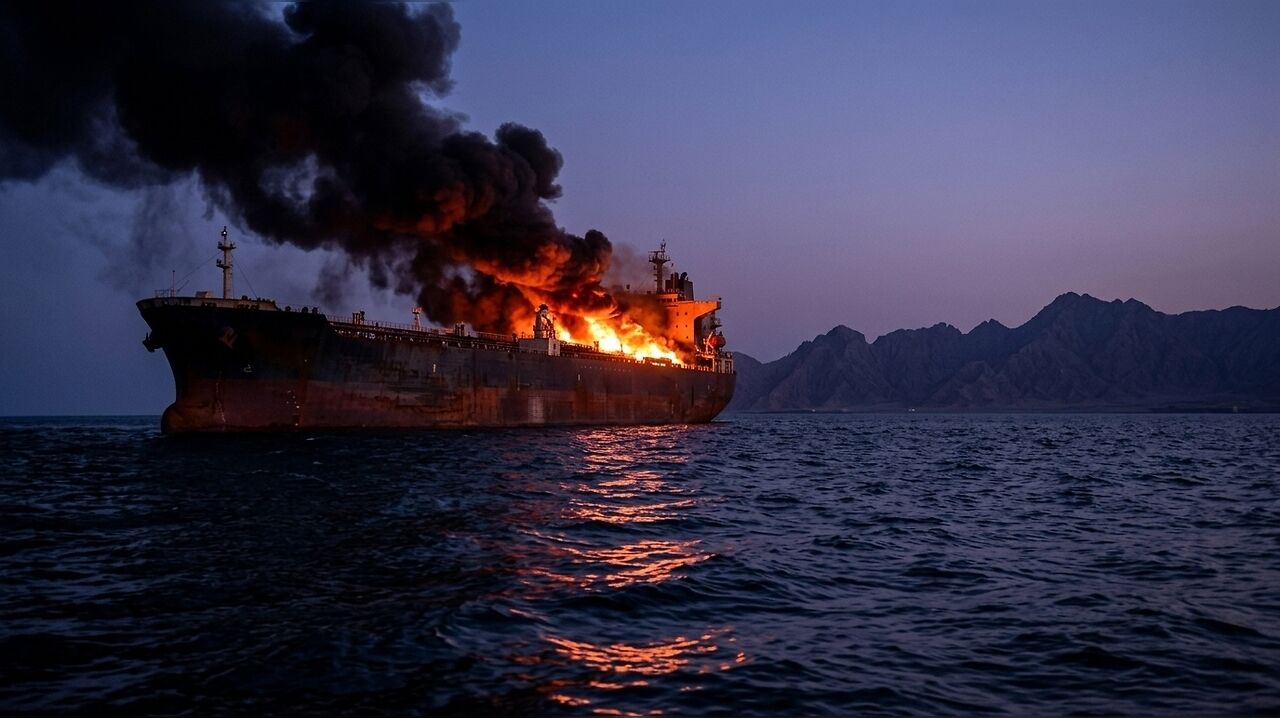
Iran’s Revolutionary Guards announced on Friday that their forces struck a liquefied petroleum gas (LPG) tanker, asserting that the vessel was attempting to navigate an illegal route through the
In an official statement, the Revolutionary Guards claimed they have assumed administrative control over the strait. They identified the targeted vessel as the
Conflicting Reports on Maritime Incidents
While the Revolutionary Guards confirmed the strike on the NV Sunshine, international maritime monitoring agencies reported a separate incident involving a different vessel. The United Kingdom Maritime Trade Operations (UKMTO) stated that a ship located 13 nautical miles off the coast of Al Jazeera Al Hamra, in the United Arab Emirates, was hit by a projectile. The impact reportedly ignited a fire on board.
The UKMTO noted that the status of the crew, the extent of the damage, and any potential environmental impact remain under investigation. The British
Geopolitical Context of the Strait
The Strait of Hormuz remains a critical artery for the global economy, serving as the primary maritime passage for oil and liquefied natural gas exports from the region. Since the escalation of the Middle East war in late February, the waterway has become a focal point of regional hostilities. Iran has maintained a blockade of the passage, though some commercial vessels have continued to attempt transits, often utilizing alternative routes along the southern coast to avoid Iranian-patrolled waters.
The United States has reportedly engaged in efforts to protect shipping traffic along these southern routes, while simultaneously maintaining a counter-blockade of Iranian ports. These operations have occasionally involved direct military exchanges between American forces and vessels associated with Tehran. As investigations into the latest incidents continue, the security of the strait remains a primary concern for international shipping and global energy markets.




