
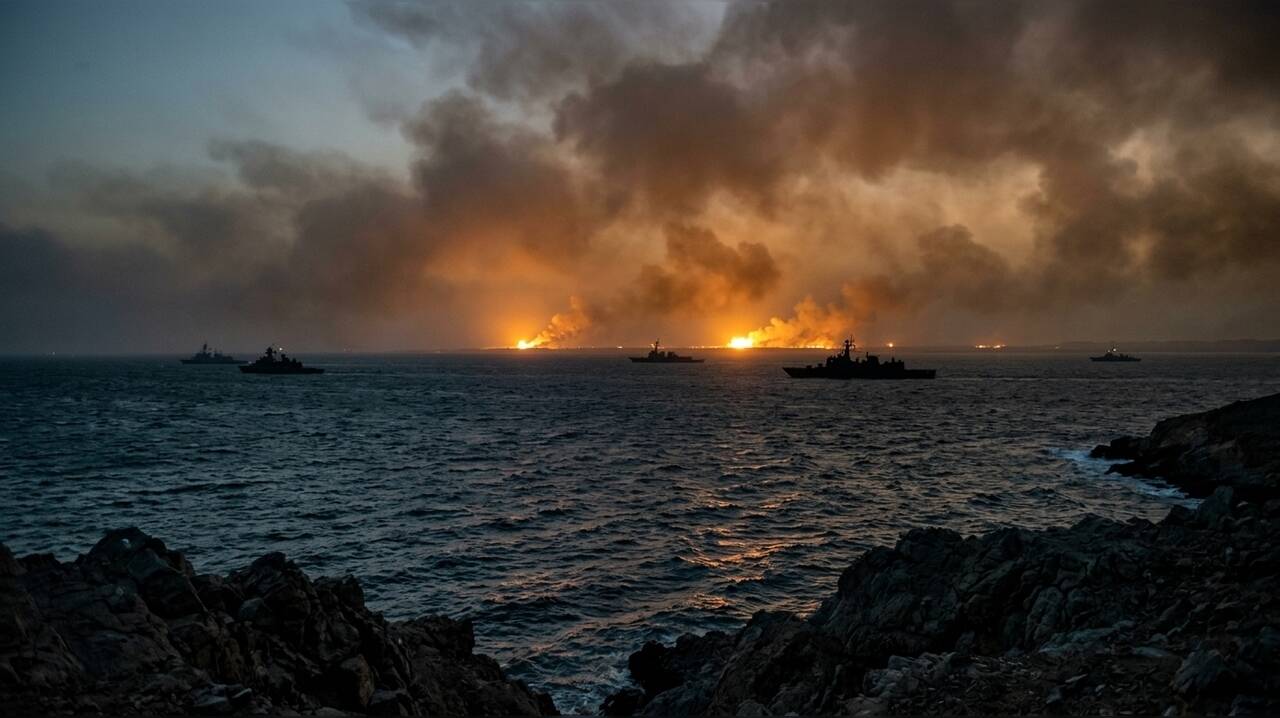
The warning follows a series of intense military engagements between the two nations, which have seen a sharp rise in regional tensions. US President Donald Trump confirmed on Tuesday that Washington has initiated a fresh wave of large-scale strikes targeting Iranian assets located near the
Military Escalation and Conflicting Claims
The US Central Command provided further context regarding the strikes, characterizing them as a necessary response to recent attempted attacks by the Islamic Revolutionary Guard Corps (IRGC) against commercial shipping vessels in the Strait of Hormuz and against American service personnel stationed throughout the region. President Trump emphasized that the current military actions are justified and warned that any further retaliation from Tehran would be met with an even more severe response.
Conversely, Iranian officials have presented a different account of the recent hostilities. Tehran claimed that it successfully conducted retaliatory strikes against US military installations located in Jordan, the United Arab Emirates, Kuwait, Bahrain, and the Erbil region of Iraqi Kurdistan. Iranian authorities framed these actions as an exercise of their inherent right to self-defense. Furthermore, Tehran has called upon neighboring countries to prohibit the United States from utilizing their sovereign territories as staging grounds for military operations against Iranian interests.
Regional Tensions and Strategic Outlook
The exchange of fire marks one of the most significant periods of military friction between the two nations in recent weeks. While the United States maintains that the Strait of Hormuz is currently clear of mines, the situation remains volatile as both sides continue to trade threats and military actions. The rhetoric from Tehran suggests a pivot toward a broader, multi-faceted strategy intended to counter the ongoing economic blockade and military pressure exerted by Washington.




