
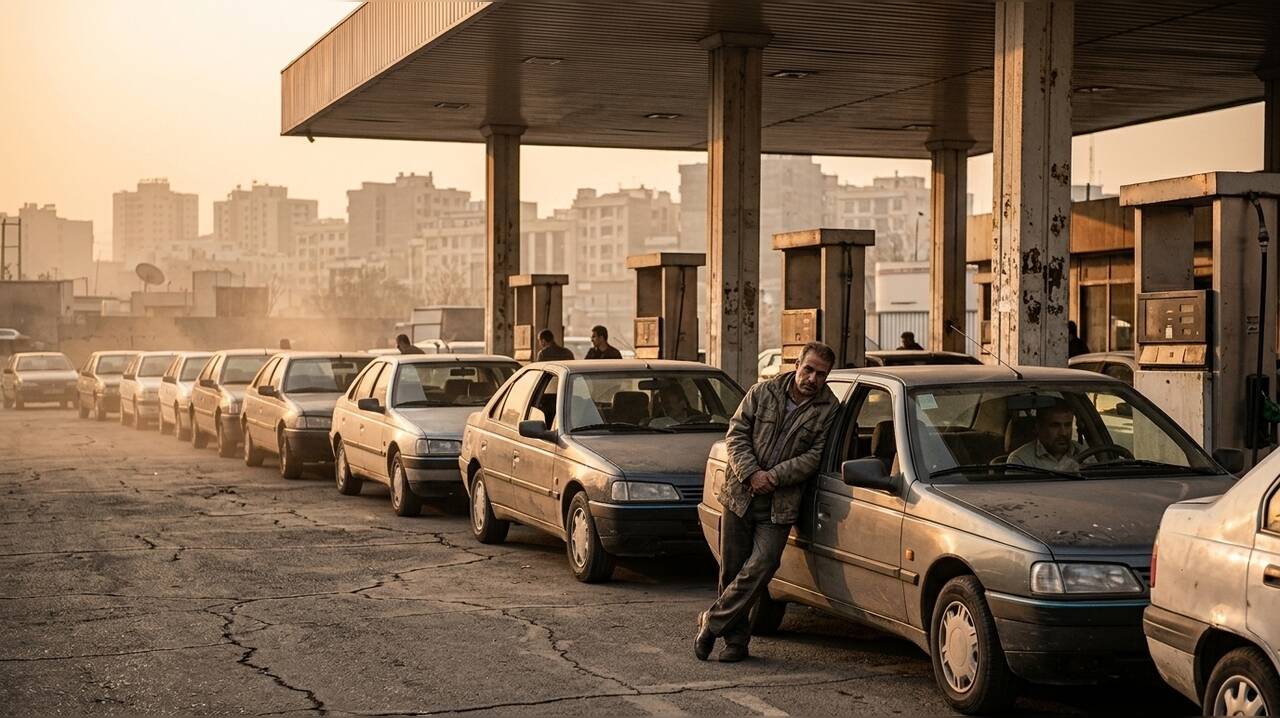
The Iranian government has implemented a significant increase in gasoline prices for heavy users, marking the second such hike since December. Under the new policy, motorists who exceed their monthly quota of 110 liters must now pay 100,000 rials per liter, effectively doubling the previous rate for those consumers.
State media reports indicate that the measure is intended to address the country's current economic climate. While the government has not explicitly linked the decision to ongoing geopolitical tensions, officials stated that the additional revenue generated from the price adjustment will be redistributed to households to help mitigate financial strain.
Economic Impact and Consumption Trends
Keramat Veis Karami, CEO of the state oil distribution company, confirmed that the new pricing structure is expected to impact approximately 15% of the population. The government move comes as Iran faces a widening gap between domestic production and national demand. According to official data, daily gasoline consumption reached a record 145 million liters in August, significantly outpacing the domestic production capacity of 122 million liters per day, necessitating imports to cover the shortfall.
The decision to raise prices is aimed at curbing high consumption, which analysts attribute to an aging vehicle fleet and limited public transportation infrastructure. However, the move has sparked concerns regarding the broader economic outlook. With an annual inflation rate currently estimated at 67% by government statistics, many citizens fear that the increased fuel costs will trigger a ripple effect, driving up the prices of essential goods such as food and basic staples.
Public Response and Historical Context
The adjustment to fuel costs remains a sensitive issue in Iran, where low gasoline prices have historically been viewed as a standard expectation. Previous attempts to reform fuel subsidies have led to significant public unrest, including widespread protests in 2019. In the wake of the latest announcement, security presence was reported to be elevated at various filling stations in Tehran, with both uniformed and plainclothes officers observed on-site.
Residents have expressed skepticism regarding the government's ability to alleviate economic hardship through these measures. Many citizens, already grappling with a weakening currency and diminished purchasing power, voiced concerns that the price hike is merely a precursor to further increases. As the country navigates these economic challenges, the balance between managing energy consumption and maintaining social stability remains a primary concern for the population.




