
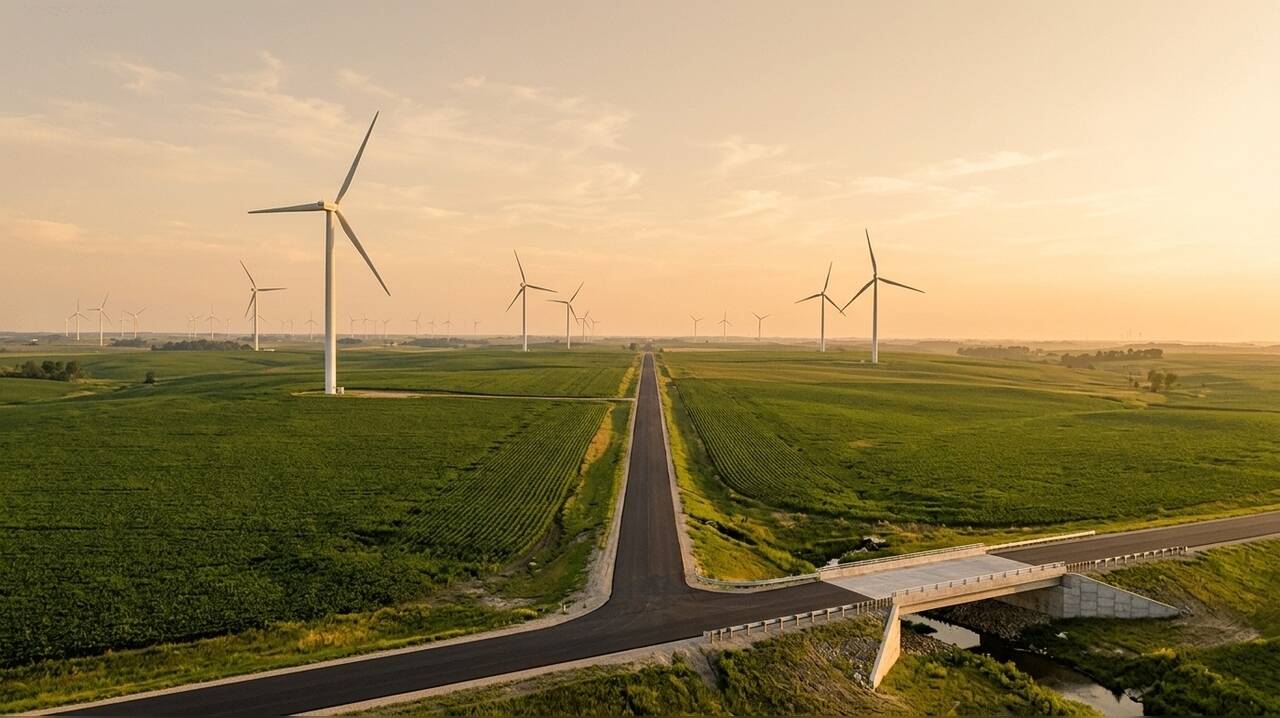
In the rural landscape of Howard County, Iowa, wind turbines have evolved from simple energy generators into a vital pillar of the local economy. Since their introduction in 2008, these towering structures have provided a consistent stream of public funding that has allowed the county to modernize its infrastructure, support local schools, and invest in conservation efforts without raising taxes on its residents.
A 2025 case study conducted by the Centre for Rural Affairs highlights the significant financial impact of the 147 wind turbines currently operating within the county. During the 2024-25 tax year, these turbines generated $2.71 million in revenue, representing approximately 14.5% of the county's total income. This infusion of capital has proven essential for a region that has experienced a stagnant tax base and a declining population over the last decade.
Infrastructure Transformation Through Targeted Financing
To maximize the utility of these funds, Howard County utilized a mechanism known as Tax Increment Financing (TIF). By capturing the increase in property tax revenue generated by the wind projects, the county successfully financed $21.5 million in public improvements. The primary focus of this spending has been the county's transportation network, which had previously faced significant maintenance challenges.
According to the case study, the wind-related revenue fully funded the replacement of 30 bridges, each exceeding 20 feet in length, alongside several other bridge rehabilitations. County Engineer Nick Rissman noted that without this dedicated funding, the local government would have been forced to make difficult decisions regarding which bridges to close or abandon. The financial boost allowed the county to double its bridge project output between 2010 and 2020 compared to the previous decade.
Beyond bridges, the funding has supported the construction of 20 miles of paved roads and eight miles of grading. The county also invested $1.5 million in heavy machinery, including motor graders and dump trucks, creating a cycle of efficiency that allows maintenance crews to address road repairs before they escalate into more costly, long-term failures.
Broadening the Economic Impact
The benefits of wind energy development have extended well beyond transportation. The county has allocated $1.5 million toward recreational and conservation initiatives, including renovations at several local parks, dam repairs, and the improvement of fishing habitats. Educational institutions have also seen tangible gains, with wind projects contributing over $228,000 annually to local school districts. This additional revenue has helped keep tax rates low for residents while supporting investments in school facilities and technology.
Individual landowners have also experienced financial stability through land-lease agreements with energy developers. Farmers participating in these arrangements reported that the supplemental income has enabled them to reinvest in their operations, facilitating the purchase of new machinery and property upgrades. While officials emphasize that developers remain responsible for road damage during construction and that lease negotiations require careful oversight, the overall impact has provided a sustainable financial lifeline for the rural community.




