
The
The path to creating a permanent tribute began shortly after the Second World War, with initial proposals surfacing as early as 1943. By 1949, the
Architectural Design and Structural Significance
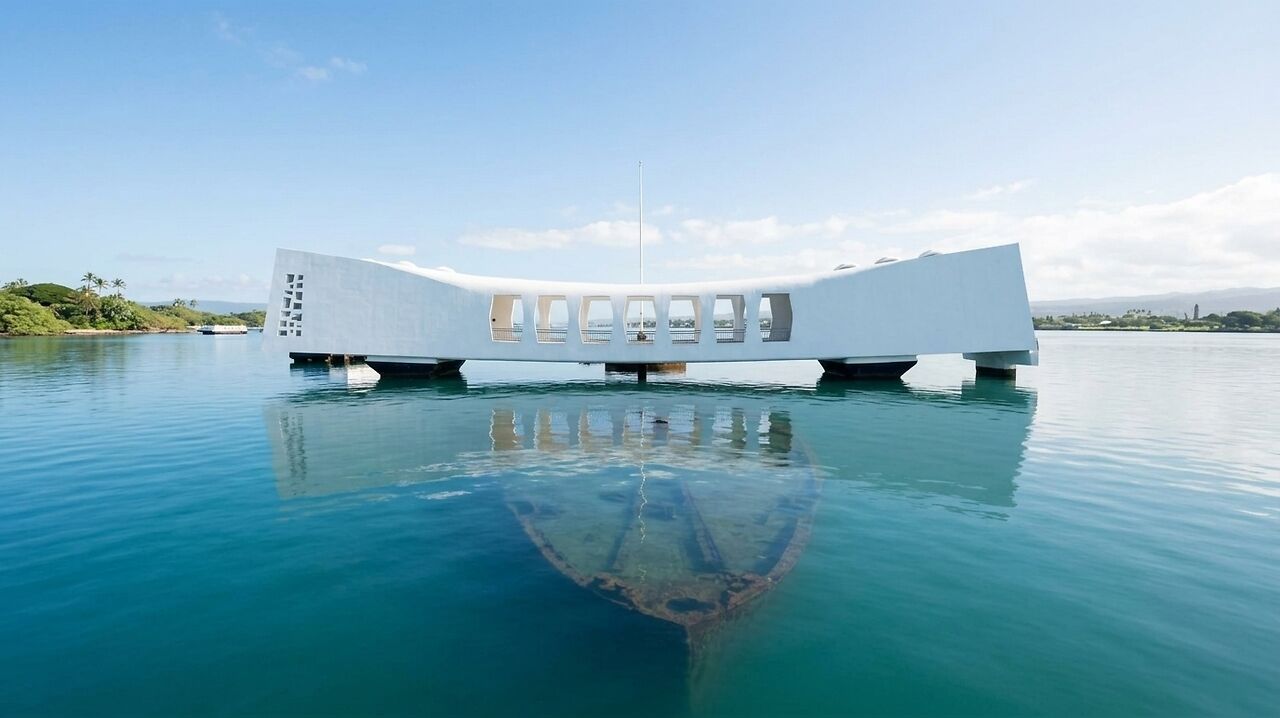
The project gained critical momentum in 1958 when President Dwight D. Eisenhower authorized its construction, which was financed through a combination of public and private donations. Architect Alfred Preis was commissioned to design the memorial, creating a structure intended to reflect the gravity of the historical events. Preis described the design as a representation of the transition from conflict to resolution, noting that the structure sags in the center while remaining strong at the ends to symbolize initial defeat and ultimate victory.
Beyond its symbolic geometry, the memorial was designed to evoke a sense of serenity. Preis aimed to omit overt expressions of sadness, instead providing a space where visitors could contemplate their own personal responses to the site. The facility is divided into three distinct sections: the Entry Room, the Assembly Room, and the Shrine Room. The Assembly Room serves as a central space for observation and ceremonies, while the Shrine Room features a marble wall engraved with the names of those who died aboard the USS Arizona.
A Site of Ongoing Remembrance
The memorial remains deeply connected to the physical remains of the battleship, which lies beneath the water. Visitors can view the wreck through open windows within the structure, and the site is marked by the continued presence of oil leaking from the sunken vessel. Although the ship is no longer in commission, the United States flag continues to fly from a flagpole attached to its severed mainmast, serving as a symbol of the ship's enduring legacy.
Managed by the




