
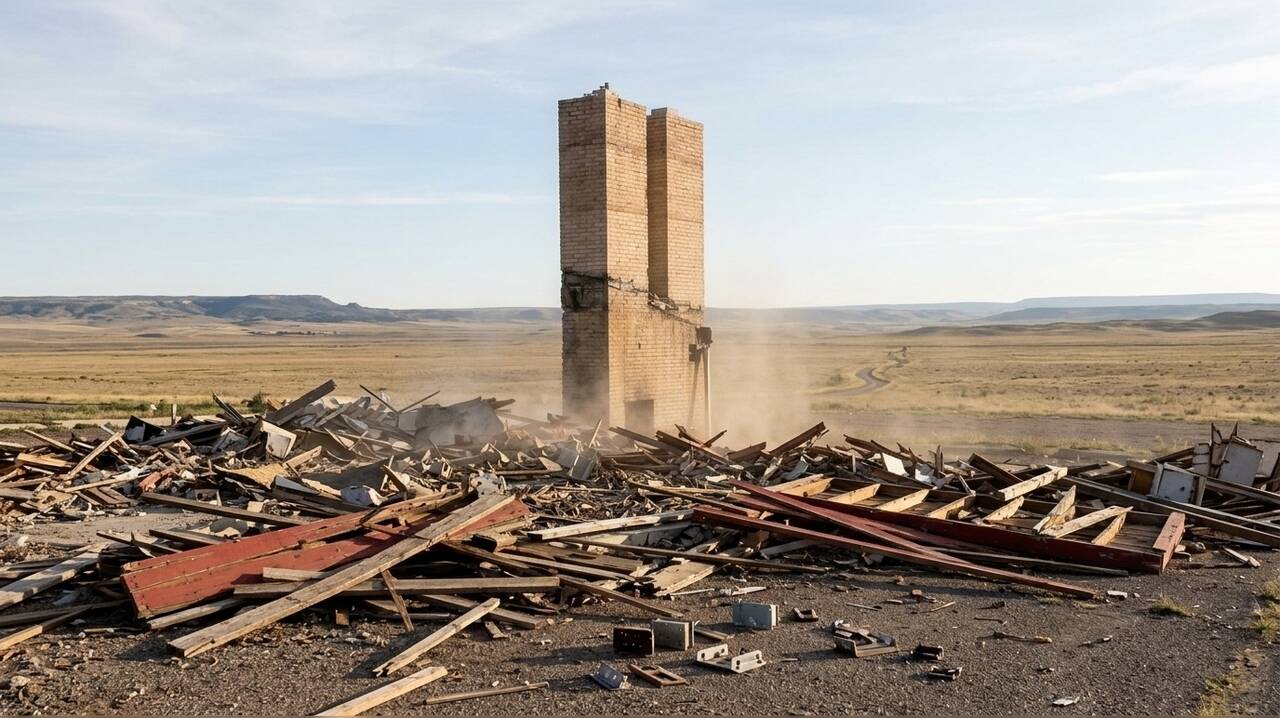
A historic fixture of the American roadside landscape has disappeared from Cheyenne, Wyoming, as the
The final remnants of the property—its namesake twin stone chimneys—were brought down in a brief operation lasting approximately 30 seconds. The demolition marks the conclusion of a long-standing local landmark known for its distinctive red exterior, green roof, and knotty pine interior, which had provided lodging and covered parking for motorists since the 1930s.
Preservation Concerns and Historic Significance
The removal of the motor court has prompted discussion regarding the preservation of
Stanfill highlighted that the Twin Chimneys were likely designed as a strategic marketing tool during an era when motor courts competed intensely for the attention of transcontinental travelers. In the absence of modern digital navigation, unique architectural features served as essential landmarks that allowed travelers to identify and remember specific lodging options while traversing the country.
The Legacy of the Lincoln Highway
The motor court was part of a broader network of properties associated with the Lincoln Highway, the first transcontinental road for automobiles in the United States, which began construction in 1913. These facilities were specifically designed to accommodate the needs of early motorists by offering both a room and a secure, covered space for their vehicles.
While other examples of this architectural style remain in Wyoming—including sites in Evanston and Fort Bridger—the demolition of the Twin Chimneys highlights the ongoing tension between modern commercial development and the preservation of historic travel infrastructure. Stanfill noted that there is a growing national interest in restoring historic motor courts, similar to the preservation efforts seen along Route 66, but emphasized that such initiatives require timely intervention.
Although the physical structure has been cleared by the Denver-based construction firm McCarty & Sons, some historical artifacts from the motor court, such as vintage matchbook covers and postcards, persist in private collections. For the site at 2405 East Lincolnway, the transition to a modern coffee franchise is now underway, with the property expected to be fully cleared within days.




