
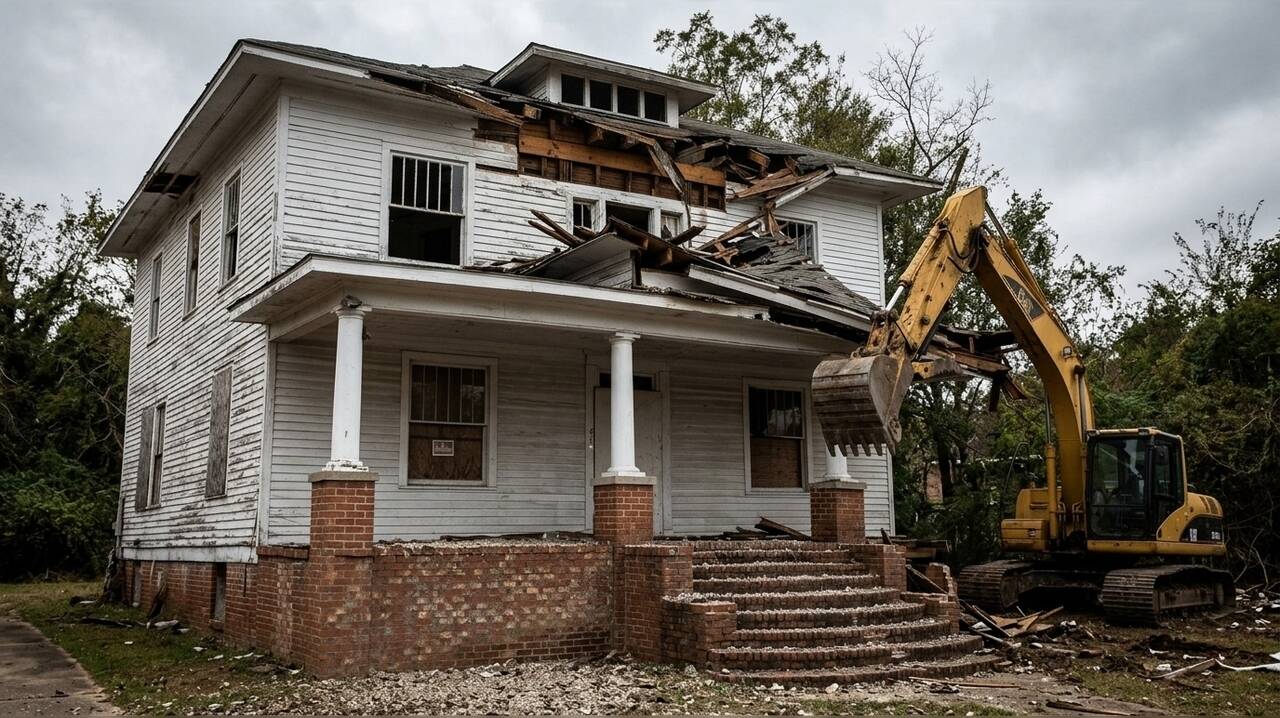
A historic residence in Columbia, South Carolina, once home to prominent figures in the local Black community and civil rights movement, is being demolished following years of neglect and a protracted legal dispute. The
The demolition marks the end of a contentious chapter between the university and local preservationists. While Allen University argued that the costs associated with restoring the aging building were prohibitive, city preservation staff had previously contended that the structure remained sound enough to be saved. The conflict culminated in a legal battle that lasted over two years, ultimately concluding after the city issued a demolition permit this summer.
A Legacy of Community Leadership
The house is named for the Reverend Robert Weston Mance, who purchased the property in 1922 while serving as the president of Allen University. The home served as a residence for his family, including his son, Dr. Robert Weston Mance Jr., who later became a physician and educator. The younger Mance served as the superintendent of Waverly Hospital, an institution founded by Dr. Norman A. Jenkins to provide medical care to the Black community during the era of segregation.
The surrounding
Broken Promises and Safety Concerns
When Allen University relocated the house in 2008 as part of an $18 million campus expansion, the institution entered into an agreement to restore the building to a livable condition for future university leadership. This commitment was tied to federal financial guarantees regarding the university's development projects. At the time, then-president Charles Young publicly expressed pride in the university's role in preserving the historic structure.
However, the promised restoration never materialized. Over the subsequent 18 years, the house fell into significant disrepair, suffering from broken windows, structural decay, and code violations. Ronald Davis, president of the Historic Waverly neighborhood association, noted that while the building’s history was important, its deteriorating state posed a public safety risk. Davis reported that the vacant property had become an entry point for unauthorized individuals, raising concerns about potential fire hazards and structural collapse.
The situation reached a turning point in 2023 when the university attempted to begin demolition without a permit. Although the city’s Design/Development Review Commission initially denied the request, citing the building's potential for restoration, the university pursued legal action. Following two years of litigation, the parties reached an agreement to dismiss the case, clearing the way for the university to proceed with the demolition of the historic site.




