
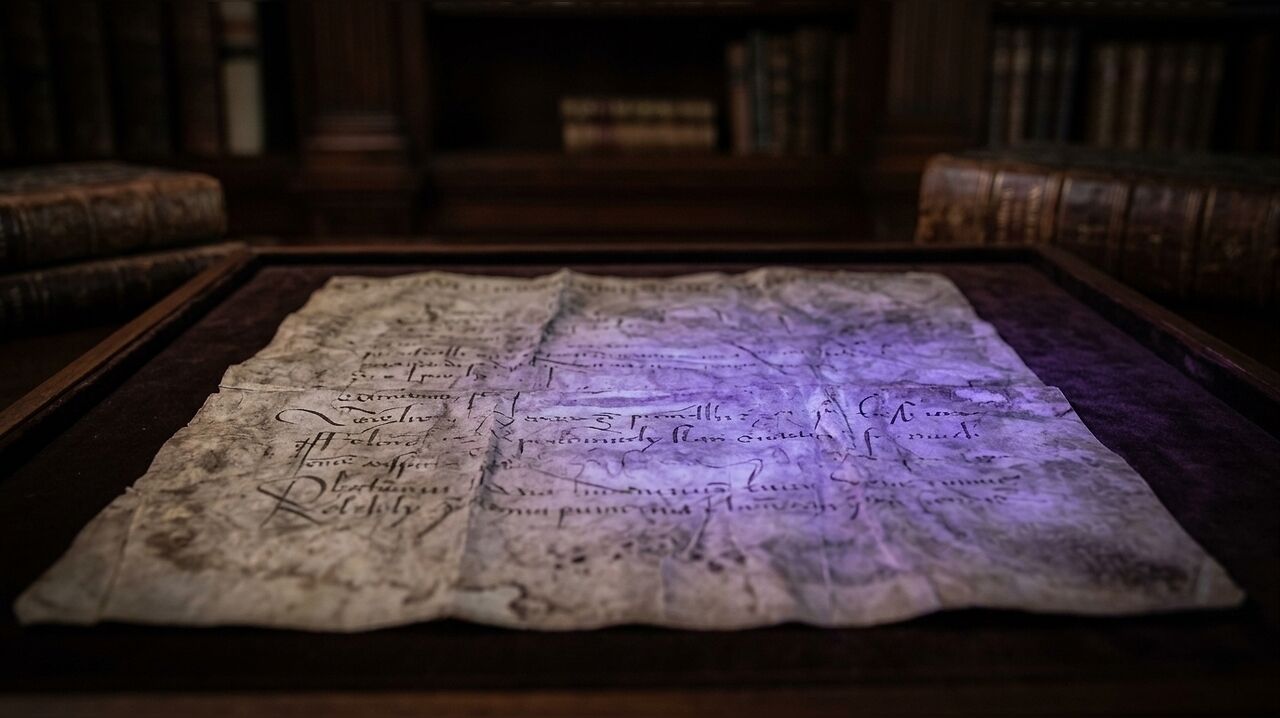
A parchment long dismissed as an unremarkable 14th-century copy has been identified as a rare, original version of the
The discovery occurred in December 2023 when David Carpenter, a professor of
Scientific Verification and Historical Significance
To confirm the document's origins, researchers compared the parchment against the six previously known originals from the 1300 issue. Because the text had faded significantly over time, Harvard librarians employed ultraviolet light and spectral imaging to reveal obscured details. These scans allowed experts to verify that the handwriting, dimensions, and specific textual features matched the authorised standards of the era, including the distinctive capital E used in the opening line.
The 1300 edition holds particular historical weight as the final version of the Magna Carta to be authorised by an English monarch’s seal. Originally issued by King John in 1215 to establish the principle that the crown is subject to the law, the charter underwent several reissues. The 1300 version, issued under
Tracing the Provenance of the Lost Charter
Beyond confirming the document's age, researchers have sought to reconstruct its history. Records indicate that the parchment was sold through a London book dealer in 1946, shortly after being purchased at a Sotheby’s auction for £42. The trail leads back to Forster Sammy Maynard, a First World War flying ace who had inherited archives linked to the anti-slavery campaigners Thomas and John Clarkson.
Historians believe the document may have originated in Appleby, Westmorland, potentially passing through the Lowther and Clarkson families before reaching the auction market. While Vincent noted that the evidence strongly points to the parchment being the lost Appleby copy, he acknowledged that further documentation is required to definitively prove the link. Despite estimates that the document could be worth millions of dollars, Harvard Law School has stated it has no intention of selling the historic charter.




