
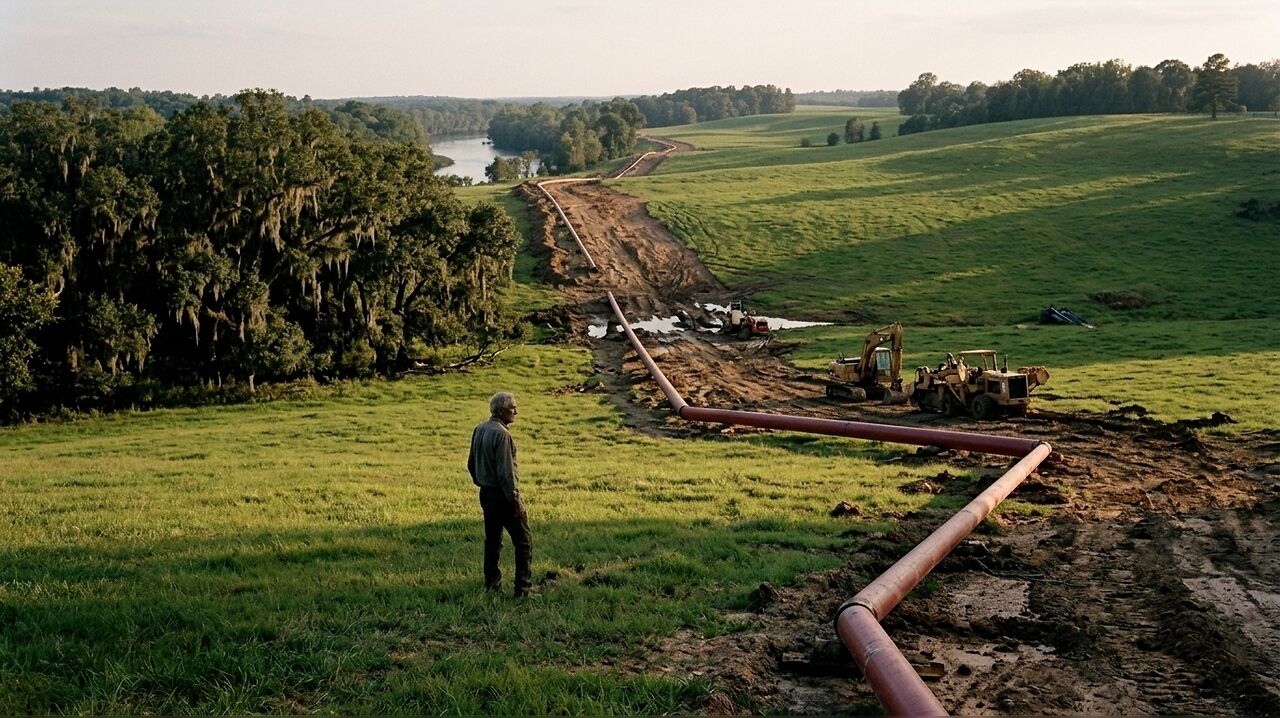
A 79-year-old landowner in western Georgia is challenging a major energy infrastructure project, alleging that a multi-billion-dollar natural gas pipeline was diverted to avoid the home of a utility executive.
The project, managed by
Allegations of Preferential Treatment
The rerouting has prompted a formal complaint to the Federal Energy Regulatory Commission (
Peek, who had initially accepted the pipeline’s presence when it followed the existing easement, expressed frustration over the lack of transparency in the planning process. Emails obtained by The Atlanta Journal-Constitution indicate that Lane had submitted alternative route proposals directly to Kinder Morgan, including one that would have avoided the neighborhood entirely by utilizing a different transmission line right-of-way. Peek stated he was excluded from these discussions while the alternative paths were being evaluated.
Company Response and Regulatory Status
Southern Natural Gas has denied that Lane received any preferential treatment, asserting that no company policy exempts employees from the standard land-acquisition process. In a statement, the company maintained that the current route was selected to balance operational needs with landowner impact, noting that the change reduced the number of affected properties from four to one. Kinder Morgan executive Allen Fore added that various engineering and environmental factors frequently necessitate adjustments to pipeline routes, and the company intends to engage in further dialogue with Peek once legal reviews conclude.
Despite offers from SNG—including a $300,000 payment for easement rights—Peek has refused to accept the current plan, maintaining that the issue is one of fairness rather than compensation. The case now rests with FERC, which has already granted primary approval for the broader 7,600-mile interstate expansion. Peek’s legal team is requesting that the agency mandate a return to the original straight-line easement, arguing that the initial route would have been more environmentally sound and distributed the project's impact more equitably among local landowners.




