
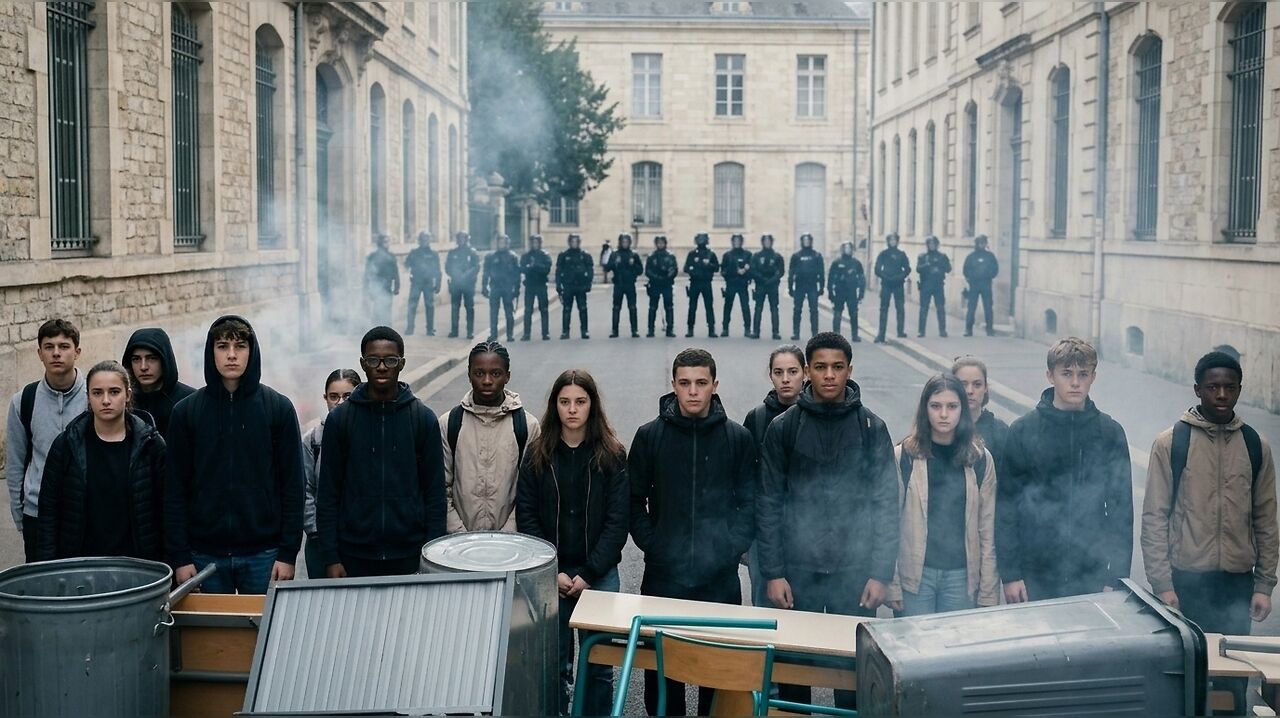
A wave of student-led protests has swept across France, resulting in significant disruptions to hundreds of educational institutions and sparking a heated national debate over police conduct and school conditions. The demonstrations, which primarily involve students aged 15 to 18 at lycees, have seen teenagers blockading school entrances and engaging in confrontations with security forces. According to the French interior ministry, more than 5,000 people have been arrested since Monday, while the education minister reported that approximately 735 schools were impacted by the unrest as of Friday.
The movement originated on September 17 at the Saint-Exupery high school in the Paris suburb of Creteil, initially as a show of support for teachers striking over staffing shortages and resource deficits. While the situation at that specific school has since stabilized following the government’s decision to provide additional staff, the protests have gained momentum, spreading rapidly across the country. As the demonstrations continue, the government has condemned the associated violence while accusing hard-left political factions of inciting the unrest. Conversely, critics have raised concerns regarding the use of force by police against student protesters.
Root Causes and Social Inequality
The grievances driving the protests are multifaceted, centering on systemic issues within the
The role of social media has been pivotal in the expansion of the movement. Platforms like TikTok have allowed students to bypass traditional media narratives, sharing raw footage of school blockades, burning trash cans, and police interventions. These digital channels have provided a platform for students to document their experiences, though they have also been criticized for amplifying the most dramatic and violent moments of the confrontations.
Political Tensions and Police Conduct
The protests have emerged as a significant political flashpoint with presidential elections approaching in six months. The government has explicitly blamed the hard-left France Unbowed (LFI) party for fueling the movement, a charge that senior LFI official Manuel Bompard has dismissed as a conspiracy theory. Jean-Luc Melenchon, the veteran LFI presidential candidate, has publicly supported the students while advocating for non-violent protest methods. His support remains notable given his strong polling numbers among voters aged 18 to 25.
The response from security forces has drawn intense scrutiny. Reports of police using tear gas, rubber bullets, and batons have been met with public outcry, particularly after a prosecutor in Tours confirmed that a young man lost the use of his right eye during clashes on Wednesday. Viral videos depicting aggressive arrests have further fueled public anger. At the same time, authorities have reported instances of violence directed at officers, including an incident in the eastern city of Belfort where a police officer was beaten by a group of youths. As the country prepares for further demonstrations planned for Tuesday, the situation remains volatile.




