
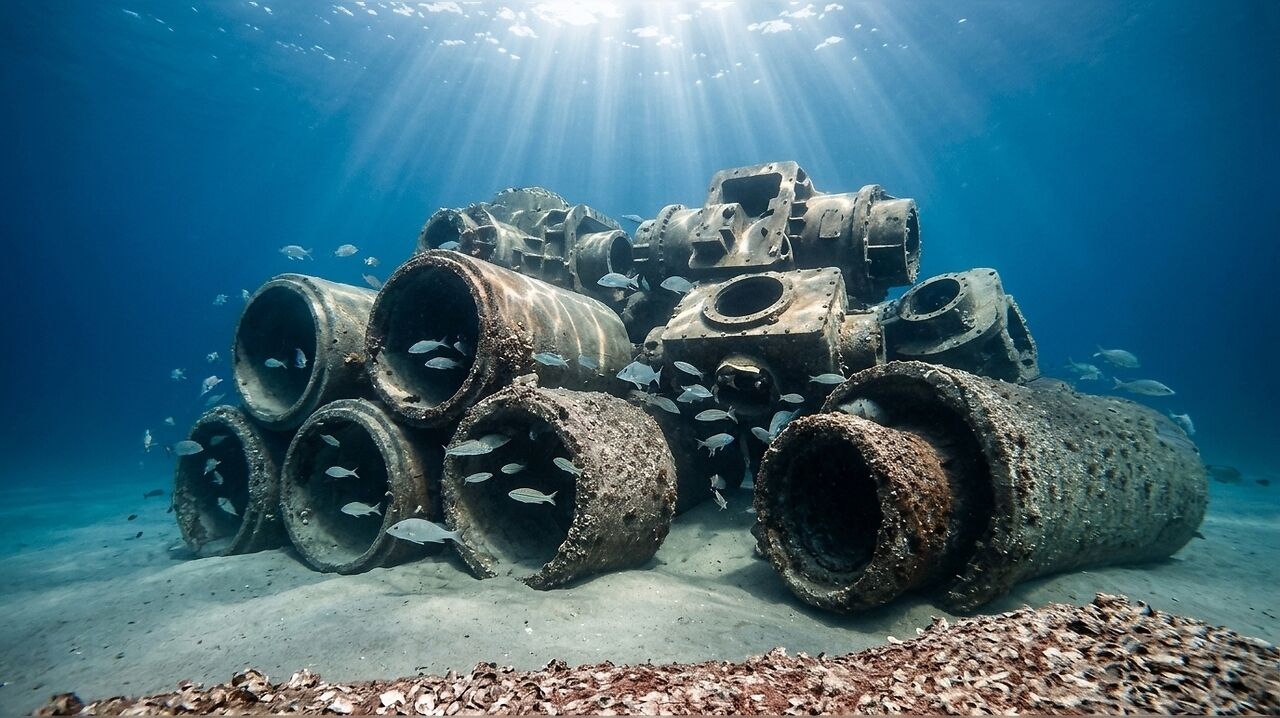
In a move to bolster marine biodiversity, environmental crews in Florida have successfully repurposed 159 tons of industrial waste into a new artificial reef. The project, which took place in March 2026, diverted concrete pipes, junction boxes, and steel components from landfills, instead lowering them 72 feet onto the Gulf of Mexico seabed near
The initiative, officially recorded by the
Ecological and Recreational Benefits of Artificial Reefs
Artificial reefs serve as critical infrastructure in areas where natural hard-bottom habitats are scarce. By introducing complex structures to the seafloor, the project provides essential surfaces for the growth of sponges, corals, and algae. These organisms form the foundation of a food-rich ecosystem, which in turn attracts a variety of marine life, including crustaceans and larger fish species that rely on the structures for shelter, breeding, and foraging.
According to the University of Florida’s Institute of Food and Agricultural Sciences, the strategic arrangement of concrete pipes and culverts creates diverse openings that significantly increase habitat complexity. Experts anticipate that the colonization process will begin within the first year, eventually establishing a thriving, self-sustaining underwater environment. This project is part of a broader, long-standing effort in Florida to utilize secondary-use materials to expand the state’s extensive network of artificial reefs.
Supporting Coastal Economies and Marine Conservation
Beyond the immediate ecological advantages, the new reef is expected to provide tangible benefits for the local community and tourism sector. Panama City Beach, a popular destination for anglers and divers, will see an increase in accessible sites for recreational activities. The FWC notes that such reefs play a dual role: they provide necessary habitats for marine species while simultaneously supporting the state’s coastal economy through fishing and diving tourism.
Erin Graham, the coastal resource manager and artificial reef coordinator for the program, emphasized the dual nature of the project. For Graham, who has a background in local fishing and diving, the initiative represents a practical approach to conservation that balances the need for




