
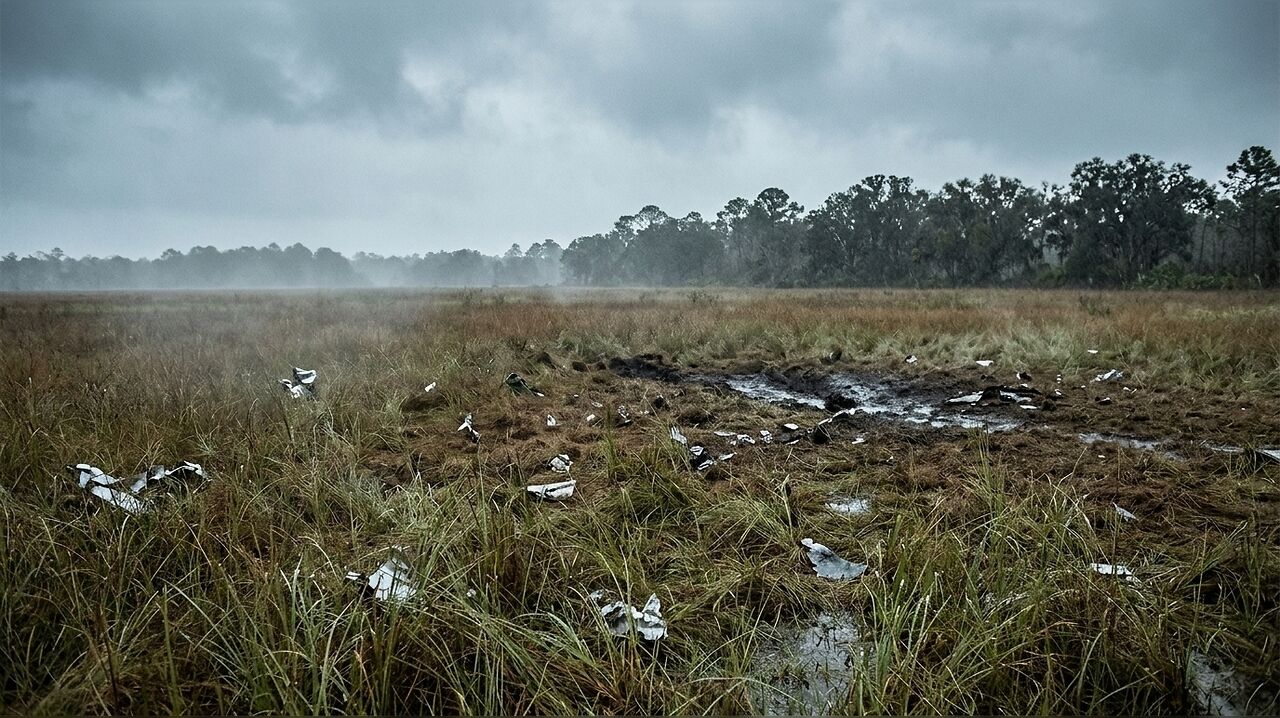
A chartered Learjet 60 carrying nine people crashed in Florida earlier this week, resulting in the deaths of all passengers and crew on board. The aircraft, which was valued at approximately $2 million, went down in a remote area 11 kilometres southwest of West Palm Beach, creating a crater upon impact and erupting into a fireball.
Among the victims were tech entrepreneur
Investigation into Potential Structural Failure and Weather
The National Transportation Safety Board (NTSB) has launched a formal investigation into the circumstances surrounding the disaster. NTSB member Tom Chapman confirmed that initial evidence suggests the aircraft may have begun to break apart in mid-air before striking the ground. Investigators are currently searching a wide area for debris, as parts of the jet may have detached during the final moments of the flight.
Air traffic control recordings indicate that the crew encountered severe difficulties while navigating through the region. Co-pilot Filgueiras reported that the jet was experiencing moderate turbulence and accumulating ice at high altitude. The situation escalated rapidly as the aircraft lost altitude at an extreme rate. In final radio transmissions, the crew reported a descent of up to 20,000 feet per minute before the pilot indicated that a crash was imminent.
Focus on Atmospheric Conditions and Crew Actions
The investigation is placing a significant emphasis on the weather conditions present at the time of the flight. Reports confirm that the region was experiencing heavy rain, and the crew had been alerted to potential storms by air traffic controllers. While the pilots noted icing conditions at their cruising altitude of 35,000 feet, the NTSB is working to verify the exact atmospheric data at that height to determine if environmental factors contributed to the loss of control.
Beyond weather, the NTSB will conduct a comprehensive review of the crew’s actions and the mechanical integrity of the Learjet. Aviation experts, including former federal investigators, have suggested that the loss of critical tail components could explain the steep, uncontrolled nosedive observed in the final moments before impact. The recovery of the flight data recorder and further analysis of the wreckage remain central to establishing the sequence of events that led to the tragedy.




