
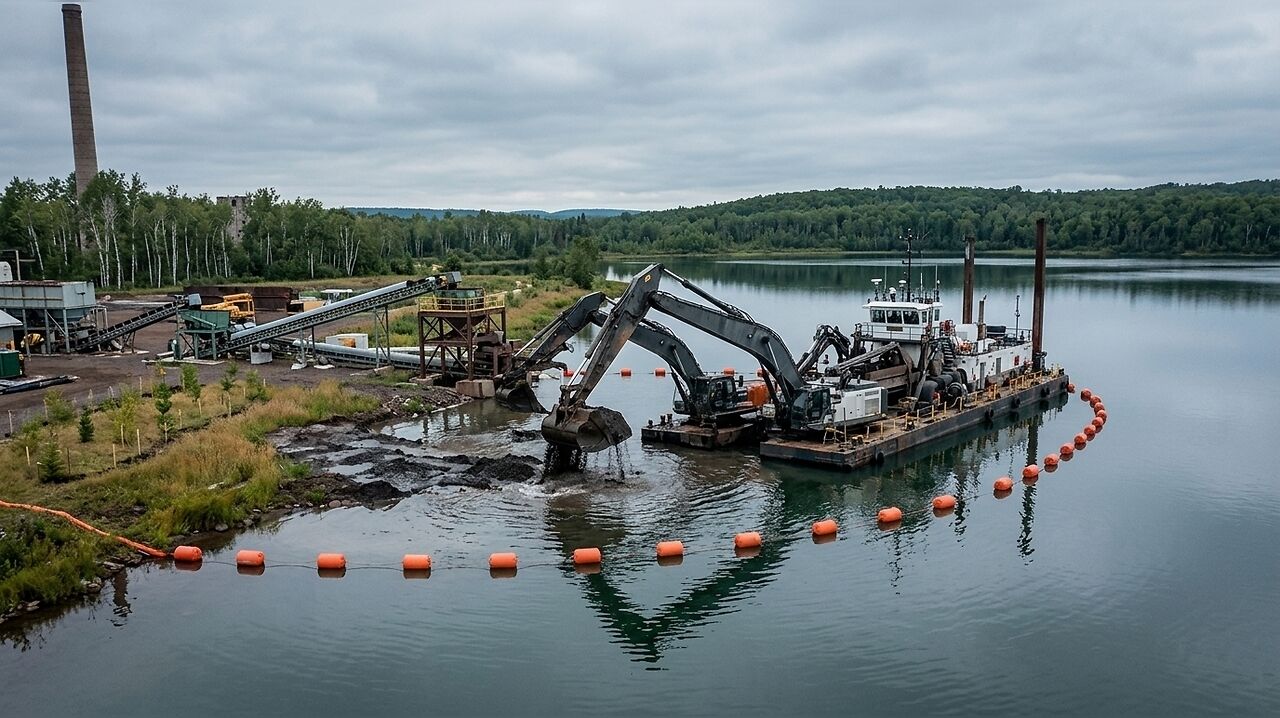
Environmental authorities have launched a major remediation project at Torch Lake in Michigan’s Upper Peninsula to address the lingering environmental impact of over a century of copper mining. The United States Environmental Protection Agency (EPA) confirmed that work began on June 15, 2026, at the Lake Linden Recreation Area, where crews are tasked with removing sediment tainted by heavy metals and industrial chemicals.
The initiative, valued at $12 million, focuses on extracting approximately 13,300 cubic yards of material contaminated with lead, zinc, and polychlorinated biphenyls (PCBs). Once the hazardous sediment is removed, the site will be restored using clean backfill and sand. While the local marina and campground remain operational, the beach is closed to the public for the duration of the 2026 season, and officials have requested that boaters maintain a safe distance from active dredging equipment.
A Century of Industrial Legacy
The contamination stems from extensive copper mining operations that spanned from the 1840s until 1968. During this period, approximately 200 million tons of waste material, referred to as stamp sands, were deposited directly into the lakebed. The current cleanup effort is part of a long-term strategy to address environmental degradation within the Torch Lake Area of Concern, one of 23 such sites in the United States identified under the 1987 Great Lakes Water Quality Agreement.
Funding for the project is provided through a partnership between the Great Lakes Restoration Initiative and Honeywell International, operating under a cost-sharing agreement established by the Great Lakes Legacy Act. This collaborative approach is intended to mitigate the risks posed by the historic industrial waste that has defined the lake's ecosystem for decades.
Future Outlook and Consumption Advisories
Beyond the immediate work at Lake Linden, the EPA and Honeywell International are currently evaluating cleanup strategies for the Hubbell Processing Area of Torch Lake. These ongoing efforts are critical to the eventual reassessment of public health guidelines in the region, including existing advisories regarding the consumption of fish and wildlife.
Officials have indicated that once the remediation projects are finalized and environmental monitoring confirms sufficient improvement, the current restrictions will be formally reviewed. For the local community, this process represents a significant step toward addressing the long-term environmental consequences of the region's mining history.




